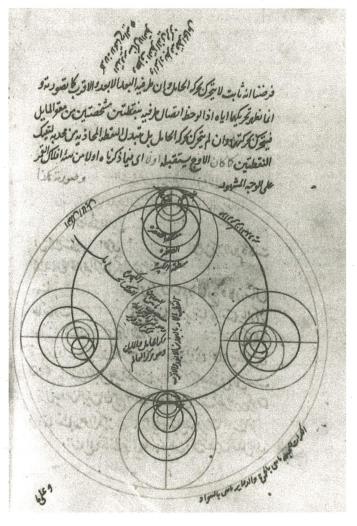
In my recent collective book review, I mentioned that I had been unkind on social media regarding Jim Al-Khalili’s *The House of Wisdom: How Arabic Science Saved Ancient Knowledge and Gave Us the Renaissance* (Penguin, 2011), prompting inquiries about alternative recommendations for those intrigued by the history of science in medieval Islamic culture.
I noted that there wasn’t a single book encompassing the entire range except for the three-volume *Encyclopedia of the History of Arabic Science*, edited by Roshdi Rashed (Routledge, 1996), although it is currently out of print. A commenter pointed out that it is available on the Internet Archive, which is good to know.
Subsequently, I recommended several books that address parts of the spectrum, starting with Stephen P. Blake’s *Astronomy and Astrology in the Islamic World* (Edinburgh University Press, 2016), part of *The New Edinburgh Islamic Surveys* series, edited by Carole Hillenbrand. At the conclusion of my review, I noted that I had acquired two additional volumes from *The New Edinburgh Islamic Surveys* and will review them here.
The first book is Donald R. Hill’s *Islamic Science and Engineering* (Edinburgh University Press, 1993).
Donald Hill (1922–1994) was a prominent figure in the history of technology. I have kept his *A History of Engineering in Classical and Medieval Times* (1984) on my shelf for several years. However, I only learned while reading *Islamic Science and Engineering* that he specialized in the history of Islamic engineering, rooted in his rather unique personal background.
He served with the Royal Engineers during WWII, and in 1949 he earned an engineering degree from the University of London, eventually becoming a professional engineer. Additionally, he obtained an M.Litt. in Islamic History from Durham University in 1964 and a PhD in Islamic Studies from the University of London in 1970. He attended a conference at SOAS where the renowned, albeit somewhat controversial, historian of technology Lynn White Jr. (1907–1987), after discovering his unconventional qualifications, encouraged him to translate al-Jazari’s *The Book of Knowledge of Ingenious Mechanical Devices* (Springer, 1975), paving the way for him to specialize in the field of Islamic engineering.
Hill’s book begins with a succinct three-point introduction that effectively sets the stage for the remainder of the text. He initially describes the sources from which Muslims initially gained knowledge of science and technology. This is followed by a brief overview of the rise of Islam, concluding with a concise examination of the translation movement. The core of the book is segmented into two roughly equal parts, with the first half focusing on science and the latter on technology.
Hill addresses the historical development of four disciplines: mathematics, astronomy, physics, and chemistry. The mathematics section provides a brief overview of each area, including arithmetic, the historical application of the decimal place value system in Arabic, algebra, geometry, and trigonometry. These sections serve as introductory texts. Nonetheless, similar to other parts of the book, a bibliography is included at the end, suggesting further reading. However, this bibliography is somewhat outdated, and resources such as J.L. Berggren’s *Episodes in the Mathematics of Medieval Islam* (Springer, 1986, ppb. 2003) may offer more current suggestions.
The astronomy section is significantly more extensive than the mathematics portion and adequately covers all the usual topics. It comprises a solid set of introductory essays, and though the bibliography features works by both Edward Kennedy and David King, those looking for a deeper exploration should seek out more contemporary resources.
The physics section, grandly titled, actually addresses only two fields: mechanics and optics. The mechanics essay is quite well done and highly recommendable; the optics discussion focuses predominantly on Ibn al-Haytham and his *Kitab al-Manazir* (*Book of Optics*). In his bibliography, Hill himself observes a lack of sufficient literature on Islamic physics, which is certainly not the case today for optics. Concerning mechanics, I must admit my unfamiliarity with the available literature.
The chemistry section is quite engaging. Hill acknowledges that the Arabic term *al-kīmīā*, from which we derive the modern term alchemy, encompasses both what is currently recognized as alchemy and what we now define as chemistry. He notes:
>The Arabic word *Al-kīmiyā* can apply to chemistry or alchemy, but it would be an unrewarding task to attempt to