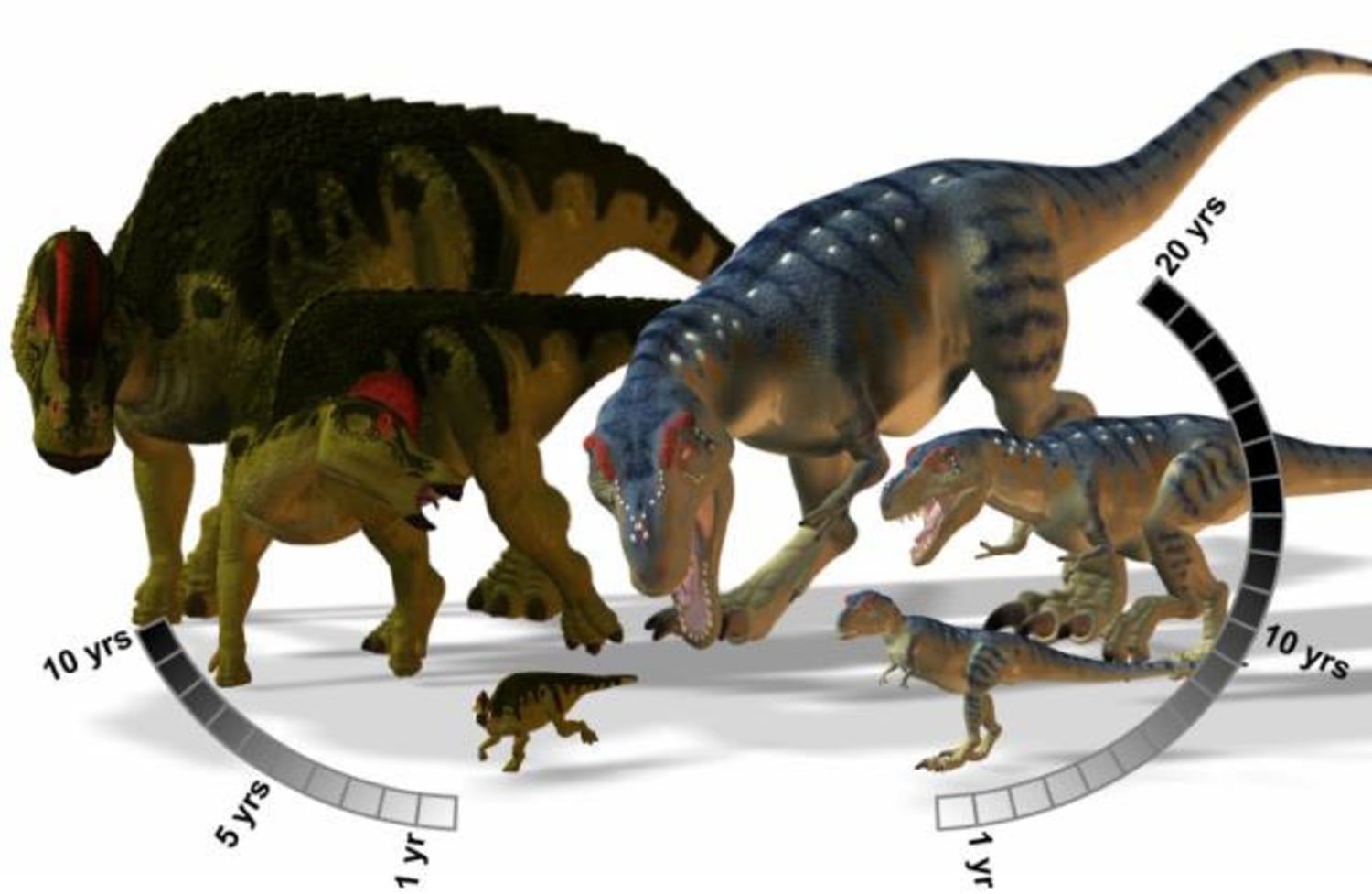
Tyrannosaurus rex required four decades to reach full growth. This duration extends 15 years beyond previous paleontological estimates and alters our perception of this iconic prehistoric predator.
The revised timeline is derived from an analysis of 17 T. rex specimens, representing the largest compilation of data ever collected for the species. Researchers from Oklahoma State University and Intellectual Ventures investigated fossilized leg bones and counted growth rings, akin to determining the age of a tree. They also employed circularly polarized light to uncover rings that traditional microscopy fails to detect.
These concealed marks indicated that prior age determinations were regularly inaccurate. Earlier models estimated T. rex maturation at about 25 years, based on incomplete ring assessments. Older specimens underwent bone remodeling over time, obscuring early growth layers and revealing only the final 10 to 20 years.
## Bone grows in bursts, then slows
During active growth intervals, T. rex could generate 25 to 100 microns of bone each day. As the animal aged, this rate diminished to less than 10 microns daily in the largest adults. This decrease signifies the nearing of asymptotic size, approximately eight tons for a fully mature specimen.
> “This is the largest dataset ever compiled for Tyrannosaurus rex. Analyzing the growth rings preserved in the fossilized bones enabled us to reconstruct the animals’ growth histories year by year,” explains Holly Woodward.
The research team compiled partial records from various individuals to create a composite growth curve. Imagine overlapping segments from incomplete biographies. The findings imply that T. rex spent decades in an extended adolescence, developing steadily rather than hastily reaching adulthood.
This gradual growth likely had ecological implications. Younger tyrannosaurs were not merely smaller versions of adults. They occupied distinct ecological roles, hunted different prey, and sidestepped competition with older counterparts. Multiple age groups could thrive together without interfering with one another.
## Jane and Petey don’t correlate
Two notable specimens skewed the data. Fossils named Jane and Petey exhibited growth patterns that varied markedly from other T. rexes analyzed in the research. They had much slower growth rates compared to their counterparts.
This discrepancy fuels the Nanotyrannus debate—whether smaller tyrannosaur fossils classify as a separate “pygmy” species or simply represent juvenile T. rexes. Growth data alone cannot settle the matter, but the outlier status of Jane and Petey implies that the Late Cretaceous environment was denser than previously understood. It may indicate a species complex or significant ecological stress. The data does not clarify this.
Beyond Tyrannosaurus, the results imply that conventional bone-reading methods may overlook densely packed growth markers throughout dinosaur paleontology. Age assessments for other species might require reevaluation. A century after its discovery, the king of dinosaurs continues to instruct us on bone interpretation.
DOI: [10.7717/peerj.20469](https://doi.org/10.7717/peerj.20469)
**There’s no paywall here**
*If our reporting has informed or inspired you, please consider making a donation. Every contribution, no matter the size, empowers us to continue delivering accurate, engaging, and trustworthy science and medical news. Independent journalism requires time, effort, and resources—your support ensures we can keep uncovering the stories that matter most to you.*
Join us in making knowledge accessible and impactful. Thank you for standing with us!