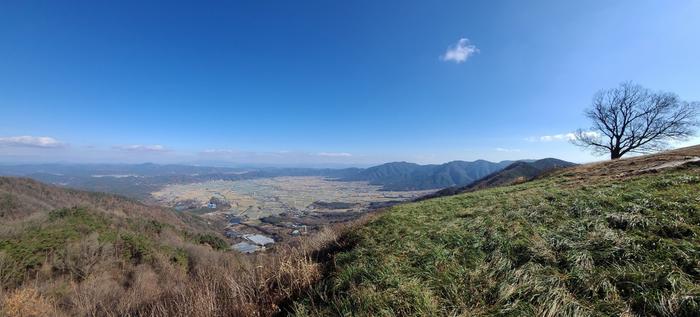
Somewhere in the foothills of South Korea’s Hapcheon province, in a slim valley where a stream flows sporadically, small rounded stones are buried twenty centimeters beneath the gravel. To a casual hiker, they appear unremarkable. However, to Jaesoo Lim and his colleagues at the Korea Institute of Geoscience and Mineral Resources, they represent something profoundly significant: the oldest biological structures ever discovered within an impact crater, and possibly a key to understanding how oxygen first permeated Earth’s atmosphere around 2.4 billion years ago.
The stones are stromatolites, layered formations developed over millennia by microbial communities. Cyanobacteria and their precursors have been creating these mounded mats for at least 3.5 billion years, positioning stromatolites as the oldest fossil evidence of life on Earth. Nowadays, they mainly thrive in extreme environments: hypersaline coastal bays in Western Australia, hot springs in Yellowstone, alkaline lakes throughout the African interior (locations that are inaccessible to animal grazers). Their presence in a Korean impact crater raises a question that researchers are just beginning to explore. What if asteroid impacts did not merely wipe out early life? What if they simultaneously created conditions for life to thrive?
## A Crater That Kept Something Alive
In 2021, Lim’s team first established the Hapcheon basin as Korea’s sole recognized meteorite impact site, identifying the distinct shatter cones and shocked mineral fabrics that differentiate authentic impact structures from everyday geological formations. They now understand that the impact occurred approximately 42,300 years ago, geologically speaking, practically yesterday. They are more intrigued by events in the years and decades that followed the strike.
When a large bolide strikes, the immediate consequences are disastrous: vaporized rock, pressure waves, fires. However, the resulting crater is not merely a dormant bowl. The heat generated from the impact melts rock deep underground, and this residual heat can linger extraordinarily long, driving hydrothermal circulation through the newly fractured bedrock. Evidence of such hydrothermal activity in the Ries crater in Germany extends for around 250,000 years post-impact. In Hapcheon, the chemical record embedded in the stromatolites themselves implies that the hydrothermal phase lasted over 27,000 years. For microbial life, that is essentially an open invitation.
A post-impact lake formed in the basin. Water trickling through hot fractured rock would likely have been warm, mineral-laden, and somewhat alkaline: precisely the conditions that modern stromatolite analogues appear to favor. Sediment cores extracted from the crater floor exhibit signs of this early environment. High concentrations of calcite in the lower sediments indicate a carbonate-saturated chemistry conducive to microbial mat formation. Sulfur is plentiful. Microbial DNA extracted from sediments approximately 70 meters deep includes organisms clearly related to geothermal specialists: Annwoodia aquaesulis, originally isolated from geothermal water, and Sulfuritortus calidifontis, which resides in hot spring microbial mats. The lake, in its nascent phase, was essentially a warm spring confined within a bowl.
## Reading the Chemistry Frozen in Stone
The fact that the Hapcheon stromatolites originated in this hydrothermal environment rather than simply washing in from other locations is encoded in their rare earth element chemistry. Europium, one of the scarcer members of that group of fifteen metals, behaves unusually under high-temperature conditions: it is transformed into a more soluble form and accumulates in hydrothermal fluids, leaving a notably strong Europium signal in anything that crystallizes from those fluids. The Hapcheon stromatolites exhibit exactly this signature. More significantly, the Europium anomaly is most pronounced in the innermost growth layers and diminishes toward the outer rim, a gradient that corresponds neatly with the gradual cooling of hydrothermal activity over time. The stromatolites, in essence, maintained a record of temperature changes as they grew.
A second chemical fingerprint connects them to the impact event itself. Meteorites are rich in osmium and possess distinctive isotope ratios that differ significantly from those of typical Earth rocks. The stromatolites contain elevated osmium concentrations with depleted isotope ratios that lie between local bedrock and carbonaceous chondrite meteorite values. The modeling suggests that the stromatolites incorporated about 0.02% meteoritic material, a minuscule portion, but one that is detectable and meaningful. These structures developed from material that included the impactor itself, dissolved and redistributed throughout the hydrothermal system.
“This is the first comprehensive evidence suggesting that stromatolites could form in hydrothermal lakes generated by asteroid impacts,” said Lim. “Such environments may have provided advantageous conditions for early microbial ecosystems.” The research was [published in *Communications Earth & Environment*](https://doi.org/10.1038/s43247-026-03206-7).
The paper carefully clarifies what the Hapcheon findings do not demonstrate.