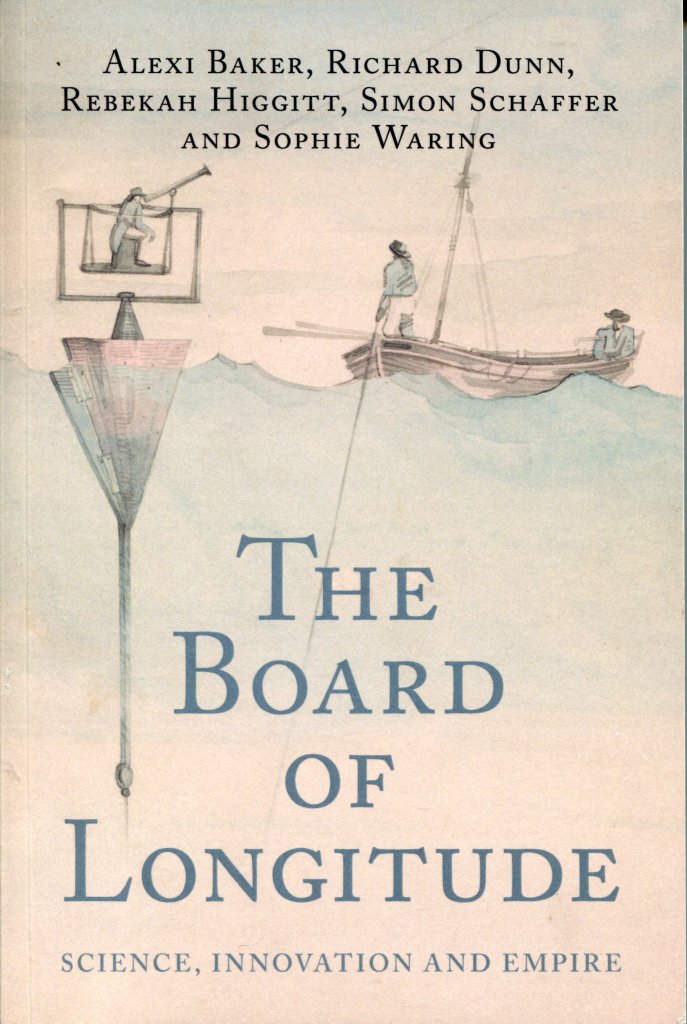
In 2010, the University of Cambridge alongside the National Maritime Museum in Greenwich initiated a six-year research initiative titled “The Board of Longitude 1714–1828: Science, Innovation and Empire in the Georgian World,” spearheaded by Simon Schaffer for Cambridge with Richard Dunn and Rebekah Higgitt representing Greenwich. This project sought to create the first all-encompassing history of the British Board of Longitude, investigating its evolving role as a significant entity in the culture of the Georgian era.
The team comprised postdoctoral researchers Alexi Baker and Nicky Reeves, doctoral candidates Katy Barrett, Eóin Phillips, and Sophie Waring, as well as Engagement Officer Katherine McAlpine. Throughout its duration, the group generated a blog and various academic materials, including monographs and doctoral theses. Notable publications featured Richard Dunn’s “Navigational Instruments” (2016), “Navigational Enterprises in Europe and Its Empires” edited by Dunn and Higgitt (2015), and “Maskelyne Astronomer Royal” authored by Rebekah Higgitt (2014). Katy Barrett’s doctoral dissertation evolved into the book “Looking for Longitude: A Cultural History” (2022).
Dunn and Higgitt organized a significant exhibition at the National Maritime Museum, culminating in the book “Finding Longitude: How Ships, Clocks and Stars Helped Solve the Longitude Problem” (2014). The concluding report, titled “The Board of Longitude: Science Innovation and Empire,” penned by Baker, Dunn, Higgitt, Schaffer, and Waring, is set to be published by Cambridge University Press in 2025.
This publication encompasses a thorough timeline, an expansive introduction, and chapters that offer a chronological narrative of the Board’s history alongside particular facets of its operations dating back to the 1760s. Each chapter functions independently and is suitable for separate publication, serving as a resource for anyone intrigued by specific incidents within the British longitude narrative. The research presented in this book is outstanding, skillfully composed, and features illustrations, a glossary, bibliography, and index.
While the authors concede that the work regarding this maritime historical episode is not yet complete, the project and the subsequent volume signify a significant contribution to high-caliber historical research. The book serves as an essential resource for those fascinated by the subject, establishing elevated standards for forthcoming historical research endeavors.