**The Pantheon’s Enduring Concrete Dome: A Marvel of Ancient Engineering**
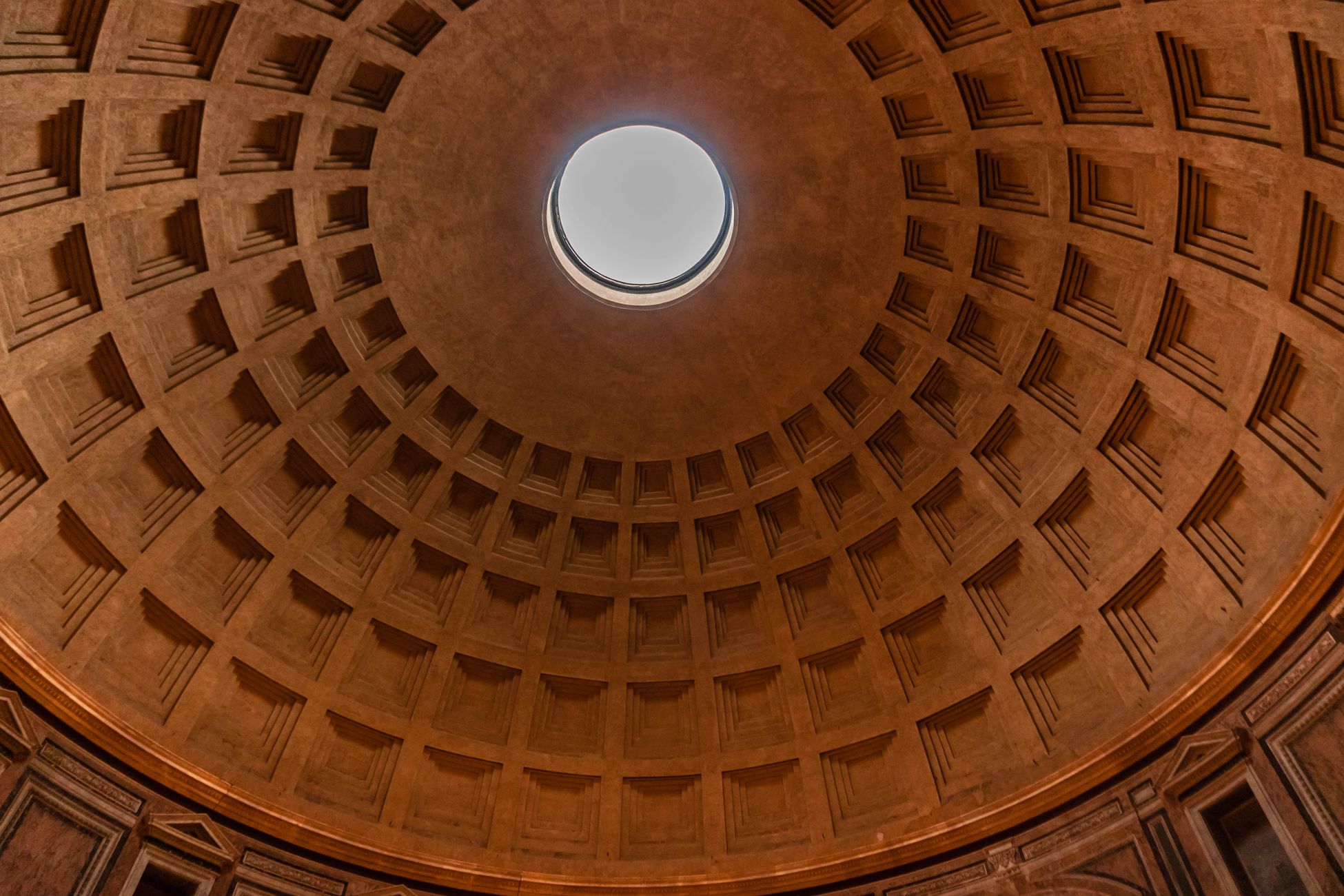
Constructed during the reign of Emperor Hadrian around 128 CE, the concrete dome of the Pantheon in Rome stands as a symbol of ancient engineering expertise. Spanning 142 feet with a 27-foot oculus at its apex, this dome holds the title of the largest unreinforced concrete dome globally. Its remarkable durability stems from a carefully graded mix of lime, seawater, volcanic ash, and differing aggregate densities, resulting in a lighter mixture as it rises.
**An Achievement of Ancient Creativity**
Erected on the location of Marcus Agrippa’s temple, Hadrian maintained the original inscription while building a structure that was groundbreaking for its epoch. The dome, measuring 43.3 meters in diameter, rests on a drum of equal height, allowing a perfect sphere to fit within. Its magnificence remained unparalleled until the Renaissance.
**Ingenious Structural Design**
The dome’s enduring robustness is attributed to the gradient of aggregates, which reduces the weight of the material as it ascends. At the base, dense travertine and brick aggregates transition to lighter volcanic tuff and pumice near the oculus, thereby optimizing weight distribution. The thinning walls and cleverly crafted oculus further fine-tune this equilibrium.
**Self-Repairing Roman Concrete**
The resilience of Roman concrete extends beyond its structural composition. Recent research has revealed its self-healing capabilities, linked to unintentional lime clasts formed during “hot mixing.” When fractures occur, these lime inclusions dissolve and transform into calcium carbonate, effectively sealing the cracks—a phenomenon that has been mimicked in contemporary studies.
**The Influence of Seawater and Lasting Legacy**
Marine structures from the Roman period showcase concrete that continues to harden over time due to reactions with seawater and volcanic ash. While the Pantheon is not a marine structure, it exhibits similar robust traits, as evidenced by its ongoing self-healing process related to micro cracks.
**The Pantheon’s Resilience Against Modern Challenges**
Even with technological advancements, contemporary concrete does not possess the durability of its Roman progenitor. Portland cement constructions have a significantly shorter lifespan. Nevertheless, new investigations aim to incorporate Roman methodologies to improve the longevity and sustainability of modern concrete.
**A Testament to Rome’s Eternal Heritage**
Currently functioning as the church of Santa Maria ad Martyres, the Pantheon conducts masses and showcases Roman architectural excellence. Nearly two thousand years later, the Pantheon remains a symbol of historical and architectural importance, serving as a testament to the creativity and craftsmanship of its ancient creators.
*Produced with AI assistance. Reviewed by the ScienceBlog.com editorial team before publication.*