In 2010, the University of Cambridge and the National Maritime Museum in Greenwich initiated a six-year research project named ‘The Board of Longitude 1714–1828: Science, Innovation and Empire in the Georgian World.’ Directed by Simon Schaffer, Richard Dunn, and Rebekah Higgitt, the objective was to create the first thorough history of the British Board of Longitude, an essential element in Georgian culture. The research group comprised postdoctoral researchers Alexi Baker and Nicky Reeves, along with doctoral students Katy Barrett, Eóin Phillips, Sophie Waring, and Engagement Officer Katherine McAlpine.
Throughout its duration, the project established itself as a significant benchmark in the golden era of science history blogging. Alongside various academic papers, it produced three doctoral theses, two of which are yet to be published, and several monographs including Richard Dunn’s “Navigational Instruments” (Oxford, 2016), the edited collection “Navigational Enterprises in Europe and Its Empires” by Dunn and Higgitt (Basingstoke, 2015), and Rebekah Higgitt’s “Maskelyne Astronomer Royal” (London, 2014). Katy Barrett’s “Looking for Longitude: A Cultural History” (Liverpool, 2022) stemmed from her doctoral thesis.
Exhibition efforts were also a crucial component of the project, with Dunn and Higgitt coordinating a significant exhibition at the National Maritime Museum in Greenwich that later traveled internationally. In conjunction with this, they penned the widely praised book “Finding Longitude: How Ships, Clocks and Stars Helped Solve the Longitude Problem” (Glasgow, 2014).
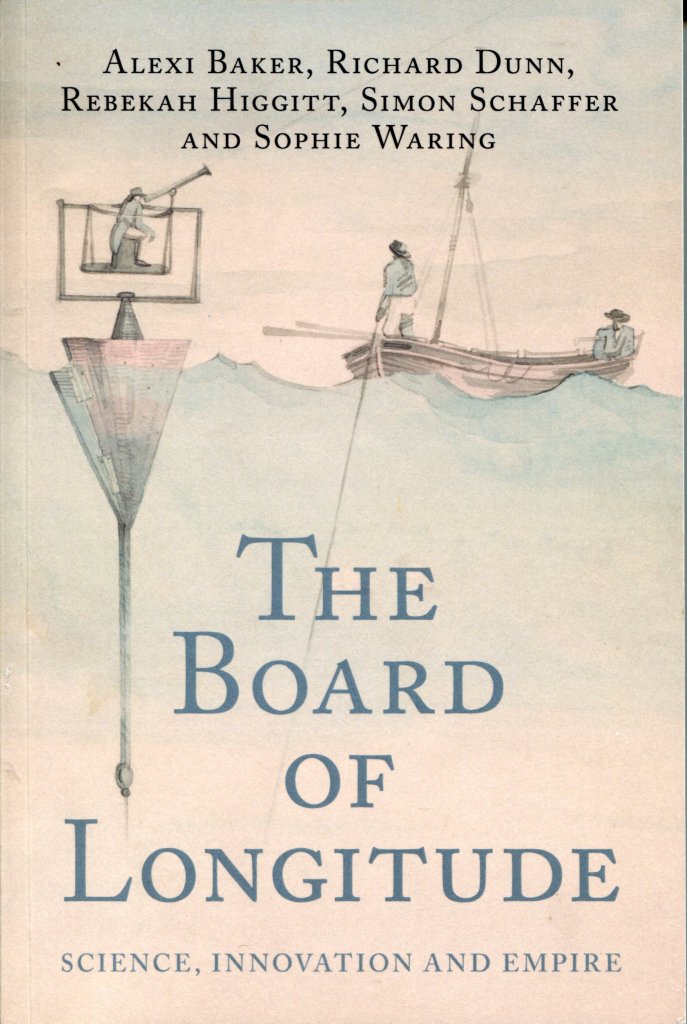
With the project’s completion, the book “The Board of Longitude: Science Innovation and Empire” (CUP, 2025) by Baker, Dunn, Higgitt, Schaffer, and Waring presents a comprehensive narrative of the Board’s history. However, the authors openly recognize that numerous questions remain unanswered. They emphasize that further exploration of the extant documents of the Board of Longitude and other related archives is necessary.
The book opens with an extensive timeline of the British efforts to determine longitude and an introduction that provides a coherent standalone discussion of the subject. The following chapters offer a chronological narrative of the Board’s history and examine specific facets of its endeavors, each capable of individual publication with slight adjustments.
Accompanied by illustrations, an extensive glossary, and a detailed bibliography, the book concludes with a helpful index. The authors contend that although the research on this crucial maritime historical event is not complete, their project has established a high standard for research and become an essential resource for anyone interested in the subject.