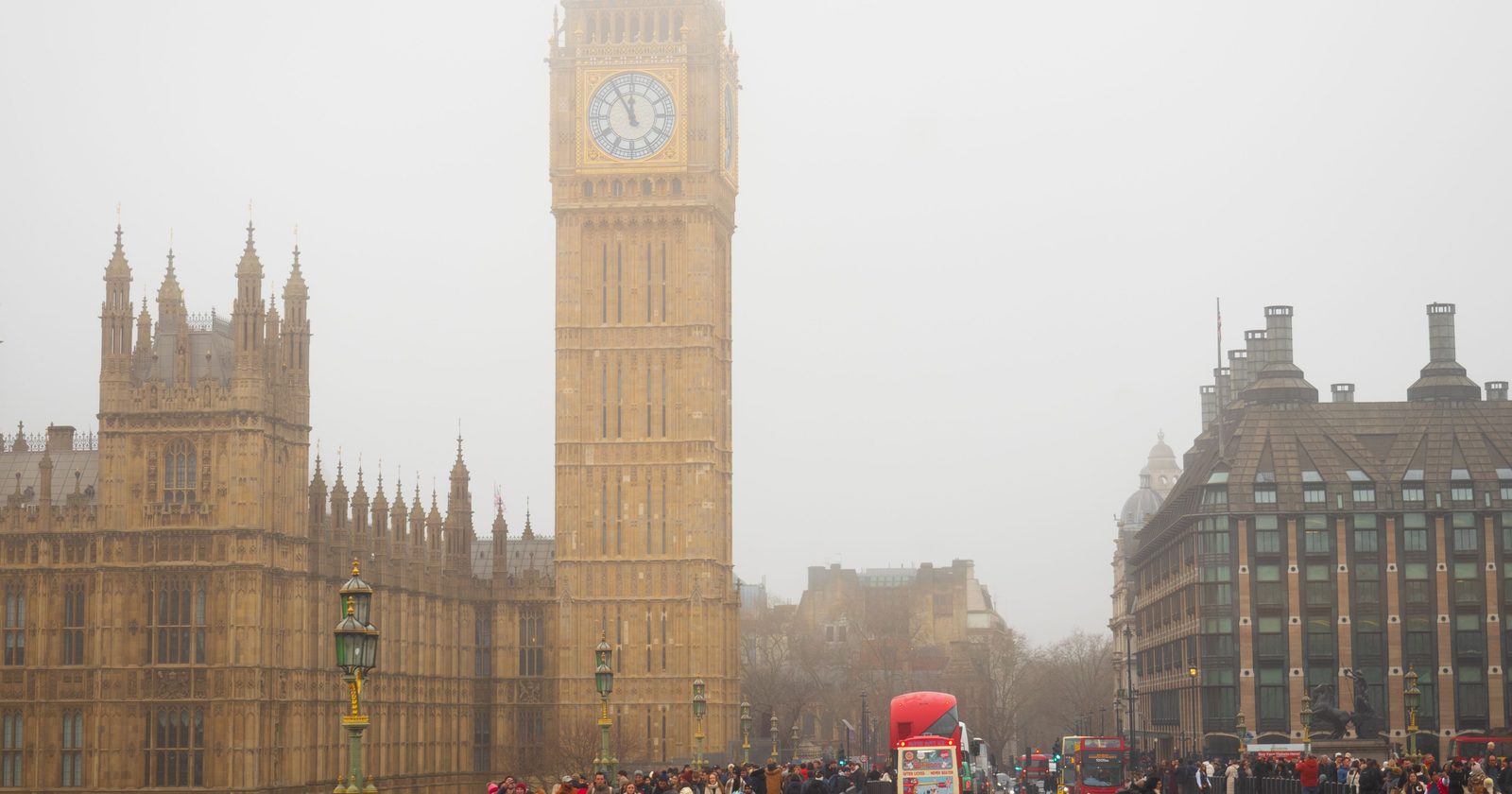
The bell most commonly associated with London has been fractured since 1859. The chime you hear every hour is not emitted by an intact bell. Instead, it emanates from a bell that developed a defect shortly after it began functioning, was rotated 90 degrees, and was left with the crack untouched.
The narrative is concise and straightforward, which contributes to its effectiveness as a tour guide highlight. Below is the account of what occurred, how it was amended, and the reasons for leaving the crack in situ.
## What precisely went awry in 1859
### The bell that fractured
This was already the second bell produced. The first, crafted by John Warner & Sons, fractured during testing and could not be utilized, prompting the metal to be dismantled and melted down for a successor. That successor was created at the Whitechapel Bell Foundry in 1858, weighing 2.5 tonnes less than its predecessor.
The Great Clock commenced its operation on 31 May 1859, with the Great Bell sounding for the first time on 11 July. It did not endure the summer. By September, the bell had fractured anew after being struck by a hammer that was excessively heavy.
### The four years of silence with a quarter bell in place
Instead of recasting for a third time, Westminster opted to leave the bell undisturbed, assigning the task to a smaller one. Big Ben remained mute for four years, during which the largest of the four quarter bells took over the hour strikes.
For four years, the profound note that Londoners had briefly become familiar with was absent. The hour was indicated instead by one of the smaller bells that typically produce the Westminster Quarters before the Great Bell tolls.
## How the solution was implemented
The resolution arrived in 1863 from Sir George Airy, the Astronomer Royal, and it did not involve a repair in the conventional manner. No welding, filling, or recasting occurred. The entire strategy focused on navigating around the damage rather than rectifying it. Three steps accomplished this.
The first measure was to cease striking the cracked area. Records from Parliament indicate that Big Ben was rotated 90 degrees to ensure the hammer would hit an untouched section of the bell. This quarter turn aligned undamaged metal with the hammer. The crack remained intact; only the point of contact shifted.
If a heavy hammer contributed to the bell’s fracturing, a lighter hammer was the solution. Airy’s answer involved swapping the original hammer for a smaller version. The current hammer weighs approximately 200 kilograms, impacting a bell that weighs 13.7 tonnes.
The final step is what visitors are eager to witness. A small square was cut into the bell at the crack to prevent it from extending further. Parliament records that both the crack and the cut are still visible today.
The concept is straightforward: removing metal at the end of a crack can disrupt the propagation path and decrease stress concentration there. The square did not restore the bell to its original state but helped prevent the existing crack from worsening.
## Why the crack remains
A common inquiry is why, over a century and a half, no one has simply replaced or repaired the bell. One reason to refrain from interference is that the crack has become a recognized part of the bell’s sound.
Parliament characterizes the Great Bell, when struck with the smaller hammer, as producing a “soulful E note.” Repairing or replacing the bell could alter that familiar tone.
Hugh Hunt, a Reader in Engineering Dynamics and Vibration at Cambridge, argues for maintaining the status quo: “The cracked bell has a unique sound that we have all grown to appreciate, so perhaps it’s best to leave it as is.” A cracked bell that resonates beautifully is more valuable than a flawless one that does not.
## How to experience it and hear it for yourself today
The crack and the square cannot be seen from the street. To view them, one must ascend inside the Elizabeth Tower, which was renamed from the Clock Tower in 2012, and stand in the belfry where the bell is located.
Parliament organizes official guided tours of the tower that lead to the bells. Prepare for the stairs: the standard tour involves climbing a 334-step spiral staircase, and the ascent and descent occur without an elevator. The tour lasts up to 90 minutes, passing the clock mechanism and the backs of the four dials on route. Each dial measures 6.9 meters across.
Current public ticket prices are £55 for adults and £35 for children aged 11 to 17. Tickets are made available three months in advance on the second Wednesday of each month. UK residents can also request a complimentary Big Ben tour through a Member of the House of Commons, though availability is limited.
There’s no need to climb anything to hear the result of Airy’s solution. Each time the hour tolls, the deep note resonating across Westminster is the sound of a cracked, quarter-turned bell being struck by