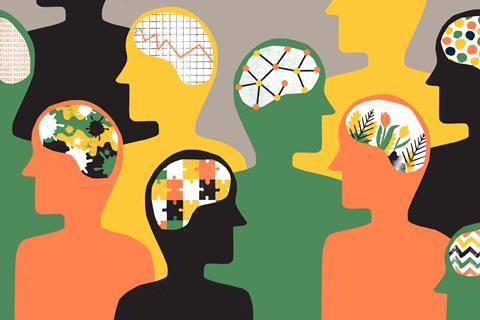
Neurodivergent learners are more inclined to find it challenging to reason consistently through structural chemistry problems compared to their non-neurodivergent counterparts, according to a recent study. While this led to a decrease in overall accuracy, these students demonstrated heightened self-awareness regarding their learning and reasoning habits, with many crafting personalized strategies to mitigate these challenges. A deeper comprehension of these alternative cognitive approaches, along with their respective strengths and weaknesses, could guide the creation of more inclusive coursework and assessment methods, helping to diminish the obstacles encountered by neurodivergent individuals in the field of chemistry education.
Neurodiversity represents the inherent variation in how people process and respond to information and includes a spectrum of identities such as ADHD, autism, and dyslexia. Each of these distinctions can affect how a person tackles problem-solving, sometimes beneficially and at other times disadvantageously; however, the exact ramifications of neurodiversity in the realm of chemistry remain unclear.
Chemistry requires a diverse array of reasoning abilities: mathematical logic, spectral interpretation, and spatial-structural reasoning, all of which may vary among neurodivergent individuals. Specifically, ‘representational competence – the capacity to interpret structural representations, translate between them, and apply them to problem-solving – is crucial for all the subsequent courses a student will encounter,’ remarks Maia Popova, a chemistry education researcher at the University of North Carolina at Greensboro, US. ‘Yet we are currently unaware of how neurodivergent students utilize their distinctive strengths and address their challenges to overcome this.’
To explore this inquiry, Popova and PhD candidate Audrey Gay enlisted 86 undergraduate students enrolled in organic chemistry classes at a US university, with 30% of them identifying as neurodivergent. The students engaged in a computer-based structural translation exercise, evaluating their capacity to shift between wedge and chair representations across 40 distinct molecules. All participants completed the exercise within a similar timeframe and reported similar confidence levels; however, neurodivergent individuals, on average, exhibited moderately lower accuracy than their non-neurodivergent peers.
The researchers then conducted a follow-up interview, prompting students to articulate their reasoning processes for eight of the problems. These discussions revealed that non-neurodivergent students were more prone to adopting a consistent and systematic method that resulted in a higher level of accuracy. Conversely, the neurodivergent participants often relied on self-created rules, such as wedges always indicating an axial group, or alternated between various strategies when encountering difficulties, which frequently led to unclear explanations and diminished accuracy. ‘We discovered that a larger portion of neurodivergent students fit into these inconsistent or unproductive reasoning patterns, but we also observed that they engaged in significant reflection about their actions and reasoning, relying more on specific self-accommodating strategies to assist them in solving the problems,’ clarifies Gay.
Overall, neurodivergent students noted significant differences in how they learned compared to their non-neurodivergent peers. They underscored particular challenges, such as maintaining focus during lengthy lectures and experiencing visual overload on densely packed slides, significantly hampering their ability to absorb new information. Consequently, many developed techniques like annotation systems, personal routines, and utilization of online resources to counter these challenges. ‘What individuals believe about themselves holds substantial power, and they firmly believe that their identity influences their learning,’ states Popova. ‘Ultimately, we aim for their diligent efforts in developing these self-accommodation strategies to align with what instructors and university administrators offer in terms of resources.’
For Kevin Morgan, a chemical education expert at Queen’s University Belfast, UK, this research represents a highly encouraging initial step in an insufficiently explored domain. ‘This is what universal design for learning strives for – realizing that everyone faces distinct challenges and barriers and striving to structure your content and assessments in a way that accommodates differences while not reinforcing them,’ he notes. ‘The variance observed was certainly not in capability, and I would like to see this research broadened to encompass other neurodiversities, intersectionalities, and a larger participant pool.’