In daily European conversations, the names of a select group of scientists are prominently recognized by the general populace. Among these are influential figures like Copernicus, Galileo, Descartes, Newton, Darwin, Einstein, and Curie, known for their revolutionary contributions to both science and philosophy. However, the specifics of their achievements are frequently clouded by clichés and myths. A legendary individual from a considerably earlier time deserving of similar acknowledgment is Archimedes of Syracuse (c.287–c.212 BCE), esteemed as a mathematician, physicist, engineer, and astronomer. Although solid facts about Archimedes’ life are scarce, certain phrases and accomplishments, such as “Eureka” and “Give me a place to stand,” are largely attributed to him, solidifying his place in popular culture amidst a blend of reality and folklore.
Archimedes is celebrated in the field of mathematics, particularly for establishing the method of exhaustion, a predecessor to integral calculus, even as his contributions extend to engineering, physics, and astronomy. This method is closely associated with Archimedes, at times overshadowing the prior innovative efforts of Eudoxus, his Greek forerunner. Nevertheless, Archimedes’ mathematical pursuits exhibit significant depth and intricacy that surpassed those of his predecessors, rejuvenating interest in his work during the Renaissance and prompting developments in areas like calculus.
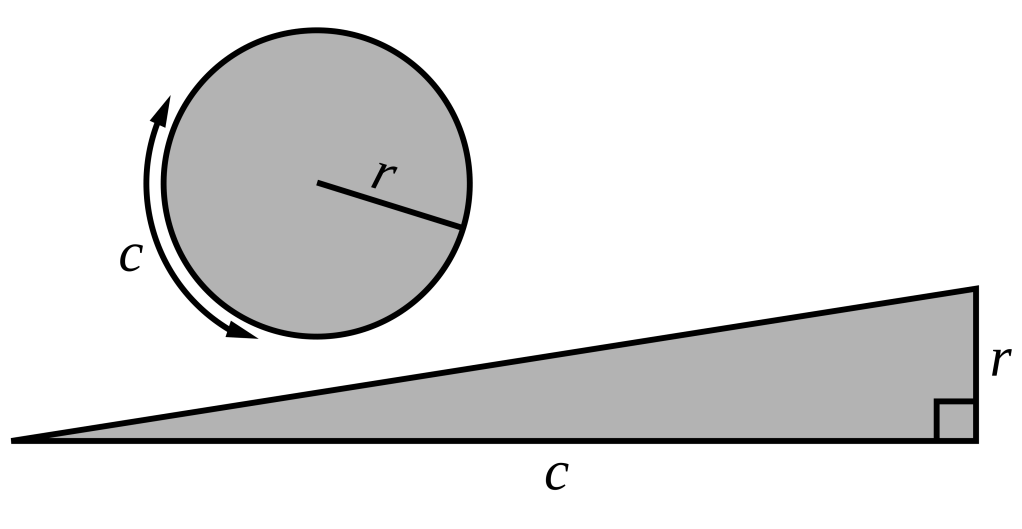
The method of exhaustion put forth by Archimedes is vividly depicted in his work “Measurement of a Circle.” In this text, he computed the value of Pi by inscribing and circumscribing polygons around circles, achieving bounds that defined 223/71 < π < 22/7, a technique showcasing his expertise in mathematical reasoning. Another notable work of his, "Quadrature of the Parabola," examines the area of parabolic segments, laying down concepts that anticipate integral calculus—a reflection of his deep comprehension of geometric properties and series.
The influence of Archimedes extended into the Early Modern Period, inciting a revival that reintroduced ancient techniques into the transforming realm of modern science. However, his lost works were not rediscovered until the 20th century, unveiling insights into his methodologies, including his determination of tangent lines and his exploration of proto-calculus ideas. Although his work did not have a direct impact on the formal creation of calculus due to its later rediscovery, its sophistication and creativity highlight Archimedes' unmatched contributions to the foundations of mathematics and its contemporary extensions.
Therefore, while the life of Archimedes remains enshrouded in enigma, his scientific heritage continues to shed light on the path from ancient to modern scientific thought, connecting the spaces between geometric studies and the rise of calculus, firmly establishing his name among the great thinkers of history.