**Nicolaus Steno: The Multifaceted Anatomist Who Influenced Contemporary Science**
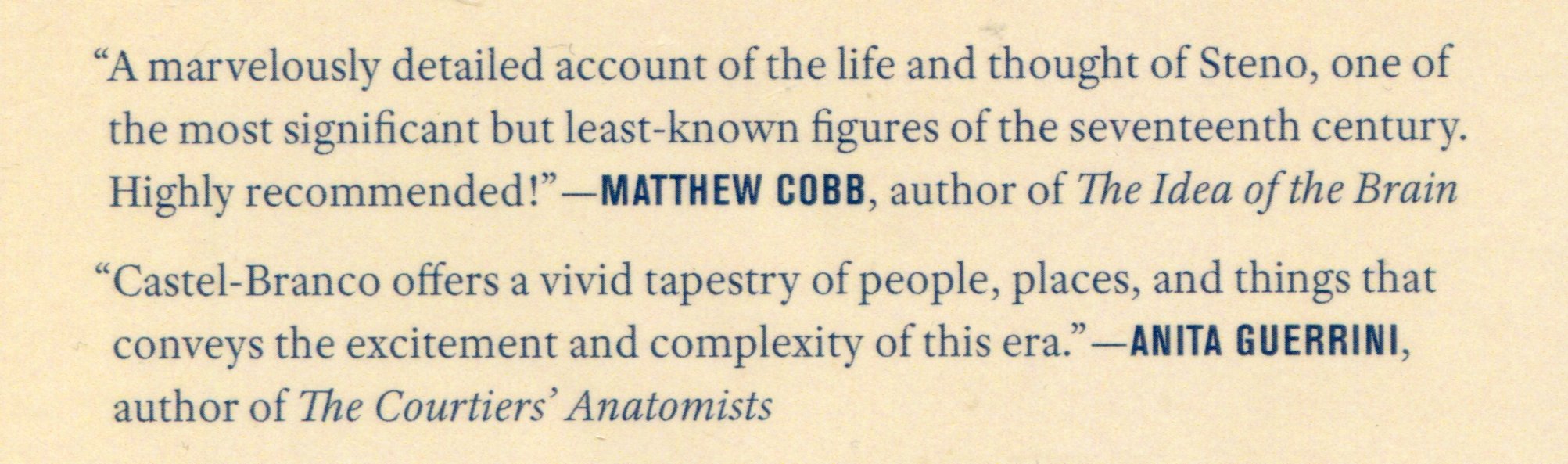
The impact of Nicolaus Steno, a distinguished 17th-century thinker, is once more highlighted through Nuno Castel-Branco’s detailed biography, “The Traveling Anatomist: Nicolaus Steno and the Intersection of Disciplines in Early Modern Science.” This vital work not only narrates the journey of a groundbreaking scholar but also acts as an enlightening examination of interdisciplinary study during an era when the confines of science were undergoing transformation.
Steno (1638–1686), acclaimed for his revolutionary contributions to anatomy, palaeontology, and geology, redefined what it meant to be a scholar in his day. Often labeled as a polymath, Castel-Branco disputes this designation, contending that Steno embodied a “targeted interdisciplinarity.” While polymaths of the time, such as Athanasius Kircher and Leibniz, pursued all-encompassing knowledge, Steno was more discerning, utilizing concepts from various fields to address specific scientific challenges. His approach emphasized disciplined learning and note-taking, prioritizing the integration of knowledge with accuracy over mere breadth.
Steno’s scientific endeavor, thoroughly chronicled by Castel-Branco, initiated in Copenhagen where his passion for mathematics was cultivated in his father’s goldsmithing workshop. This foundational experience paved the way for his enduring quest for knowledge. Against the backdrop of the Swedish siege of Copenhagen in 1658-59, Steno took advantage of a year-long academic break to compile a “Chaos” manuscript—a pivotal point in his interdisciplinary emphasis, encapsulating ideas from a range of sources.
His ensuing journeys across Europe connected him with prominent thinkers and dynamic academic circles. In the Netherlands, he built his reputation as a skilled anatomist. This phase of his career was marked by an inventive fusion of chemistry, mathematics, and mechanics, an approach supported by peers and mentors in the Low Countries.
Steno’s relocation to Paris signified another era of scientific achievement, highlighted by public dissections that displayed his anatomical expertise. Here, his alliance with Jan Swammerdam, a Dutch biologist, was crucial, nurturing mutual intellectual growth anchored in the evolving field of microscopy.
Florence emerged as a critical point for his evolution, both scientifically and spiritually. By joining the Medici’s Accademia del Cimento, Steno engaged in pioneering work on muscle geometry and stratigraphy. Castel-Branco dispels the myth of a sudden revelation during a shark dissection that allegedly led Steno to identify shark teeth fossils, instead offering a nuanced perspective on his gradual transition from anatomy to geology.
In tandem with his scientific pursuits, Steno underwent a significant spiritual transformation, converting from Lutheranism to Catholicism in 1667. His religious devotion deepened, culminating in his ordination as a priest and subsequently as a bishop, reflecting his multifaceted identity that harmonized faith with logic—a theme that Castel-Branco explores with thoroughness and insight.
Nuno Castel-Branco’s work is not merely a biography of Steno but a narrative embedding him within the vibrant scientific context of 17th-century Europe. Steno’s relationships with colleagues, his navigation through the intellectual disputes of his era, and his enduring impact on disciplines like stratigraphy and geology are articulated with academic accuracy. “The Traveling Anatomist” serves as a definitive biography for any readers drawn to the history of science, presenting an academic work that is both thorough and engaging.
For those who value history intertwined with scientific progress, and for those captivated by the intricacies of scholarly life during one of science’s most pivotal moments, Castel-Branco’s biography of Nicolaus Steno is an essential read.