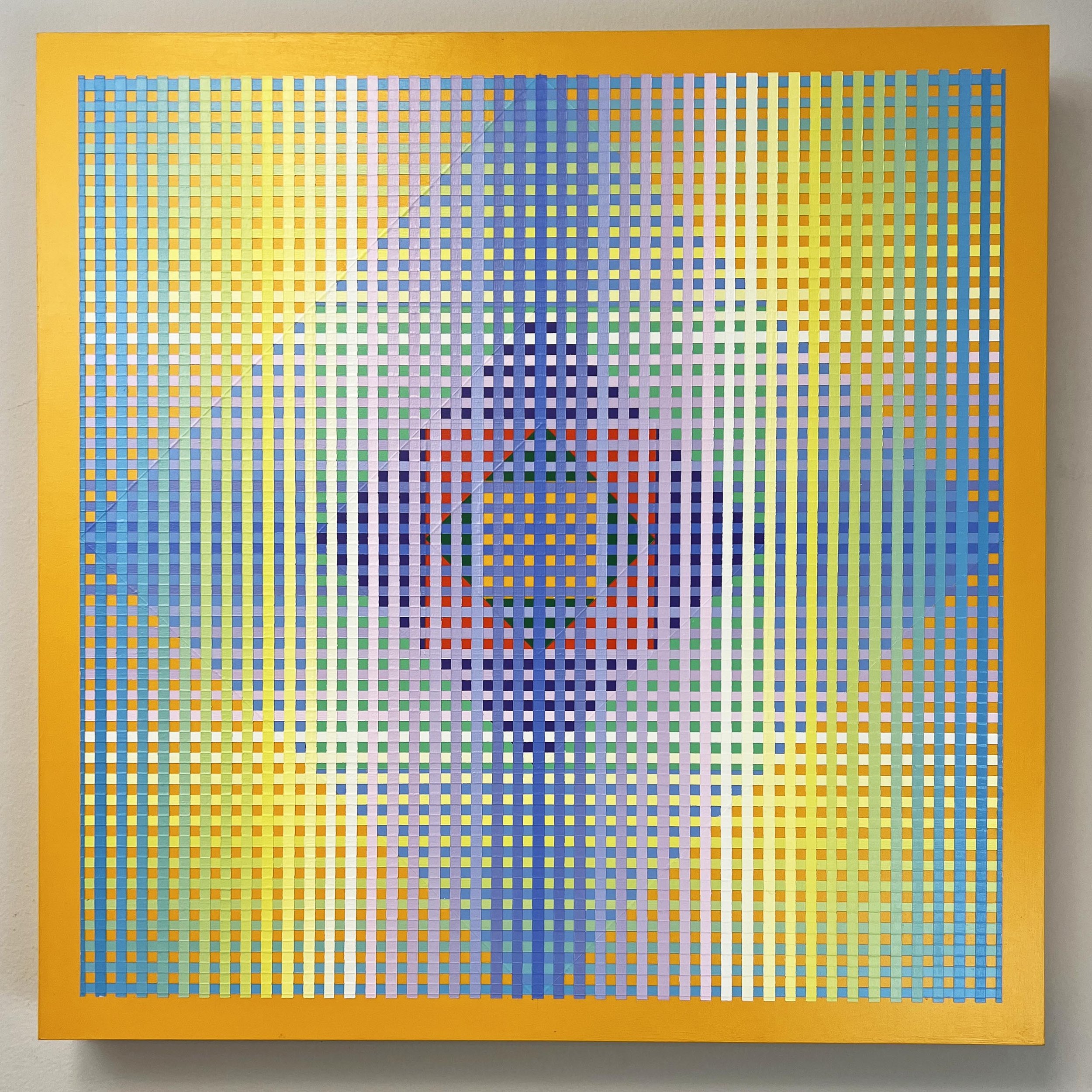
The Visual Phenomenon of Chromostereopsis: An Investigation
Chromostereopsis is an intriguing visual phenomenon that impacts individuals uniquely. This effect is evident in specific images where colors seem to occupy different depths, crafting an illusion of three-dimensionality on a two-dimensional surface. Some viewers might not perceive anything unusual, observing merely a blue iris within a red eye. Conversely, for others, a profound depth illusion is present, where the colors appear to be at varying distances.
Amplifying the Effect:
– Rapidly blinking or observing in an dimly lit environment can sometimes enhance the illusion.
– Elevating the brightness of the screen might also increase the perception of depth.
– The illusion may fade temporarily before reemerging as one continues to gaze at the image.
The Chromostereopsis Illusion:
– This phenomenon is distinctive as it does not necessitate two separately presented images for each eye, unlike 3D cinema that requires glasses. Instead, chromostereopsis happens with a lone image and demands binocular vision (both eyes open).
– By shutting one eye, the depth illusion disappears, reinforcing the requirement for both eyes to perceive the effect.
Personal Differences:
– Individuals experience varying intensities of the effect; some may observe it more distinctly, while others may not notice it at all.
– There is also variation in which color is perceived as closer. Generally, red is seen as nearer, whereas blue appears more distant. However, some individuals may see this relationship in reverse.
Grasping Chromostereopsis:
– The underlying science of chromostereopsis is not fully comprehended. It is thought that the effect results from the difference in focusing wavelengths of light at the extremes of the light spectrum.
– Those wearing glasses might perceive a stronger effect due to changes in light focusing.
Uses in Art and Design:
– The application of color to generate depth and perception has been a longstanding technique in art, from stained glass to modern digital expressions.
– Certain visual artists may have intuitively harnessed chromostereopsis to enhance depth in their creations.
Further Inquiry:
– Works like the “Mind Hacks” text offer deeper insights into the neuroscience of visual perception and depth illusions.
– Ongoing research in color science continues to investigate phenomena such as chromostereopsis, aiding in a deeper comprehension of its mechanisms and ramifications.
This visual phenomenon is captivating, not only for its capacity to trick the eye but also for the insights it provides into individual differences in perception and the intricacies of human vision.