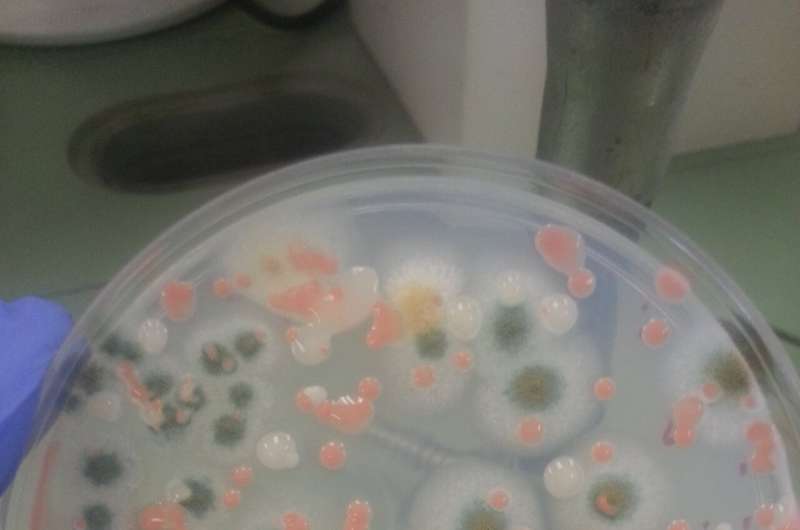
Spacecraft assembly locations at Kennedy Space Center are cleaned to near-sterility, treated with ultraviolet radiation, and inundated with industrial disinfectants. However, when scientists sequenced bacteria obtained during the assembly of the Phoenix Mars lander, they stumbled upon an intriguing finding: 26 completely new species, flourishing specifically due to the harsh conditions designed to eradicate them.
The research, spearheaded by Junia Schultz and Kasthuri Venkateswaran and published in Microbiome, examined genomes from 215 bacterial isolates. Among these, 53 strains belonged to species that had never been documented before. These are not mere contaminants that bypassed protocols. Instead, they are extremotolerant experts that have transformed NASA’s decontamination challenge into an evolutionary advantage.
Metagenomic analysis unveiled that these unprecedented species constitute less than 0.1 percent of the total microbial DNA in cleanrooms, categorizing them as the rare “dark matter” of these facilities. They remain in a state of readiness, equipped with molecular mechanisms that enable them to endure radiation, chemical challenges, and extended periods without nutrients. Even slight changes in their environment, such as a hint of moisture or a loose nutrient molecule, trigger their revival.
How Intense Cleaning Fosters Resilience
The cleanroom setting acts as an evolutionary sieve. By eliminating most competitors, it favors those organisms endowed with specialized resistance mechanisms. Genomic evaluations indicated that species capable of spore formation and various actinobacterial strains harbor resistance-associated proteins that oversee DNA repair, membrane transport under radiation stress, and transcription regulation when confronted with disinfectants.
Numerous species also harbor genes influencing biofilm development, incorporating BolA and CvpA proteins primarily present in proteobacterial members, and YqgA regulators identified in most spore-formers. These biofilms function as molecular shields, enabling bacteria to adhere to surfaces and safeguard themselves against cleaning agents. Regulators of cell fate governing sporulation and competence were observed in all spore-forming species, providing them with extra survival strategies when circumstances worsen.
“The diminished microbial competition in these settings amplifies the discovery of new microbial diversity, aiding in the reduction of microbial contamination and encouraging biotechnological advancements,” Schultz remarks.
The results question prior beliefs regarding non-spore-forming bacteria, which were once considered less adept at long-term survival in arid environments. Several of the newly discovered species illustrate that specialized stress responses can replace sporulation, enabling them to endure for years within spacecraft facilities.
Unforeseen Biochemical Abilities
Some findings ventured beyond survival strategies to actionable applications. Agrococcus phoenicis, Microbacterium canaveralium, and Microbacterium jpeli were all found to possess biosynthetic gene clusters for epsilon-poly-L-lysine, a natural preservative utilized in food science and biomedical applications. Two newly identified Sphingomonas species contained genes for zeaxanthin production, an antioxidant critical for human eye health.
Paenibacillus canaveralius carried genes for bacillibactin, essential for iron acquisition in nutrient-deficient settings. Georgenia phoenicis exhibited clusters for alkylresorcinols, compounds with antimicrobial and anticancer attributes valuable in pharmaceuticals and food preservation.
For NASA, comprehending these resilient inhabitants is crucial for planetary safety. Upcoming Mars missions and sample return initiatives necessitate contamination control strategies that regard extremotolerant bacteria capable of surviving spacecraft voyages. The research indicates that even with strict protocols, some organisms might endure through launch, transit, and landing.
However, the investigation also reconceptualizes cleanrooms as engines of discovery. By filtering out common microbes, these facilities unveil rare biology typically concealed in more populated environments. What originated as an assessment of contamination risk has uncovered microbial diversity with prospective applications in medicine, biotechnology, and our comprehension of life’s thresholds. Absolute sterility, it appears, does not eradicate life. It simply transforms it into forms we are just starting to acknowledge.
[Microbiome: 10.1186/s40168-025-02082-1](https://doi.org/10.1186/s40168-025-02082-1)