Data loss on a laptop can be annoying, but on a quantum computer, it has historically been viewed as a consequence of physics that is irreversible. Researchers from the University of Waterloo have created a technique to back up quantum information without breaching quantum principles. This innovation, detailed in Physical Review Letters, addresses the no-cloning theorem, which asserts that an unknown quantum state cannot be perfectly replicated. While classical computers can easily duplicate files, in quantum systems, a failure of a qubit leads to lost information.
Physicists Achim Kempf and Koji Yamaguchi tackled this issue from a fresh perspective. Instead of directly copying quantum information, they investigated the possibility of distributing it in encrypted segments, which would only make sense upon reassembly. The solution permits distribution, with a significant constraint: the decryption process consumes the key.
### Scrambled Copies That Function Just Once
The researchers created encrypted duplicates. Each duplicate contains a complete representation of the original quantum state, scrambled to seem like nonsensical noise. The key, stored in auxiliary qubits, is entangled with the encrypted duplicates. To retrieve data, a user combines an encrypted duplicate with this key, reconstructing the original quantum state while obliterating the key, thereby adhering to the no-cloning theorem.
Kempf and Yamaguchi’s protocol scales effectively, requiring only a small increase in quantum gate operations for additional encrypted duplicates. These duplicates can be maintained in various locations, with their preservation guaranteed by a master key that can unlock any remaining duplicate after a failure.
### Infrastructure Once Considered Unfeasible
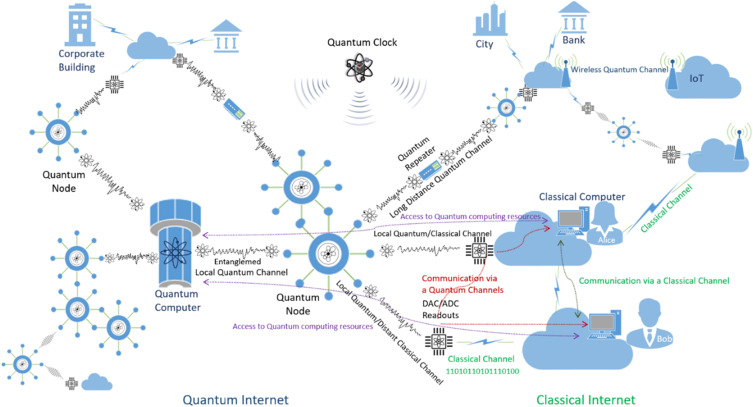
In addition to backups, these results open doors to opportunities such as distributing encrypted duplicates across noisy channels, improving quantum networks, and paving the way for distributed quantum clouds. Quantum radar systems could achieve enhanced accuracy with this method. Redundancy, straightforward in classical systems, is now feasible in quantum systems without presuming unavoidable vulnerability.
Currently theoretical, the large-scale implementation of encrypted cloning requires advancements in quantum control and error correction. Nevertheless, this progress redefines the limits of what is achievable. Quantum information remains fragile but is not fated to be unreplaceable.
*[Physical Review Letters: 10.1103/PhysRevLett.134.010201]*
If our reporting informs or inspires you, please think about donating. Your support enables us to keep delivering precise, engaging, and reliable science news. Independent journalism necessitates time, effort, and resources—your contributions help us continue unveiling important stories. Thank you for supporting our mission to make knowledge accessible and influential.