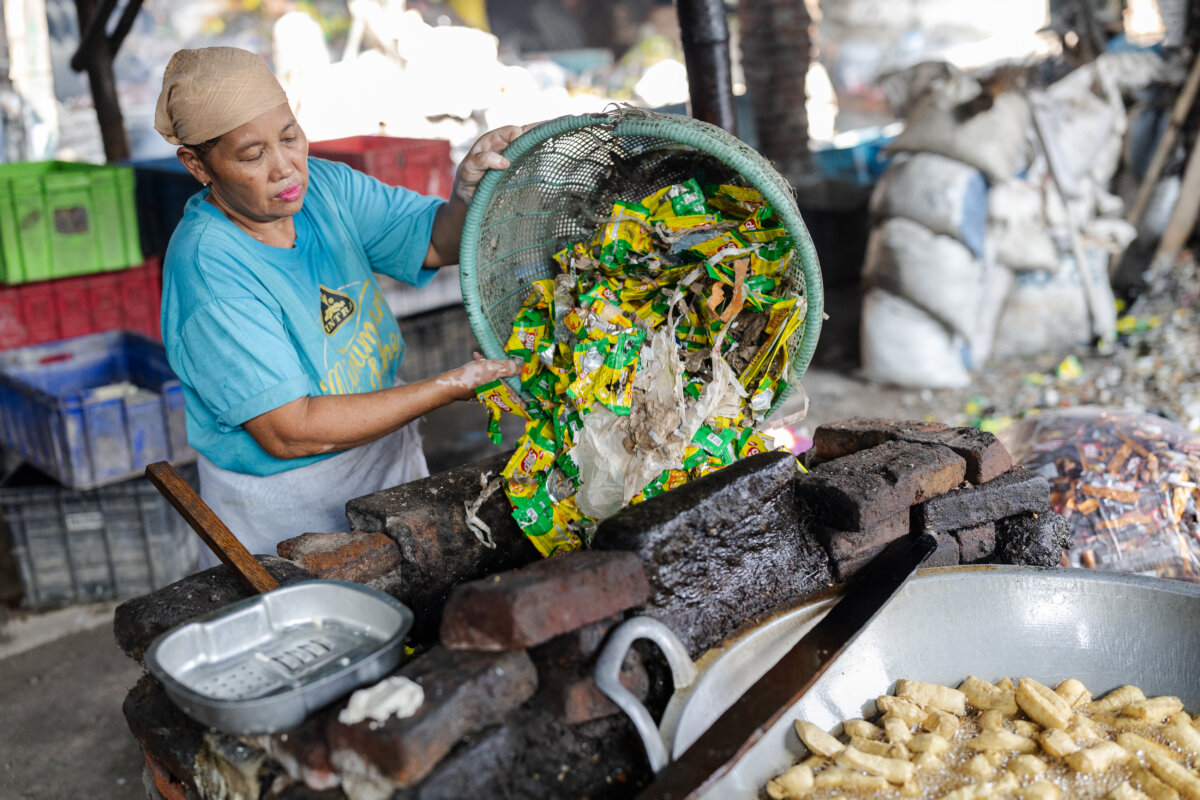
A mother residing in a packed community adds plastic wrappers to her cooking fire due to the high cost of firewood. The environment fills with harsh smoke. Her children inhale it as she prepares the meal. This scenario, unnoticed in many policy discussions, takes place in countless areas where waste management is insufficient and clean energy is out of reach.
Recent findings from Curtin University indicate that the use of burning plastic for domestic energy is more widespread than previously acknowledged. By surveying over 1,000 community workers, government representatives, and local authorities across 26 nations in the Global South, the research revealed that one-third of those surveyed recognized families utilizing plastic not only to discard waste but also for cooking, heating their homes, and lighting fires. Many participants had seen it themselves, with some having engaged in the practice.
This phenomenon arises where two crises intersect: unreliable waste management and energy deprivation. Households depending on basic stoves, three-stone fires, or charcoal burners can easily toss in plastic bags, bottles, and packaging along with wood or charcoal. Researchers reference this as “fuel stacking,” which exacerbates toxic emissions. The study, published in Nature Communications, highlighted that plastic burning is most prevalent in Sub-Saharan Africa and other low-income areas where biomass fuel availability has diminished as urban populations rise.
PVC Listed Third Among Burned Plastics
While not all types of plastic are equally hazardous, the most frequently burned varieties include some of the most dangerous. Polyvinyl chloride, or PVC, commonly used in pipes and packaging, ranked third on the list. Its combustion releases dioxins and furans, chemicals that linger in the environment, build up in food webs, and are associated with cancer, immune dysfunction, and reproductive issues.
“People engage in this because they lack safer options, attributed to root causes like severe energy poverty, prohibitively priced cleaner fuels, and insufficient waste services,” explains Peta Ashworth, co-author and CIET Director.
Sixty percent of those surveyed suspected these toxins are polluting local food and water supplies. The smoke does not merely linger in the atmosphere but settles on crops, permeates water sources, and blankets cooking surfaces. Women, children, the elderly, and individuals with disabilities suffer the greatest exposure due to their increased time spent near indoor fires.
Lead researcher Bishal Bharadwaj points out that this issue has evaded global scrutiny precisely because it occurs within marginalized groups. Families burn everything from bags and wrappers to bottles, fulfilling basic needs with whatever fuel they can find. Advising them to cease the practice without providing alternatives merely drives it further indoors, heightening exposure.
Access to Energy, Not Just Awareness
The outcomes challenge the portrayal of plastic incineration as mere ignorance or negligence. It is a systemic issue. With plastic production projected to triple by 2060, the intersection of waste and energy scarcity will worsen unless waste management improves and clean cooking options become accessible to the most impoverished urban families.
Co-author Hari Vuthaluru underscores the long-term implications. These emissions engender a hidden health crisis in communities already confronted with considerable struggles. The study identifies biogas, electricity, and other clean cooking methods as vital solutions, but only if they are affordably priced and backed by dependable infrastructure.
This is not merely a tale of pollution but a narrative about the consequences of urban expansion outpacing the systems designed to support it. Plastic incineration will not cease simply because individuals recognize the dangers. It will end when they possess alternative cooking methods and appropriate disposal options for their waste.
Nature Communications: 10.1038/s41467-025-67512-y
If our reporting has been beneficial or inspiring to you, please consider making a contribution. Every donation, regardless of amount, empowers us to continue providing accurate, engaging, and reliable science and medical news. Independent journalism necessitates time, effort, and resources—your support helps ensure that we can keep revealing the stories that matter most to you.
Join us in making knowledge accessible and impactful.