As global initiatives to lower carbon emissions escalate, carbon capture methodologies have emerged as key components in climate change abatement plans. Ocean Alkalinity Enhancement (OAE), an innovative carbon capture strategy, seeks to augment ocean alkalinity to elevate its capacity for absorbing and storing carbon dioxide (CO2), effectively sequestering carbon over extended periods. A recent study by a research team in the US has yielded promising preliminary findings from an OAE trial executed in an open marine setting, showcasing the technique’s potential with minimal ecological disruption.
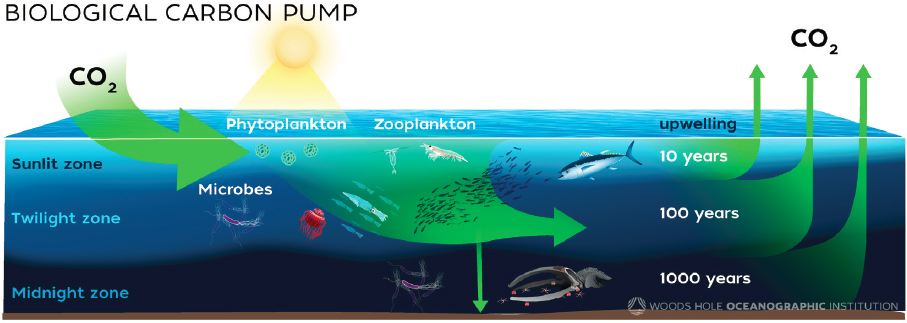
The ocean functions as Earth’s largest carbon reservoir, harboring approximately 38,000 gigatonnes (GT) of carbon—40 times greater than the atmospheric amount and considerably exceeding that found in terrestrial environments. Naturally alkaline, due to minerals and ions dissolved from rocks, shells, and sediments, oceans possess the ability to neutralize acids and absorb atmospheric CO2, which forms carbonic acid that breaks down into bicarbonate and hydrogen ions. Nevertheless, elevated atmospheric CO2 has led to ocean acidification, progressively diminishing its capacity to absorb and store carbon and jeopardizing its functionality as a natural carbon sink.
OAE aims to address this issue by introducing substances like sodium hydroxide to the ocean, thereby enhancing its alkalinity and promoting increased carbon absorption. While ‘alkalinity enhancement’ is often used for restoring lakes and rivers, applying it to oceans carries broader ecological repercussions. The difficulty lies in accurately assessing its success and ecological effects.
This is where the Loc-Ness initiative, spearheaded by the Woods Hole Oceanographic Institution, becomes relevant. The project seeks to thoroughly evaluate the effectiveness and impacts of OAE. In August 2025, a field experiment in the Gulf of Maine off Massachusetts involved dispersing 65,000 litres of sodium hydroxide across a 1km² area, using a tracer dye to observe dispersion in a 3600km² region. This area was meticulously observed with vessels, autonomous underwater vehicles (AUVs), and NASA satellite monitoring for water pH and carbon measurements.
Initial results, shared at the Ocean Sciences Meeting 2026, reveal an increase of 2–10 tonnes of atmospheric CO2 absorption into the ocean over four days, with estimates suggesting an annual uptake of 50 tonnes. Notably, researchers reported no significant negative ecological effects—no alterations in phytoplankton or zooplankton populations and no consequences for higher-trophic organisms.
Ongoing long-term monitoring with AUVs aims to evaluate the physical, chemical, and ecological implications. The developers stress that comprehending real carbon offset levels and the associated energy costs is essential prior to scaling up the technology. Although the Loc-Ness team is not pursuing commercialization, partnerships with companies like Microsoft and Google are underway with Ebb Carbon to utilize OAE techniques for carbon offsetting via alkaline water discharges from desalination processes.
Nonetheless, experts such as Jannes Koelling from the University of Washington advocate for caution, underscoring the necessity of risk assessments and the potential long-term ecological ramifications of such technological interventions in natural frameworks. Historical precedents indicate that human actions within environmental systems can occasionally yield unforeseen adverse effects, thus necessitating thorough evaluation and prudent execution of innovative carbon capture techniques like OAE.