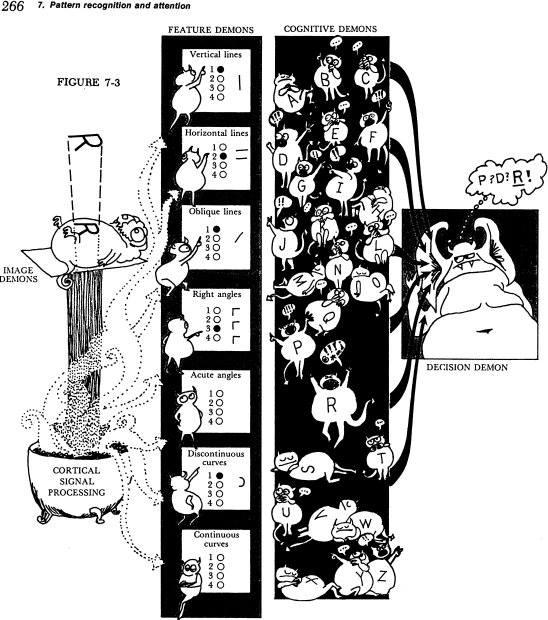
Oliver Selfridge was an early trailblazer in artificial intelligence, celebrated for his contributions to the conceptualization of models that formed the basis for modern AI research. In 1959, he presented the Pandemonium architecture, an innovative model comprising interconnected simple units referred to as “demons,” each carrying out specific functions to collectively achieve complex cognitive tasks. This model greatly influenced the advancement of neural networks, setting the stage for the contemporary machine learning we observe today.
The Pandemonium model attained widespread acclaim in part due to delightful and thought-provoking illustrations by Leanne Hinton, which appeared in Lindsey and Norman’s 1977 textbook “Human Information Processing.” These visuals reflect the model’s complexities with a playful touch, often likened to a child’s nightmare while also conveying a warm, inviting appeal to many.
Selfridge’s diverse career encompassed the authorship of four children’s books and substantial contributions to raising public awareness of NSA’s Echelon program, demonstrating his impact beyond just AI research. Although Pandemonium’s influence persists in psychology and informatics literature, Hinton’s contribution as the illustrator is frequently marginalized.
Efforts to verify Hinton’s identity and obtain permission to display the illustrations have encountered obstacles, indicating the necessity for further investigation into her role in visualizing psychological theories.