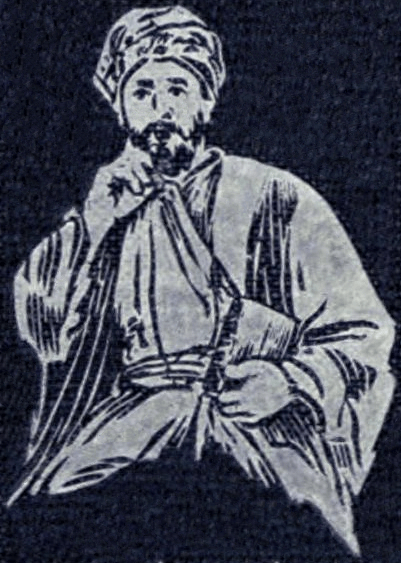
It is a well-known reality that medieval Islamic science achieved remarkable advancements before undergoing a downturn. As historians of science seek to clarify these events, they also face numerous myths that have arisen throughout history. A notably widespread myth suggests that Al-Ghazali, the distinguished Shafi’i Sunni Muslim Iranian polymath, hindered Islamic science with his work “Tahāfut al-Falāsifa” (The Incoherence of the Philosophers). This false belief has been propagated by individuals like Neil deGrasse Tyson.
Tim O’Neill, a noted historian, has already thoroughly dispelled this myth. Moreover, objective evidence further disproves the misconception. The fifteenth-century observatory of Ulugh Beg in Samarquand stands as proof of the ongoing prosperity of Islamic science long after Al-Ghazali’s period.
Sally P. Ragep, in her examination of the dynamic academic setting of Samarquand, highlights the large number of students and scholars involved in mathematical sciences. According to Kāshī, around 500 students were pursuing mathematics across twelve sites in Samarquand. Additionally, investigations into fifteenth-century Islamic astronomical texts reveal a wealth of scholarly activity, with approximately 120 authors producing nearly 489 treatises on subjects ranging from cosmology to time management and astrology. These results, emphasized by thousands of manuscripts located worldwide, highlight the persistent vitality of Islamic scientific pursuits beyond Al-Ghazali’s time.
Consequently, the idea that Al-Ghazali brought an end to Islamic science is baseless. The persistence of abundant scientific work, especially in astronomy and mathematics, disproves this myth, reaffirming the enduring legacy of scientific exploration within the Islamic realm.