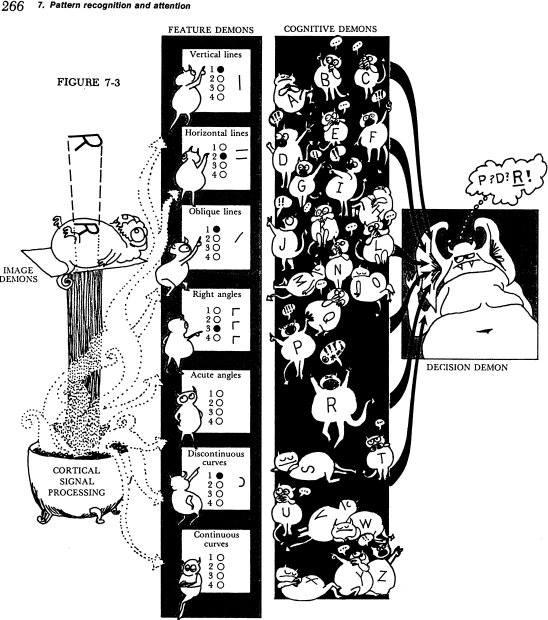
Oliver Selfridge, known widely as a trailblazer in artificial intelligence, made significant advancements in the domain through his groundbreaking 1959 paper on “Pandemonium Architecture.” This framework outlines a cognitive mechanism where many simple, specialized units collaborate to perform intricate tasks, establishing a foundation for contemporary neural networks and machine learning technologies. The Pandemonium model is vividly illustrated in Leanne Hinton’s artwork, included in the 1977 psychology book “Human Information Processing” by Lindsey & Norman. These illustrations, though some have likened them to a child’s nightmare, are fondly appreciated for their relatable representation of complex concepts. Selfridge’s varied life also encompassed writing children’s literature, three marriages, and involvement in revealing the NSA’s Echelon program. Even with the model’s acclaim, Hinton’s artistic contributions frequently go unnoticed. Efforts to reach out to Leanne Hinton, a Professor Emerita of Linguistics, to verify her involvement in creating the illustrations were unsuccessful, leaving her perspective unexamined.