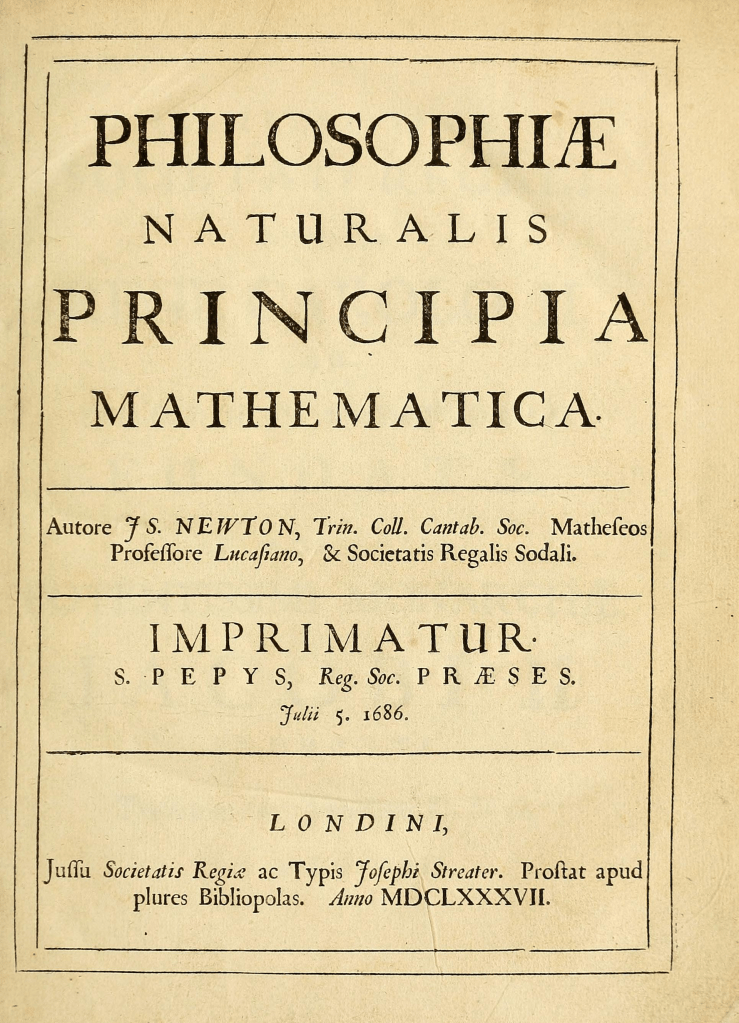
In the exaggeration of mainstream science history, Newton’s _Philosophiæ Naturalis Principia Mathematica_ (_The Mathematical Principles of Natural Philosophy_) is frequently referred to as one of the most crucial, if not the most crucial, works in scientific history. If you inquire why it holds such esteem, most individuals would likely respond that it is due to his discovery of the law of gravity. However, as I often emphasize, Newton did not discover the law of gravity; he validated it, which is an entirely different matter. While this played a pivotal role in understanding the true significance of Newton’s _Principia_, it is not the sole reason. What Newton accomplished with his masterpiece was to establish that there exists only one set of mechanics governing both terrestrial and celestial realms, thereby dismantling a dichotomy in natural philosophy that Aristotle had created two millennia prior.
Aristotle had segmented the universe into two distinct zones: the sublunar, encompassing everything beneath the Moon’s orbit, and the supralunar, containing everything above it. He posited that different rules applied to motion in these two realms, resulting in separate celestial and terrestrial mechanics. The Stoics developed a philosophy that transcended Aristotle’s division, but Aristotle ultimately triumphed in the contest of philosophical systems, and his rigid categorization prevailed from his era through to the Early Modern period.
According to Aristotle, the only natural movement within the sublunar sphere was a direct descent to the earth, for which he proposed a mechanical theory that was fundamentally flawed. He also put forth a theory of projectile motion that was even more erroneous. In the sixth century, John Philiponus began to dismantle Aristotle’s motion theories, demonstrating through experimentation that his fall theory was incorrect and introducing the theory that would evolve into the impetus theory for projectile motion. Various Islamic scholars later adopted and expanded Philiponus’ ideas.
In the fourteenth century, the Oxford Calculatores and the Paris Physicists anticipated much of Galileo’s findings regarding the laws of fall. The sixteenth century saw Tartaglia making advances in projectile motion theory. Throughout this century, others contributed to the discourse on the laws of fall, and Tartaglia’s former pupil, Giambattista Benedetti (1530–1590), articulated much of the theory pertaining to falling bodies that would later be credited to Galileo, a full fifty years before Galileo articulated it.
As the seventeenth century arrived, Guidobaldo del Monte and Galileo proved that a projectile follows a parabolic trajectory, while Isaac Beeckman introduced the accurate law of inertia. Galileo, of course, experimentally validated the correctness of the Oxford Calculatores and demonstrated that Aristotle’s theories of fall and projectile motion were supplanted by the laws we recognize today.
However, Aristotle’s dichotomy between the terrestrial and celestial spheres largely remained intact well into the sixteenth century. For Aristotle, the sole motion occurring in the celestial realm was perfect, uniform circular motion. It was the responsibility of astronomers to devise mathematical models that reconciled the apparent contradictions between this cosmological directive and the actual observed motions of the planets. These mathematical constructs were seen as useful fictions for calculating planetary positions, yet they were not regarded as reflective of reality, as described by the Aristotelian cosmological framework.
In contrast, the terrestrial sphere was composed of the four elements—water, earth, fire, air—and was subject to transformation and decay, while the celestial sphere was made of the fifth element, aether or quintessence, which was eternal and immutable. The planets were thought to be transported in concentric crystalline spheres, propelled by a friction model, with the outermost sphere being moved by the unmoved mover, God, according to the Christian interpretation of the Aristotelian universe.
Aristotle’s assertion that the celestial sphere was eternal and unchanging led him to declare that comets were atmospheric phenomena, and it would be these comets in the sixteenth century that would precipitate the collapse of Aristotle’s cosmology. As early as the fifteenth century, Toscanelli (1397–1482) became the first astronomer to perceive comets as celestial entities and track their trajectories. Simultaneously, Regiomontanus attempted to gauge the parallax of a comet to determine whether it was beneath or above the Moon’s orbit. In the 1530s, a succession of comets sparked renewed discussions among Europe’s leading astronomers regarding the nature of comets and their position relative to the lunar boundary. This discourse coincided with a revitalized interest in Stoic philosophy, which had dismissed Aristotle’s sublunar-supralunar dichotomy and proposed that comets were celestial phenomena. This discussion incited further intense inquiry into the matter.
In the 1570s, a supernova appeared in 1572, followed by a significant comet in 1577. Both events were confirmed to be supralunar, delivering a substantial blow to Aristotle’s cosmology from