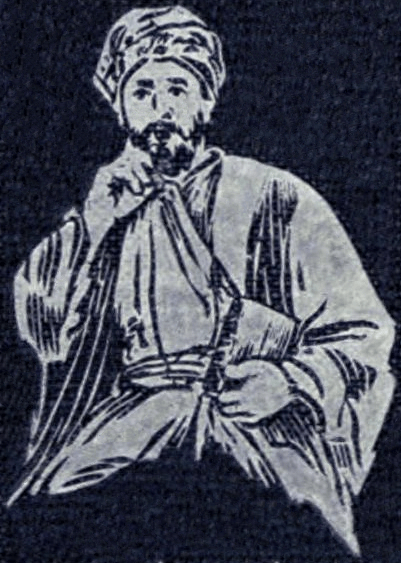
Within the intricate fabric of medieval Islamic science, a scholarly fallacy has endured: that the esteemed polymath Al-Ghazali’s critique of philosophy, particularly presented in his work Tahāfut al-Falāsifa (The Incoherence of the Philosophers), triggered the downturn of Islamic science. This misunderstanding has been sustained by numerous commentators, yet thorough historical inquiries uncover a dynamic and ongoing tradition of scientific exploration extending well past Al-Ghazali’s time.
Al-Ghazali (1058-1111 CE), a monumental personality in Islamic jurisprudence and philosophy, penned Tahāfut al-Falāsifa to contest certain philosophical doctrines he perceived as at odds with Islamic principles. However, to assert that this criticism stifled scientific advancement ignores substantial empirical evidence that challenges such a claim.
Notable historians like Tim O’Neill have dismantled this myth, emphasizing the unbroken scholarly engagement in the Islamic realm after Ghazali. A striking empirical counterargument arises from an examination of the fifteenth-century observatory of Ulugh Beg in Samarquand. This era saw an impressive number of students involved in mathematical fields, as noted by Kāshī, an intellectual figure from that period.
While there may be some exaggerations, Kāshī’s reports suggest a thriving scholarly community thoroughly engaged in scientific endeavors. This activity is quantified in an analysis of fifteenth-century Islamic astronomical literature, documenting approximately 120 authors and 489 works that have survived in countless manuscripts around the world. This collection of work encompassed a wide array of topics, including cosmology, instruments, handbooks, and astrology.
This evidence undeniably demonstrates that Islamic science did not cease with Al-Ghazali. The intellectual atmosphere of Samarquand represents a vibrant interaction with science long after his passing, undermining the decline narrative put forth by figures such as Neil deGrasse Tyson. The myth falters under scrutiny when faced with the recorded continuity and progression of scientific thought in the subsequent centuries of the Islamic Golden Age.
Thus, it is essential to acknowledge that while Al-Ghazali’s theological contributions had profound effects, they did not signal the termination of scientific inquiry in the Islamic domain. Instead, a nuanced perspective reveals that medieval Islamic science continued its pursuit of knowledge, adapting and prospering through intricate historical circumstances.
[1]Sally P. Ragep, Fifteenth Astronomy in the Islamic World, in Rivka Feldhay & F. Jamil Ragep eds., Before Copernicus: The Cultures and Contexts of Scientific Learning in the Fifteenth Century, McGill- Queen’s University Press, 2017, pp. 143-160, p. 144