**Investigating the Vast Realm of Senses**
Humans are commonly educated to believe that they have five main senses: sight, sound, smell, taste, and touch. However, recent scientific revelations indicate that humans might actually possess at least nine senses, and potentially more. Animals also demonstrate a wide variety of sensory experiences, often exceeding human abilities in several aspects. This article examines the intricate and frequently unexpected realm of senses, highlighting both human and animal perceptions that go beyond the traditional five.
**1. Body Awareness**
Proprioception and kinesthesia are the senses that allow humans to perceive their body position and movement, respectively. This sensory system functions autonomously from sight, using muscle spindles that relay information to the brain regarding limb positioning and motion. This capability enables individuals to perform tasks like walking with their eyes closed, underscoring the body’s intrinsic awareness.
**2. Sensation of Pain**
Nociception denotes the sensation of pain, a vital sense for identifying potential threats to the body. Nociceptors, the pain receptors, detect tissue injuries, transmitting signals through nerve pathways to the spinal cord and brain. This mechanism initiates reflex actions to mitigate damage while allowing the brain to interpret these signals for conscious pain recognition.
**3. Sensation of Temperature**
Thermoreception provides humans the ability to perceive heat and cold, employing specific thermoreceptors to sense temperature variations. These receptors share neural pathways with pain receptors, which clarifies why extreme temperatures can be perceived as painful sensations.
**4. Sense of Balance**
The vestibular system situated in the inner ear controls balance. This system consists of three fluid-filled semicircular canals that sense head movements and positional changes. Hair-like sensory cells monitor fluid dynamics within the canals, preserving equilibrium and spatial orientation.
**5. Use of Echolocation**
Certain animals, such as bats and dolphins, utilize echolocation for navigation and hunting purposes. By emitting sound waves and interpreting the returning echoes, these creatures can gauge distances and identify obstacles. While humans primarily depend on sight, some individuals have developed echolocation skills, providing valuable navigational assistance to those with visual impairments.
**6. Detection of Electricity**
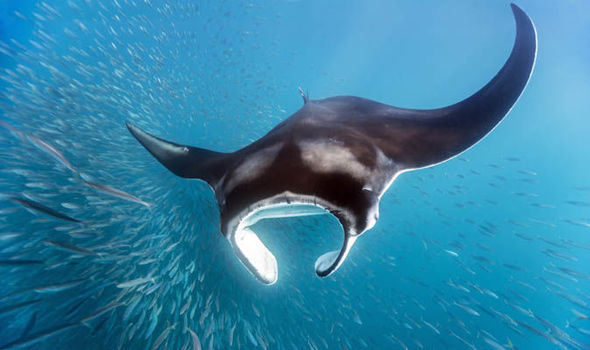
Electroreception, mainly found in aquatic species, allows creatures like sharks and rays to sense electrical currents emitted by other organisms, even those hidden from sight. Electroreceptors like the ampullae of Lorenzini play a crucial role in locating prey. Additionally, bees employ electroreception to perceive the electrical fields of flowers.
**7. Sensing Magnetic Fields**
Magnetoreception enables animals such as birds, turtles, and bees to navigate via the Earth’s magnetic fields. Although it is suggested that humans may possess comparable sensory faculties, as indicated by studies on brain responses to magnetic fields, the precise mechanism is still being explored. This sense supports migration and long-distance travel in animals.
In conclusion, both humans and animals possess a remarkable variety of senses that extend well beyond the fundamental five. These sensory systems, which differ significantly among species, promote interaction with the environment in extraordinary ways. Ongoing research continues to uncover the intricacies of sensory perception, hinting at even more undiscovered capacities that influence our comprehension of the natural world.
**References**
– A collection of sources addressing human and animal senses, referenced and linked within the original article.