**The Neural Pathway That Maintains Distinct Memories**
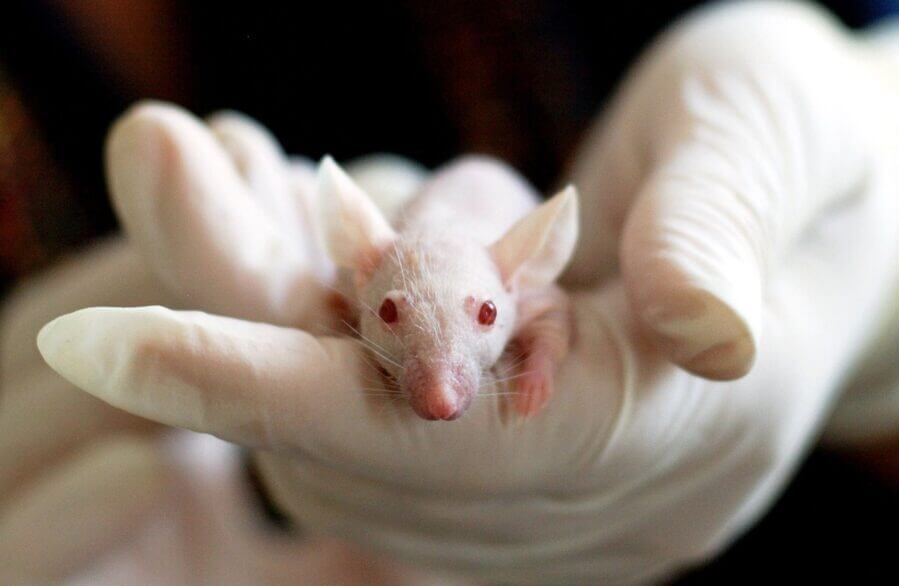
A mouse is positioned within a confined space where it has never experienced an electric shock. The surfaces are smooth and white, the ground exhibits a specific texture, and there have been no adverse events here. Nevertheless, the creature becomes motionless, paralyzed by fear, as if anticipating a shock from a completely different area it encountered a week prior. Something within its brain has connected two unrelated locations, and this connection is attributed to a single brain circuit that has been deactivated.
Normally, that circuit performs the opposite function. Its role is to prevent memories that should remain separate from merging, and a research group at the University of California, Los Angeles has now precisely defined how this process functions.
The issue it addresses is one your brain manages thousands of times daily without your awareness. Each new experience brings a corresponding question: does this relate to something I already know, or is it novel enough to be recorded independently? Getting it right maintains the ability to navigate your environment. Getting it wrong leads to the development of incorrect associations, connecting unrelated events, which is a characteristic of disorders like schizophrenia and bipolar disorder.
For years, the potential culprits were identified, but the mechanism remained elusive. “We have understood for quite some time that the prefrontal cortex and hippocampus collaborate on memory, but the manner in which the prefrontal cortex determines which memories get associated has remained unclear,” states André de Sousa, the postdoctoral researcher at UCLA Health who spearheaded the study.
**Two Queries Each Memory Must Resolve**
It was discovered that two factors influence whether the brain associates two memories: the similarity of the experiences and the duration separating them. Events occurring within a few hours tend to be automatically combined in the hippocampus, the brain’s primary memory repository. However, when the interval extends to several days, a more intentional process comes into play.
This process occurs in a section of the prefrontal cortex known as the ventromedial prefrontal cortex, or vmPFC. The researchers observed its activation, employing tiny microscopes positioned on the backs of mice to monitor individual neurons firing in real-time, whenever a mouse encountered a truly new setting days following a previous one.
Consider it a quality assurance mechanism. Once several days have elapsed, the prefrontal cortex has had adequate time to solidify the earlier memory, so when a new event arises, it performs a comparison. Significantly different? The vmPFC instructs the hippocampus to engage a new set of neurons and record the new memory independently. Quite similar? It refrains, allowing the hippocampus to utilize many of the same neurons, resulting in linked memories. Disrupt the vmPFC’s involvement and that differentiation collapses; the hippocampus begins to merge elements that should remain apart. This precisely describes what occurred to that paralyzed mouse, shocked in one room and conditioned to fear another.
Timing was crucial. When the researchers inhibited the vmPFC in mice exploring two distinct rooms just five hours apart, no alteration was observed; the memories were connected nonetheless.
**A Bidirectional Switch**
This indicates that the vmPFC is not a versatile editor but a specialized entity in the long-term perspective, intervening only after an earlier memory has had sufficient time to solidify. The researchers discovered that the signal moves from the vmPFC to a relay region known as the medial entorhinal cortex, which conveys information to the hippocampus, where a specific kind of inhibitory neuron, a neurogliaform cell, serves as the ultimate gatekeeper determining which neurons are activated.
Moreover, the switch operates in both directions. By obstructing or artificially stimulating that singular pathway, the team could compel memories to merge that ought to have remained distinct, or separate memories that would typically have fused, including those stored close together in time.
The bidirectional control is what de Sousa consistently emphasizes. “We can induce memories to merge that shouldn’t, or maintain separate memories that would usually be linked, simply by manipulating this singular pathway. This indicates that it is a fundamental control mechanism,” he remarks.
A note of caution is warranted. This research is conducted on mice, and a foot shock in a plastic enclosure is a considerable departure from the complex false associations seen in human psychiatric disorders. Whether the same circuit operates similarly in humans remains an unresolved question.
Nonetheless, the conditions in which memory organization fails—schizophrenia, bipolar disorder, certain anxiety disorders—are also the ones characterized by impaired communication between the prefrontal cortex and hippocampus. The same connections deteriorate with age, making memory organization more challenging. Having a specific circuit to reference, rather than a nebulous interaction between two regions, provides researchers with a concrete target. De Sousa notes that the overarching goal is to comprehend how the prefrontal cortex integrates working memory, long-term retention, and decision-making, leveraging existing knowledge to influence what you encode next.
For the time being, there