**The Development and Significance of Click Chemistry in Contemporary Science**
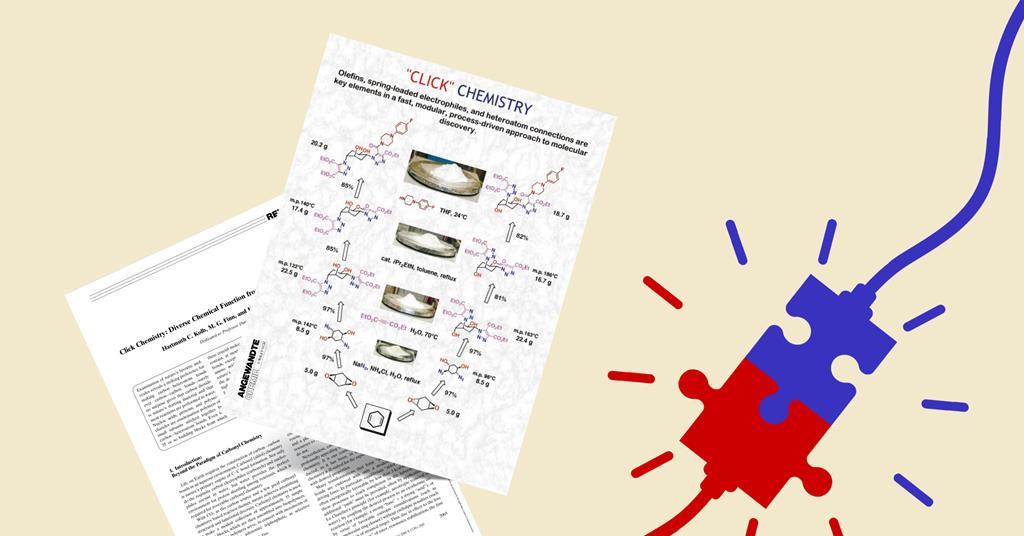
A quarter-century ago, the molecular sciences community encountered the advent of click chemistry, an idea that has since reshaped the realm of chemical synthesis and applications in diverse areas. Initially presented in the journal *Angewandte Chemie*, this concept, conceived by Nobel Prize winner Barry Sharpless, suggested a bold simplification and enhancement in the way chemists undertook bond formation. More than just another collection of reactions, click chemistry facilitated nearly flawless chemical processes that have established themselves as fundamental across various disciplines.
Initially regarded with doubt by some organic chemists, click chemistry catalyzed a shift in emphasis from simply generating carbon-carbon bonds to comprehending and employing superior bond-forming reactions in a more comprehensive manner. Carolyn Bertozzi’s research illustrated the strength of these reactions, revealing their potential beyond classical limits, akin to the developments seen in polymer chemistry. For those in the chemistry field, whether users or innovators, this methodology liberated and expanded the horizons of molecular connectivity applications.
The significance of click chemistry resides in its ability to democratize molecular design. Just as language influences thought and opportunities, as suggested by the theory of linguistic relativity in Samuel R. Delany’s sci-fi novel *Babel-17*, the arrival of click chemistry offered a novel lexicon for researchers across different fields to exploit powerful chemical reactions in creative manners.
In the present day, the tenets of click chemistry function as a framework that intertwines the knowledge of chemists with those of materials scientists, engineers, and biologists. Its applications cover various sectors, continuously growing as new reactions that align with click chemistry principles are identified. Each pioneering reaction enriches the collection of structures available for sophisticated applications, highlighting the significance of effective connectivity crucial for biological functionality.
Furthermore, click chemistry has expanded beyond its original limits, evolving into reactions that not only enable dependable bond formations but also subsequent bond cleavages or environment-sensitive reactions such as the SuFEx reaction. Such progress signifies an integration into the sphere of biological and engineered evolution, where regulated molecular functions are vital.
The enduring impact of click chemistry may reside in its effect on the expectations within molecular science—underscoring the attainable command over chemical bonds in adaptable environments. This paradigm shift holds potential for countless future advancements, illustrating that the narrative of click chemistry, from its inception through its vibrant evolution, is a tale of significant scientific change and collaboration.