Recent investigations have shed light on the complex behavior of the 5f orbital in early actinides, offering experimental validation for theoretical concepts of covalency. By analyzing the hexachlorides of tetravalent uranium, neptunium, and plutonium through x-ray scattering, scientists were able to identify the differing inner and outer components of the 5f orbitals. The research indicates that as the series advances, the outer component of the 5f orbitals widens, while the inner component shows less expansion owing to the escalating nuclear charge.
These findings are significant as the existence and variation of covalency in the 5f orbitals across actinides have been subjects of ongoing discussion. The difficulty stems from the radioactive characteristics of these elements and the rigorous analytical techniques needed for their study. Thomas Dumas, who spearheads the synthesis and analysis at CEA Marcoule and the University of Montpellier in France, refers to this research as a vital ‘experimental anchor’ for theoretical chemistry, assisting in both experimental analysis and theoretical endorsement.
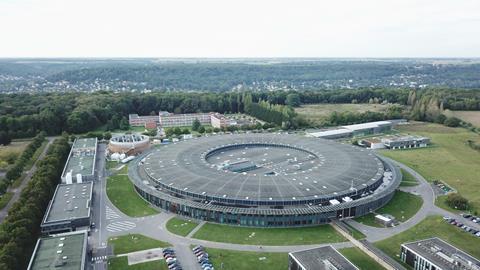
Michael Baker, the initiator of the project, underscored the collaboration with the French team due to their exceptional expertise in managing radioactive substances. The Mars beamline at Synchrotron Soleil, specifically designed for highly active samples, supported this investigation.
The research utilized resonant inelastic x-ray scattering (RIXS) to explore the actinide complexes. This technique permitted distinct resolution of the 5f orbital components, a notable success that Baker described as ‘serendipitous.’ Kristina Kvashnina, a specialist in actinide chemistry, highlighted the importance of comprehending covalency in actinides, which may have significant implications for the management of spent nuclear fuel. This understanding could transform the separation processes for lanthanides and actinides, improving nuclear waste recycling initiatives.