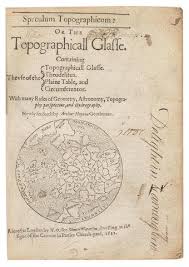
In the midst of the sixteenth century, England experienced significant progress in navigation, cartography, surveying, and gunnery, which led to the necessity for the development of new systems and expertise. This era was marked by a swift increase in mathematical literature, which soon saw the emergence of mathematical instruments tailored for accurate observations, measurements, and calculations. As these technological advancements blossomed, there was a rising need for instructors to impart knowledge on utilizing these new systems and tools.
Mathematicians such as John Dee (1527–1609) and Thomas Harriot (c. 1650–1621) were key figures supporting exploration enterprises by offering crucial training in navigation and cartography for their exploratory journeys. These educational efforts were structured when Thomas Hood (1556–1620) became the first “Mathematicall Lecturer to the Citie of London” in 1588. While his lectures gained popularity, his position was short-lived, lasting only four years. Gresham College, founded in 1597, continued this educational endeavor but struggled to engage a wider audience. The East India Company, acknowledging the necessity of mathematics, appointed Edward Wright (1561–1615) as their mathematics instructor for a limited period.
Alongside these institutional initiatives, a demand for freelance mathematical practitioners flourished. These practitioners provided individualized teaching services in mathematics to private clients. Among them in seventeenth-century London were John Speidell (1577–1657) and his son Euclid Speidell (1631–1702). The Speidells, although not widely documented, left behind some memoirs that shed light on their contributions. John Speidell, mostly self-taught, began his teaching career in 1607, offering lessons in multiple languages, including English, French, and Dutch.
Speidell’s skills also encompassed the design of mathematical instruments. His notable work with logarithms includes publishing tables of natural logarithms of sines, tangents, and secants, and subsequently, natural logarithms for numbers from 1 to 1000, reflecting the interlinked advancements in mathematics and scientific tools of the time.
Professional networks among mathematical practitioners were strong. John Speidell’s associates included notable individuals like Elias Allen, a respected instrument maker. Speidell also mingled with prominent mathematicians such as William Oughtred and Richard Norwood, who were advocates for standardizing the notations of trigonometric functions.
In 1635, John Speidell’s proficiency secured him a professorship in geometry at the Musæum Minervæ, an academy established for contemporary gentlemanly education, reflecting the age’s high regard for mathematical sciences. However, the brief lifespan of the academy meant that Speidell reverted to providing private sessions following its closure.
The ongoing political unrest of the 1640s posed challenges. Nevertheless, Speidell persevered in his profession, utilizing publishing as a means to spread mathematical knowledge. His contributions laid foundational tools for many aspiring mathematicians and surveyors of that period.
After John’s passing, his son Euclid upheld the family’s mathematical heritage. Although he initially took a clerical role at sea, Euclid eventually returned to teaching mathematics and continued to innovate in the field of logarithms. He published expanded works on arithmetic and advanced instrument designs, solidifying his place within London’s vibrant mathematical community.
The Speidells illustrate how individual efforts enriched England’s mathematical environment beyond conventional academic institutions. They played a crucial role in educating various segments of society, particularly through practical mathematics indispensable for navigation, surveying, and related disciplines.
Their legacy, deeply intertwined with England’s scientific revolution, underscores how individual practitioners propelled the advancement of mathematics, ensuring its growth amidst broader historical changes.