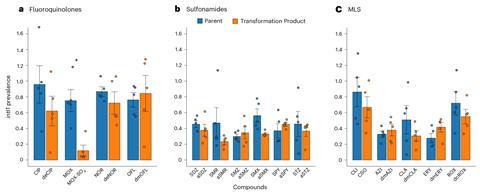
Metabolites of antibiotic medications have been demonstrated to promote antibiotic resistance in bacteria, in certain instances to a degree comparable to the antibiotic itself. This discovery has prompted researchers to reconsider the dynamics of antibiotics and their metabolites in aquatic environments.
Antibiotic, or antimicrobial, resistance (AMR) is among the leading public health challenges worldwide, associated with over 1 million deaths in 2021 alone. It arises when bacterial populations evolve to create mechanisms to resist the antibiotics developed to eradicate them. While it is widely recognized that pharmaceuticals present in our water systems can contribute to AMR in bacteria, there is less understanding of their transformation products – the substances produced when antibiotics decompose in our bodies and in nature.
To explore this, a research team led by Pooja Lakhey from the University of Queensland in Australia gathered samples from a wastewater treatment facility in Brisbane and another in Falmouth, UK. They subjected these samples to three distinct classes of antibiotics and their transformation products in a controlled environment and examined the extent of resistance developed by the bacteria in each sample.
The medications they assessed included fluoroquinolones and the MLS group (macrolides–lincosamides–streptogramins), which are commonly utilized in human medicine, alongside sulfonamides, an antibiotic primarily employed in agricultural and veterinary contexts.
In total, 15 different transformation products were evaluated across these three categories. For every transformation product analyzed, the researchers identified some degree of potential for AMR.
Lakhey noted that the results were unexpected. ‘Typically, we regard metabolites as being non-threatening, or less harmful, compared to the original compounds,’ she states. ‘But what if they are not as innocuous as we presumed?’
Once antibiotics infiltrate our aquatic systems, they are extremely challenging to eliminate. Although wastewater treatment facilities can capture and break down some pharmaceuticals, they are not specifically designed to target this issue. ‘These facilities are oriented towards managing a variety of other factors, and if they successfully remove some antibiotics, that’s an advantage, but it’s certainly not their main objective,’ explains Lena Ciric, a microbiology specialist in constructed environments from University College London, UK.
Research like this underscores an additional layer of complexity, implying that merely tracking the original antibiotic may not provide a comprehensive understanding. ‘[This study] reinforces the notion that we may be underappreciating environmental AMR selection pressures,’ remarks Holly Tipper, a molecular microbiologist at the UK Centre for Ecology and Hydrology. ‘It highlights a clear necessity for further investigation, which I believe should encompass the creation of community-level assays to more accurately assess biological impacts.’
Lakhey hopes that this discovery motivates a reassessment of risk evaluations for environmental pollutants to incorporate transformation products.
For Ciric, this represents another piece in the puzzle of combating antibiotic resistance. ‘AMR is concerning, and the presence of antibiotics and their metabolites in our water systems is a contributing aspect,’ she states. ‘However, there are numerous contributing factors, and this is merely one of them. Tackling AMR requires us to operate on multiple fronts.’