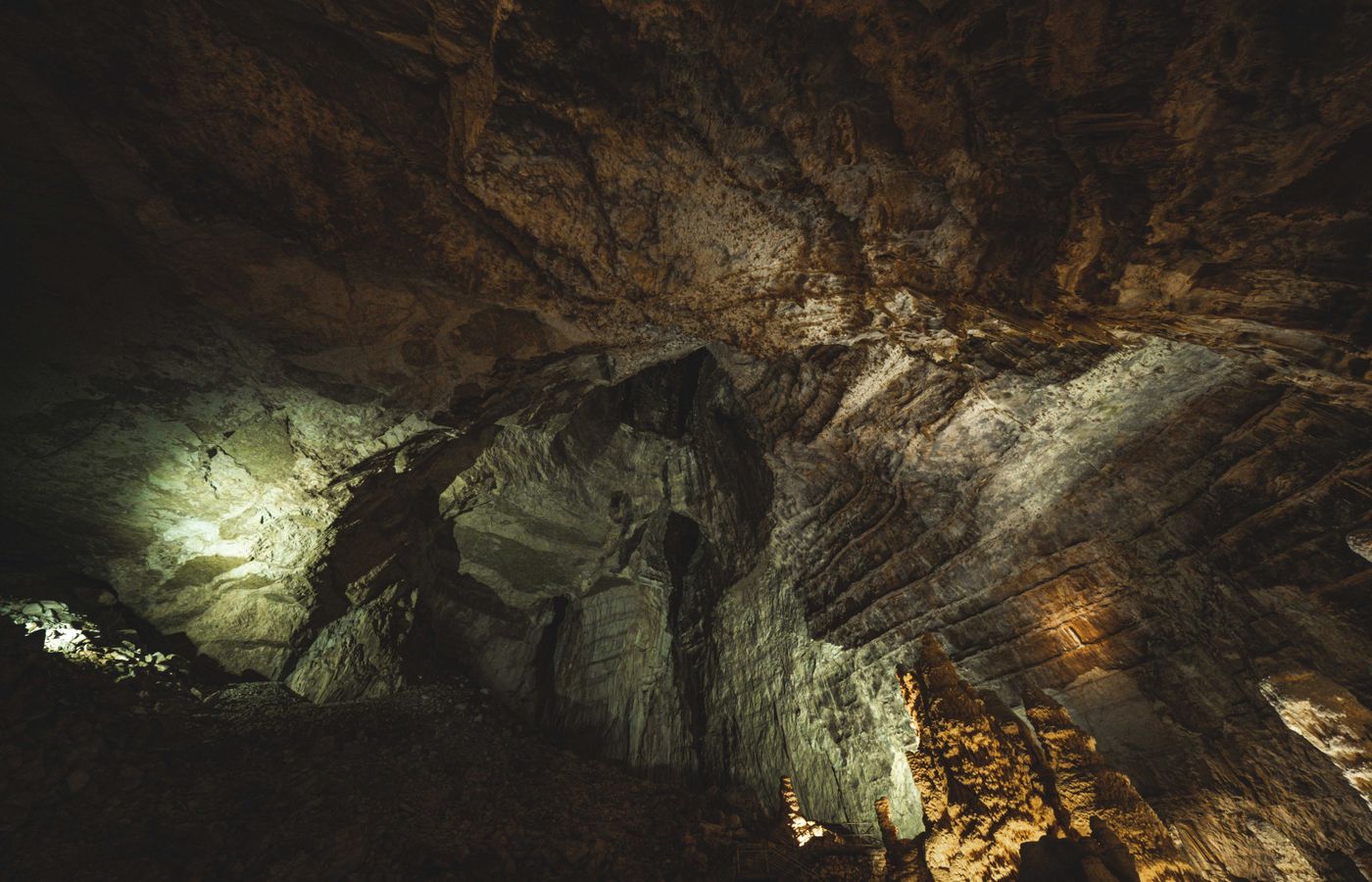
Most of the life forms on Earth are straightforward to envision in surface terms: forests, oceans, soil, animals, humans. However, a significant portion of the planet’s living matter is situated far beneath that familiar facade, in a shadowy subsurface realm where microbes can endure in rock fissures, groundwater, and ancient sediments for extensively prolonged periods.
The deep biosphere is not just one cavern or aquifer. It comprises a mosaic of habitats that initiates below the reach of common soils and seafloor mixing and then extends downward through continental crust and marine sediments. In several locations, scientists have gathered microbial samples at kilometer-scale depths, where sunlight is absent, fresh food is scarce, and pressure and heat increase with each descent.
One of the most conspicuous efforts to assess this concealed world originated from an analysis in Nature Geoscience led by Cara Magnabosco, which amalgamated information from mines, boreholes, and deep groundwater studies to evaluate the biomass and biodiversity of the continental subsurface. The findings were astonishing, not merely because a few resilient microbes were identified, but due to the implication that deep continental environments house a substantial proportion of Earth’s bacteria and archaea.
Archaea are single-celled organisms that are similar in size to bacteria but represent an entirely distinct branch of life. Collectively, bacteria and archaea are the predominant organisms in the deep biosphere. They typically are not seen as mats or colonies. Many exist as sparse cells in fluids, pores, and fissures, dispersed through rock volumes so extensive that even low cell densities can accumulate into a planetary reservoir.
A Biosphere Lacking Sunlight
At the Earth’s surface, photosynthesis is the driving force for much of the living world. Plants, algae, and photosynthetic microbes convert sunlight into chemical energy, with almost all other life forms directly or indirectly relying on that production. Deep underground, that engine is largely missing. A microbe in a fracture deep within crystalline rock cannot rely on autumn leaves or fresh plankton to fall from above.
Rather, numerous subsurface communities depend on chemistry for survival. Certain microbes utilize hydrogen generated when water interacts with minerals. Others capitalize on methane, reduced sulfur compounds, iron chemistry, or ancient organic matter that was entombed in sediments eons ago. Analyses of life under extreme energy restrictions, including research by Tori Hoehler and Bo Barker Jorgensen, depict a realm where endurance may rely less on rapid growth and more on upkeep, repair, and exceptionally slow metabolism.
This slowness is significant. Deep microbial life should not be imagined as a thriving underground rainforest. In various deep environments, cells might rarely divide and expend much of their energy merely staying alive. The unexpected outcome is that such a low-energy existence can still inhabit such an expansive physical volume.
How Much Carbon Lies Beneath?
The frequently cited estimate for deep life hovers around 15 billion to 23 billion metric tons of carbon, a range noted in a Deep Carbon Observatory summary of continental and marine subsurface evidence, which includes the continental estimate led by Magnabosco and previous studies on the subseafloor. Regarding the ocean aspect, a PNAS study spearheaded by Jens Kallmeyer updated estimates of microbial abundance and biomass in subseafloor sediment, highlighting both the vastness of the habitat and the uncertainties involved in counting.
The comparison between humans and deep life emerges from placing that range alongside global biomass estimates. A PNAS census by Yinon Bar-On, Rob Phillips, and Ron Milo approximated human biomass at about 0.06 billion metric tons of carbon. If deep subsurface life comprises 15 billion to 23 billion metric tons of carbon, its carbon mass is roughly 250 to 380 times that of all humans combined.
This does not imply that deep life exceeds all surface life. Plants still overwhelmingly dominate Earth’s biomass. However, it does indicate that the human species, which appears geologically significant at the surface, represents a carbon-minuscule fraction compared to this buried microbial reservoir.
Carbon is merely one metric for life measurement. It is advantageous as all living cells contain carbon, and biomass studies frequently convert cell counts into carbon mass. Nevertheless, each conversion relies on assumptions regarding average cell size, water content, environmental conditions, and sampling biases. The deeper the habitat, the more challenging the census becomes.
Challenges in Counting the Hidden Biosphere
Acquiring clean deep samples poses significant challenges. A borehole may transport surface microbes downward. Drilling fluid could taint a sample. Cells extracted to the surface experience variations in pressure, temperature, and chemistry compared to their underground conditions. Researchers have implemented stricter contamination protocols and pressure-sensitive sampling methods, but any global estimate still carries considerable uncertainties.
Additionally, the subsurface is heterogeneous. A cubic meter of fractured, water-bearing rock may differ biologically from a cubic meter of dry, compact rock nearby. Some sediments harbor buried organic matter, while other environments lean more on chemical energy derived from rock and water. Crafting a global estimate necessitates piecing together numerous local measurements from environments that are difficult to compare.
That is why the most prudent interpretation of the deep-biosphere figure is not “scientists have counted