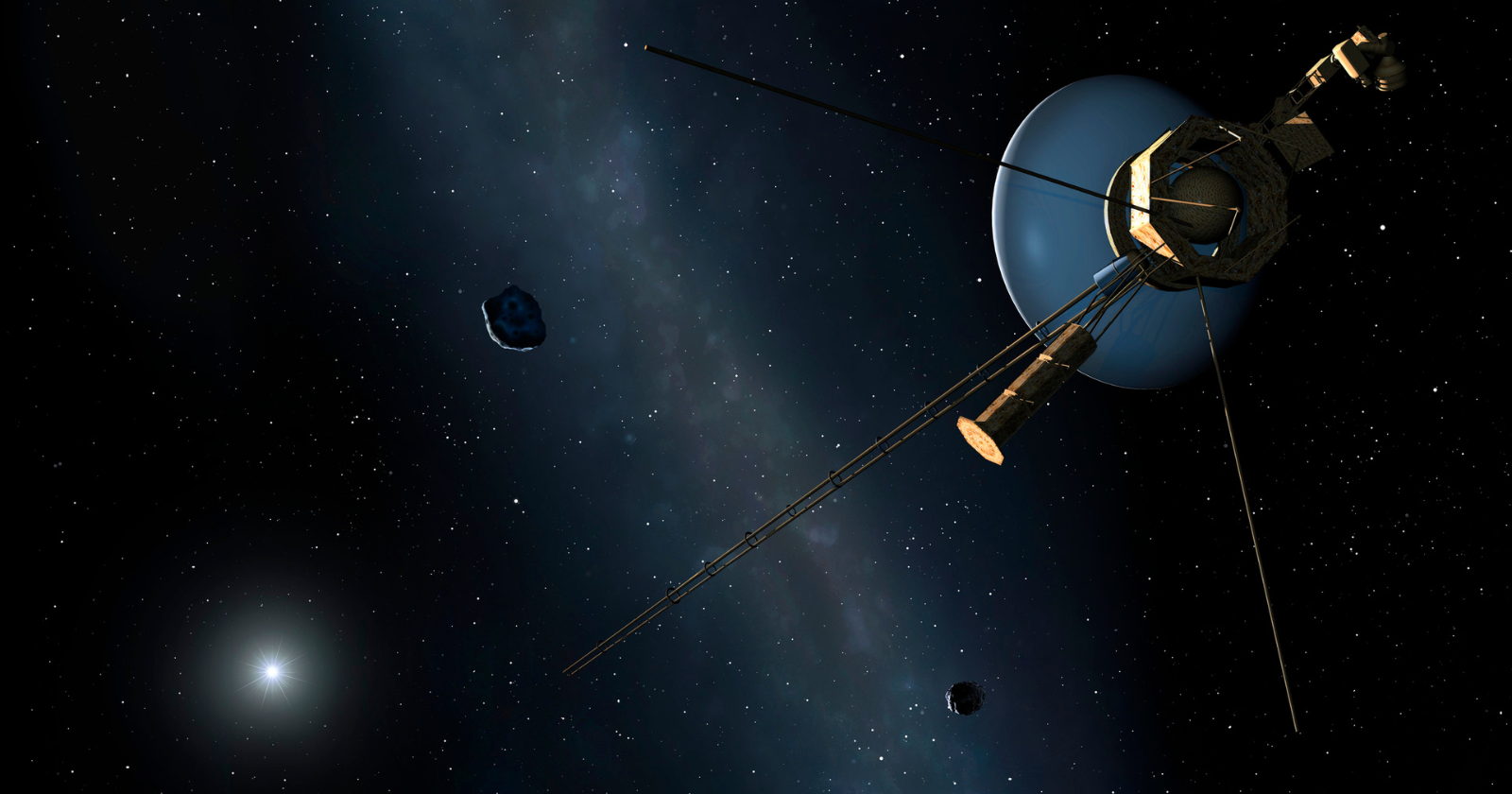
There exists a rendition of the Voyager narrative that appears almost too tidy: engineers constructed a spacecraft they understood they would never witness departing the solar system, yet they sent it forth regardless. The reality is more nuanced, and in some respects, more poignant. If departing the solar system entails traversing the heliopause, the furthest edge of the Sun’s solar-wind envelope, then some individuals involved in Voyager did experience this event. NASA indicates that Voyager 1 transitioned into interstellar space on August 25, 2012, and Voyager 2 passed this same threshold on November 5, 2018. However, if leaving the solar system is defined as moving beyond the remote Oort Cloud, then the assertion becomes almost unfathomably accurate. NASA’s Voyager FAQ states that Voyager 1 will take approximately 300 years to reach the inner perimeter of the Oort Cloud and possibly around 30,000 years to go beyond it.
This distinction is significant because Voyager was never simply one vessel with a single endpoint. It was a spacecraft intended for planetary exploration, then sustained long enough to evolve into a probe of the boundary separating the Sun from the remainder of the galaxy, ultimately destined to become a relic drifting through a future that no human project manager could evaluate personally. In 1977, upon the launch of Voyager 2 on August 20 and Voyager 1 shortly after on September 5, the fundamental mission was already quite ambitious: NASA characterizes the initial design as close-up investigations of Jupiter, Saturn, Saturn’s rings, and the predominant moons of those giant planets. The later expansion of the mission was not merely a straightforward prediction. It was the culmination of meticulous design, favorable circumstances, patient management, and a distinctive readiness to create for a time beyond recognition.
Constructing Voyager meant operating within a contradiction. The spacecraft needed to endure its launch, traverse the inner solar system, navigate a rare alignment of external planets, conduct scientific observations in environments previously unvisited by any technology, and maintain communication over distances that turned radio signals into an exercise in perseverance. Simultaneously, the engineers had to embrace the reality that the mission’s most profound implications would unfold beyond the initial planning timeline. Ultimately, Voyager 1 and Voyager 2 explored Jupiter, Saturn, Uranus, Neptune, 48 moons, and the rings and magnetic fields of the giant planets. Voyager 2 continues to be the sole spacecraft to have visited Uranus and Neptune.
The primary contribution was scientific. Voyager transformed the outer planets from distant luminous points into worlds exhibiting weather patterns, geology, rings, magnetic fields, volcanoes, ice, storms, and moons that resembled places rather than mere footnotes. The spacecraft were not created by those who anticipated immortality. They were constructed by individuals who had faith that future scientists, engineers, students, and the public would utilize data obtained long after the initial headlines had faded. This represents a specific form of public science: create something robust enough that it remains valuable after the builders have moved on.
The second contribution was to engineering culture. A spacecraft operating for decades cannot depend on glamour. It relies on comprehensive documentation, redundancy, power management, fault protection, meticulous command sequences, and teams willing to grasp hardware older than many currently operating it. Voyager’s extended lifespan frequently makes the original engineering appear almost prophetic, yet it was also pragmatic. The spacecraft were designed to function in locations where repairs were unattainable. Each command sent from Earth would need to traverse billions of kilometers. Every watt was crucial. Every outdated subsystem ultimately turned into a trade-off between scientific merit and survival.
This is why Voyager feels distinct from numerous space missions. It is not only that the spacecraft ventured far. It is that they rendered duration visible. A career may be extensive by human standards. A spacecraft lasting nearly half a century is considerable by modern technological standards. But interstellar time operates on a different plane. Voyager merges these scales into a unified narrative. It poses questions about the nature of the work people undertake when the furthest implications of that labor belong to those yet to be born, and perhaps to no one at all.
The Golden Record made this inquiry explicit. NASA defines the record aboard each Voyager as a time capsule launched in 1977, containing visuals, sounds, music, greetings, and instructions intended to communicate something about Earth to any future discoverer. It was not a scientific instrument in the conventional sense. It did not measure plasma waves or cosmic rays. It quantified a human drive: the wish to convey evidence of our existence into a vastness that may never respond.
John R. Casani, Voyager’s project manager in 1977, represents that drive with a human face. NASA’s Voyager overview mentions that Casani led the mission from the clean room to space and was the first to conceive the idea of attaching a message symbolizing humanity to another civilization, which became the Golden Record. Casani passed away in 2025 at the age of 92. He lived long enough to witness both Voyager spacecraft cross the heliopause, but not long enough, and not nearly long.