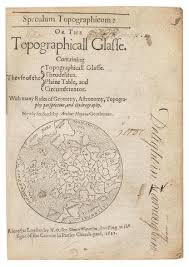
In the mid-sixteenth century, England experienced considerable changes in navigation, cartography, surveying, and gunnery, spurred by the needs of exploration and military progress. This era witnessed the rise of mathematical practitioners who authored books and joined forces with instrument makers to devise new mathematical tools crucial for precise observations, measurements, and computations.
Prominent figures such as John Dee and Thomas Harriot played key roles, hired by exploration firms to educate sailors on advanced navigational and cartographic methods. Nevertheless, institutional educational initiatives, like Thomas Hood’s short stint as the “Mathematicall Lecturer to the Citie of London” and the establishment of Gresham College, reached only a limited audience.
The necessity for hands-on mathematical instruction prompted self-employed practitioners to provide private lessons. John Speidell and his son Euclid stood out as distinguished freelance math educators in seventeenth-century London. Despite limited biographical details, Euclid’s manuscript sheds light on their experiences and contributions.
John Speidell, who initially had a background in commerce, shifted his focus to mathematics and music. By 1607, he began instructing in mathematics across several languages and developed a calculating scale. His endeavors in logarithms, influenced by John Napier’s invention, led to publications that featured tables of natural logarithms, broadening the practical application of mathematics.
Euclid Speidell upheld his father’s legacy by teaching practical mathematics while also working as a clerk. His mathematical training was thorough, concentrating on arithmetic and geometry. Following a short career at sea, he made his mark in London as an educator and released an expanded version of his father’s “Arithmeticall Extraction.”
The Speidells’ contributions connected theoretical mathematics to practical use, shaping a variety of fields from surveying to navigation. Their endeavors, alongside peers in a tightly-knit mathematical community, highlighted the importance of practical mathematics education outside traditional academic environments.
This investigation into the contributions of John and Euclid Speidell reveals the crucial function of mathematical practitioners in seventeenth-century England, influencing the practical deployment of mathematics across numerous fields and affecting the technological and educational fabric of society.