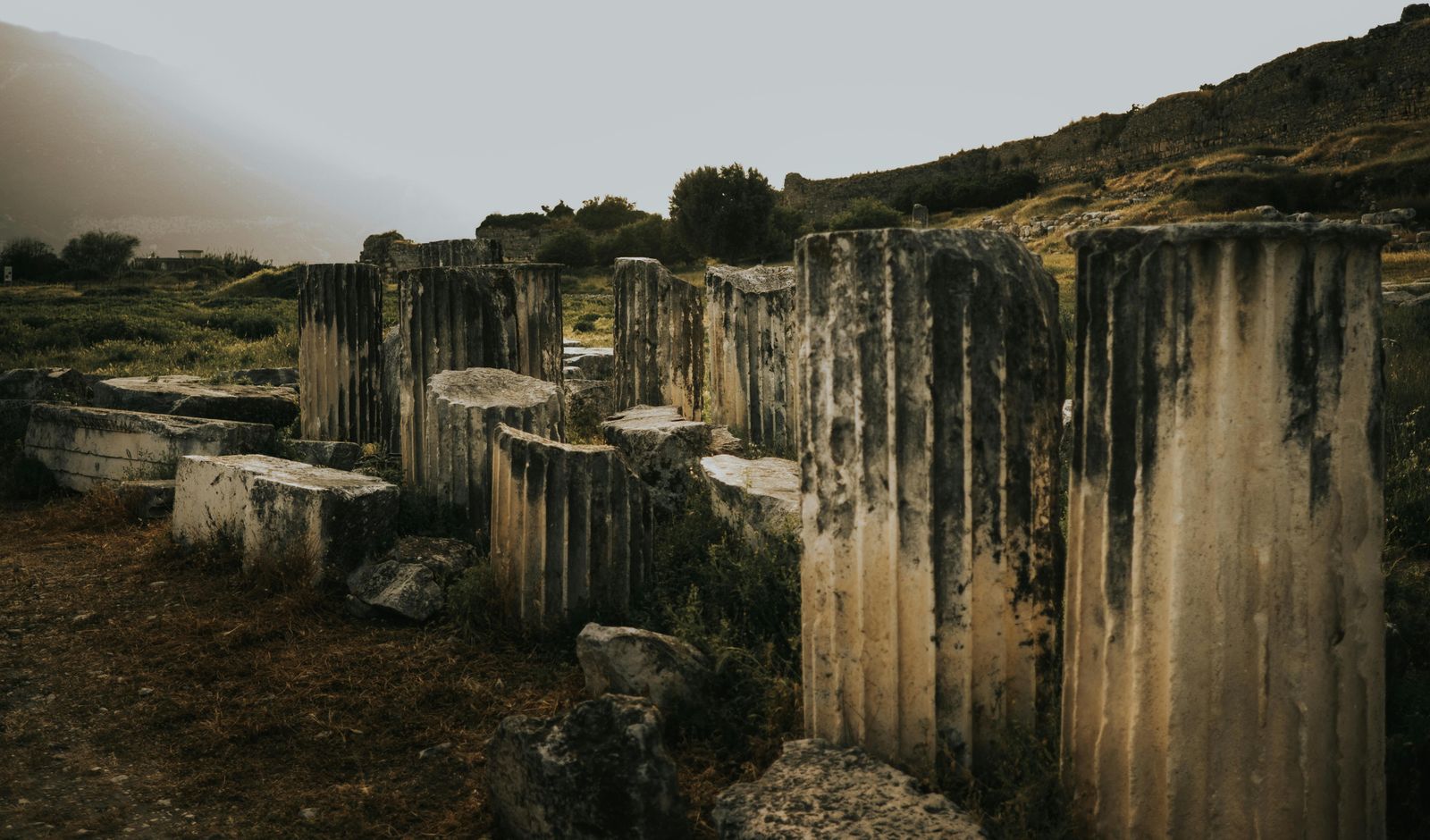
At Göbekli Tepe, a limestone ridge situated in southeastern Turkey’s Şanlıurfa Province, hunter-gatherers erected T-shaped pillars weighing as much as 20 tonnes and reaching nearly six metres in height — approximately the size of a two-storey building — around 9600 BCE. This was roughly 6,000 years prior to the erection of the first sarsens at Stonehenge and around 7,000 years before the Great Pyramid at Giza. The constructors lacked metal, wheeled transport, draft animals, and pottery. Their resources included flint, obsidian, antler, rope, timber, and each other.
The method, deduced from decades of excavation in the Taş Tepeler region, was starkly straightforward: extract the pillars directly from the bedrock of the same plateau, shape them with tougher stone hammers, haul them for a few hundred metres on wooden sledges and rollers, and set them upright into pre-carved sockets in the limestone floor. The magnitude is staggering. The technology is uncomplicated.
The site that altered the timeline
Göbekli Tepe is located approximately 15 kilometres northeast of Şanlıurfa, perched on a bare hill that appears, from afar, to be just another ordinary mound. It was documented in 1963 during a collaborative survey between Istanbul and Chicago and was initially dismissed as a medieval burial ground. In October 1994, German archaeologist Klaus Schmidt returned, identified the tips of hidden megaliths emerging from the soil, and the next year initiated the first systematic excavations in partnership with the Şanlıurfa Museum. What his team revealed necessitated a revision of the established Neolithic timeline, which previously posited that agriculture preceded monumental architecture by thousands of years, relying on a surplus to support a specialist workforce.
The earliest ringed enclosures at Göbekli — designated A through D — date back to the Pre-Pottery Neolithic A, roughly 11,500 years in the past. The individuals who constructed these structures were still hunting gazelle, aurochs, and wild boar, as well as gathering wild grains. There is no sign of cultivated grain at the establishment of the site. As Archaeology Magazine highlighted in its 2024 examination of the Taş Tepeler, over 20 associated sites now dispersed along a 125-mile stretch of the Taurus foothills exhibit a similar collection: T-shaped pillars, circular enclosures, stone benches, and engravings of leopards, snakes, vultures, and human figures with exposed ribcages.
Where the stone originated
The pillars were not transported over long distances. The plateau that supports Göbekli Tepe is a limestone shelf, and quarries filled with half-finished pillars are located within mere hundreds of metres of the enclosures. One uncompleted monolith still resting in its original place measures about 7 metres in length and would have tipped the scales at an estimated 50 tonnes if it were upright — larger than any successfully erected pillar on the site. It apparently cracked during removal, leading the workers to abandon it.
Extraction utilized a technique common across the Neolithic Near East. Labourers created a rectangular outline around the intended pillar with flint picks and stone mauls, cutting shallow grooves a few centimetres deep. They then inserted wooden wedges into the grooves and soaked them with water. As the wood expanded, it fractured the stone along the outlined mark — a principle that Egyptian quarry workers would later apply thousands of years down the line for granite obelisks. Fire-setting, where a fire is ignited against a rock face and subsequently extinguished, might also have been employed to break the limestone along natural fissures.
Limestone’s softness made this method effective. It has a Mohs hardness ranging from about 3 to 4. Flint, with a hardness of approximately 7, readily cuts through it. The pillars at Göbekli display tool marks indicative of pecking — the repetitive striking of the surface with a hard hammerstone to remove exceedingly thin flakes until a smooth surface is achieved. On a 20-tonne pillar, this entails months of labor from a team.
Carving without metal
The carvings are the aspect that initially appears inconceivable. Pillar 43 in Enclosure D — known as the Vulture Stone — features a congested panel depicting birds, a scorpion, a headless human figure, and abstract symbols etched in low relief, some barely protruding a centimetre from the surface of the pillar. The fox on Pillar 10 is depicted mid-leap, its tail curling along the edge of the stone. These are not