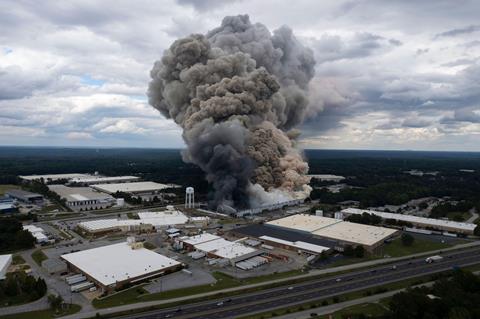
**Devastating Blaze at Bio-Lab Facility in Conyers: Safety Breaches and Regulatory Deficiencies**
In September 2024, a devastating blaze at the Bio-Lab facility in Conyers, U.S., was triggered by a deteriorated sprinkler system and improper storage of reactive chemicals. This incident resulted in the permanent shutdown of the plant and a significant release of toxic gases. As reported by the U.S. Chemical Safety and Hazard Investigation Board (CSB), water seeping from the compromised sprinkler system reacted with chlorinated isocyanurates, forming a hazardous concoction of chlorine, hydrogen chloride, bromine, and other harmful substances.
While no injuries were recorded, approximately 17,000 residents were forced to evacuate as dangerous emissions lingered for several days. In April 2025, the Occupational Safety and Health Administration (OSHA) fined Bio-Lab more than $61,000 for safety breaches, highlighting improper storage of hazardous materials as a key factor.
The CSB’s findings pointed out that the Bio-Lab warehouse was intended to accommodate 2,800 metric tonnes of raw materials but was overstressed with over 6,000 tonnes of reactive chemicals, surpassing the stated limit by more than double. The facility held around 5,000 ‘super sacks’ containing chlorinated isocyanurates in non-waterproof bags stacked precariously.
CSB chair Steve Owens criticized the unsafe conditions at the Bio-Lab Conyers warehouse, indicating insufficient safeguards. The reactivity of the stored materials, which can generate toxic gas, is not presently addressed by OSHA’s Process Safety Management standard or the EPA’s Risk Management Plan regulation.
The CSB has called on OSHA and the EPA to broaden their regulatory framework to encompass such hazardous chemicals in order to avert similar occurrences in the future. Despite the Trump administration’s suggestion to dismantle the CSB, Congress preserved its funding at $14 million for the fiscal year ending in October 2026, underscoring the significance of this independent agency in investigating industrial chemical incidents.