# Hypothesis: Understanding the Environment as a Fundamental Ability in Living Beings
The idea of perception generally entails sensory organs that interpret different signals from the surrounding world. However, a hypothesis exists that views perception, as the immediate awareness of the environment, as a basic capability inherent to all living beings, predating the development of sensory organs. This provocative hypothesis posits that even though sensory organs have indeed sharpened and improved perception, a more rudimentary form of environmental awareness is present among life forms, existing separately from recognized sensory functions.
## The Notion of Instinctive Perception
The hypothesis focuses on the belief that all organisms have an intrinsic capacity to directly perceive their environment. It suggests that this perception does not depend on quantifiable signals, contrary to what current scientific paradigms might state. Evidence backing this viewpoint is observed across a range of life forms, from flora to microorganisms, which seem to react to environmental signals without the use of conventional sensory apparatus.
### Blindsight and Human Experience Evidence
The occurrence of “blindsight” in humans offers fascinating perspectives. Individuals like Dalia Burgoin show the capability to detect colors, shapes, and even read text despite visual impairments or covered eyes. This indicates a dormant, possibly diminished ability within humans that transcends traditional sensory perception. Many indigenous cultures acknowledge and incorporate such abilities, referring to them as natural senses similar to telepathy and clairvoyance.
### Animals and Non-Human Environmental Sensitivity
Animals often display an inherent skill to foresee natural occurrences, such as storms or earthquakes, suggesting a type of environmental attunement that surpasses typical sensory experiences. Research by Rupert Sheldrake reveals that pets can seemingly sense when their owners are on their way home, indicating the presence of unconventional communicative or perceptual faculties.
## Empirical Evidence in Flora and Microorganisms
### Plant Awareness of Support Mechanisms
Research indicates that plants, such as pea plants, can detect and respond to support mechanisms, adjusting their growth accordingly. When visual indicators are altered, such as swapping a physical structure with an image, the plants do not show the same growth reactions, implying a more profound level of environmental understanding beyond mere chemical or visual cues.
### Microorganism Behavior and Environmental Engagement
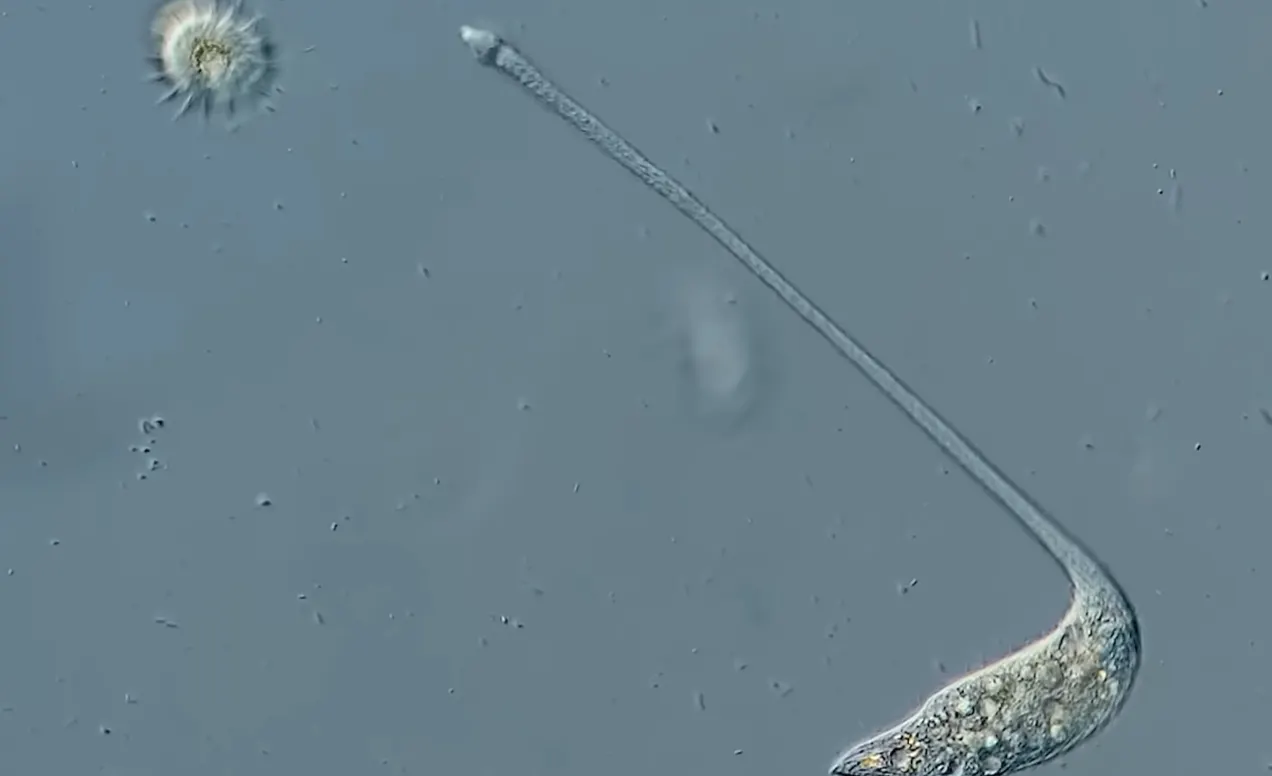
Microorganisms like the ciliate Lacrymaria olor display behaviors that hint at a type of environmental awareness that does not rely on chemical gradients. Their predatory search patterns raise questions regarding possible unknown sensory or perceptual capabilities.
## Suggested Experiments with C. elegans
To investigate the theory of inherent environmental perception, a set of experiments involving C. elegans roundworms is proposed. These worms, which lack sophisticated sensory organs, serve as an excellent model for examining non-traditional perceptual skills. Various experimental designs suggest monitoring worm behavior in controlled settings where standard sensory signals are absent or deceptive.
### Experimental Variations
1. **Y Maze Experiment**: Evaluates if worms can correctly select the path to food despite identical chemical gradients.
2. **Telepathic Influence Experiment**: Tests whether worms can discern between colonies of well-nourished versus starving worms without direct sensory input.
3. **Misleading Gradient Experiment**: Observes worm behavior when misled by artificial chemical signals.
4. **Adjacent Dish Influence**: Assesses if worms are drawn to food in nearby, unreachable environments.
## Summary and Philosophical Considerations
This hypothesis extends into philosophical realms, proposing that life inherently understands its needs, a capability as old as existence itself. This idea rejuvenates the notion of “biopsychism,” wherein consciousness or awareness is considered a universal aspect of life. Such viewpoints challenge and broaden existing scientific frameworks, encouraging further investigation into the limits of perception and consciousness in living beings.