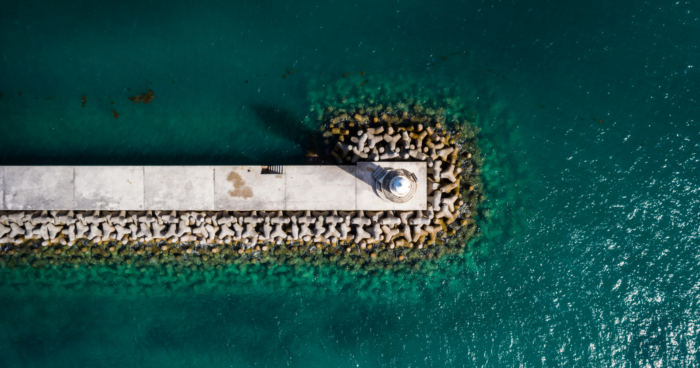
For almost thirty years, researchers have observed coral development on concrete breakwaters at Naha Port in Okinawa, Japan, in conjunction with the nearby natural reef. Initially, the two environments appeared quite distinct from one another, and following a significant bleaching event in 1998, they diverged again in a manner that astonished the counting team: the man-made structures rebounded in approximately six years, while the adjacent natural reef exhibited nearly no recovery during the same timeframe.
These results are reported in a paper published in March 2025 in Scientific Reports, titled “Artificial structures can facilitate rapid coral recovery under climate change,” authored by Toko Tanaya, Shunpei Iwamura, Wataru Okada, and Tomohiro Kuwae. The dataset spans from 1989 to 2018, which both the authors and external reviewers have highlighted as unusually extended for this type of research. Bert Hoeksema, a coral taxonomist not associated with the study, characterized the paper as noteworthy primarily for its length, telling Mongabay that “this paper is exceptional because it examines coral settlement on breakwaters over nearly 3 decades, which is quite extensive for research of this nature.” Most similar studies monitor recovery over a period of one to ten years.
The observations made over twenty-nine years of monitoring
Prior to the 1998 mass bleaching event, coral cover on the natural reef was approximately 45 percent, significantly higher than the coverage on the breakwater at that time. The bleaching, triggered by a marine heatwave impacting reefs across the western Pacific that year, affected both environments. Following the event, the natural reef’s coverage dropped to 14 percent. Coral on the breakwater, primarily made up of fast-growing Acropora species, fell even more drastically, reaching a mean of only 3 percent by 2000.
What occurred subsequently has captured attention. In the next six years, coral cover on the breakwater increased to roughly 25 percent, nearing its pre-bleaching levels, at a rate estimated by the authors to be around 6 percent per year between 2000 and 2004. The natural reef demonstrated minimal recovery over the same period. The gap did not diminish even in the following decade of monitoring. In breakwater sections where the concrete surface had been mechanically roughened during construction—a detail tracked separately by the authors—coral cover soared to 49 percent within six years, in contrast to 18 percent on unmodified sections nearby.
This is just one study, derived from a single site, focusing on a specific bleaching event. It does not provide a general survey of Japanese reefs, and the authors do not claim that it does.
Reasons for the rapid recovery of artificial surfaces
The paper’s analysis attributes the quicker recovery mainly to Acropora’s rapid growth and to more favorable conditions present on the breakwaters themselves—shallower waters, increased sunlight, and stronger wave-induced flow. Tanaya proposed an additional explanation to Mongabay: that artificial surfaces may be more structurally resilient than natural reefs, where a dying colony’s calcium carbonate skeleton becomes fragile and deteriorates under wave action and bioerosion at a quicker pace than it can be recolonized, leaving a bare, stable settlement surface on concrete almost immediately after a die-off. The authors acknowledge that this is not yet confirmed.
Tanaya, the lead author of the paper, clearly articulated the implication for coastal management rather than framing it as a case for replacing reefs entirely: “Our research indicates that integrating natural infrastructures such as coral reefs with artificial structures could effectively promote coral regeneration while also providing significant disaster prevention,” she stated to Mongabay. The breakwaters at Naha Port were constructed not for coral but to mitigate wave energy for the harbor. Thus, the coral growth on them is, in that context, incidental. While the recovery pattern is indeed authentic, it is important to accurately convey the intended purpose of these structures.
Aspects excluded from the recovery
The breakwater communities that emerged after 1998 were not identical to those that existed prior, differing in composition even if not in sheer percentage cover. The authors of the paper point out that while breakwater coral cover rebounded more rapidly, it exhibited lower species diversity than the natural reef community and was predominately composed of fast-growing branching species rather than the more diverse array of forms found on natural substrates. A reef that recovers in coverage but narrows in composition occupies the same space as a different community, rather than replicating a faster version of the original.
The authors also emphasize that the mechanism is not entirely understood. While structural stability is the leading hypothesis proposed in the paper, the team notes that further research is required to distinguish this aspect from factors such as variations in herbivory, sedimentation, or local water flow between the two habitats. Single-site studies, no matter how lengthy, cannot definitively address such questions independently.
Positioning in the broader dialogue about artificial reefs
Proposals have been made for artificial reef structures, such as sunken vessels, concrete modules, and breakwaters retrofitted to encourage coral growth, to serve as restoration measures.