India’s Initial Hydrogen Train Signifies a Significant Step in Green Energy Transition
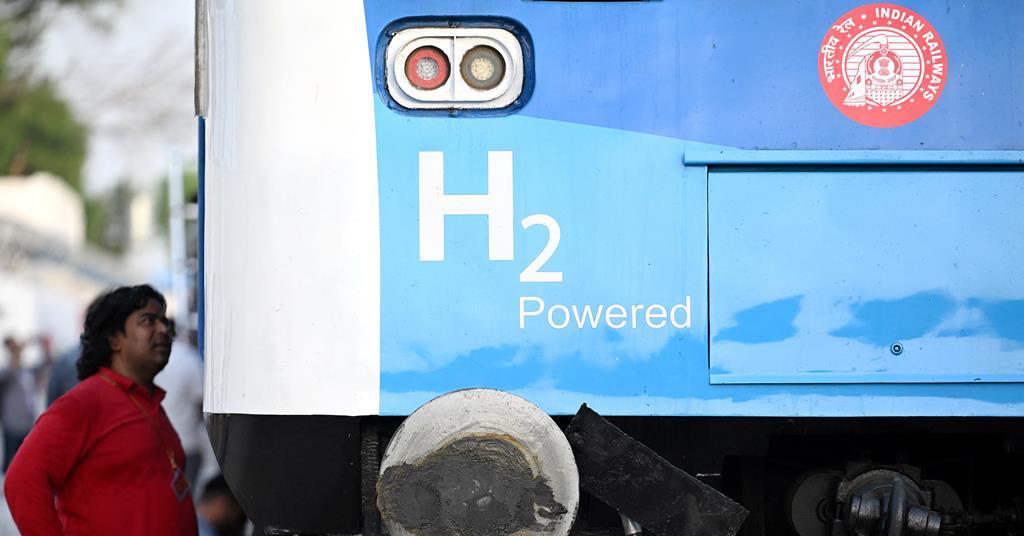
On July 17, India witnessed its inaugural train powered by green hydrogen commencing its first trip across Haryana, establishing the nation as the sixth worldwide to innovate hydrogen trains and the foremost among developing countries. The train, equipped with ten coaches to hold up to 2,600 passengers and reach distances of up to 89 kilometers, was launched by Prime Minister Narendra Modi. By July 25, it had traversed over 1,200 kilometers, successfully conserving more than 3,200 liters of diesel, as per government reports. This initiative forms part of a larger scheme to adopt hydrogen buses that are already in use in cities such as Leh and Delhi, with ambitions to extend to ten more routes.
This technological advancement corresponds with India’s goal to produce at least five million tonnes of green hydrogen per year by 2030 as part of the National Green Hydrogen Mission (NGHM) launched in 2023. Backed by an investment of INR 197 billion, the mission highlights India’s dedication to deriving 60% of its electricity from non-fossil sources by 2035, aiming for net-zero emissions by 2070 in line with the Paris Agreement.
Differentiating from conventional diesel locomotives, hydrogen trains function utilizing fuel cells. Green hydrogen, produced by dividing water into hydrogen and oxygen through renewable energy, is regarded as a crucial solution to reduce carbon emissions. This pioneering train showcases a powerful 1,200 kW fuel cell, harnessing energy from hydrogen and oxygen reactions to produce electricity, with water as the exclusive byproduct. The setup also integrates lithium-ion batteries to enhance power during acceleration.
Although green hydrogen technology is still in its early stages, Indian chemical specialists acknowledge its promise. Ujjal Gautam from the Indian Institute of Science Education and Research, Mohali, points out that the train initiative provides essential insights into the readiness of the technology across various stages such as production, storage, and refueling, which are vital for industries like steel, fertilizers, and heavy transport that are demanding to electrify directly.
India’s competitive advantage rests in its cost-effective renewable electricity, with solar energy priced around $35 per MWh. In comparison, costs in the US and Germany are approximately $62 and $65, respectively. This cost advantage is anticipated to spur the uptake of green hydrogen. Nagappan Ramaswamy from IIT Bombay notes the increasing interest from various sectors, indicating the likelihood of achieving the 2030 targets.
Despite current production levels being below 1% of the objective and the lack of essential infrastructure, experts like Gautam assert that any movement towards the target is noteworthy. Active R&D initiatives within the NGHM strive to diminish hydrogen production expenses, diversify resources, and reduce emissions, with collaborations such as the IIT-Madras consortium propelling technological progress.
Obstacles continue, especially in domestic electrolyser manufacturing, which relies heavily on imported components. Ramaswamy advocates for local innovations in materials to fulfill the mission’s large-scale ambitions. R&D projects persist in optimizing catalysts for fuel cells and electrolysers, tackling challenges such as supply inconsistencies and material deterioration, as emphasized by Gautam’s research team.
To compete internationally, India must boost investment in fundamental research and grow its cadre of skilled researchers and engineers. As India fast-tracks towards green hydrogen goals, Ramaswamy stresses the necessity of prioritizing current R&D investments to lay a solid groundwork for future technological advancements.