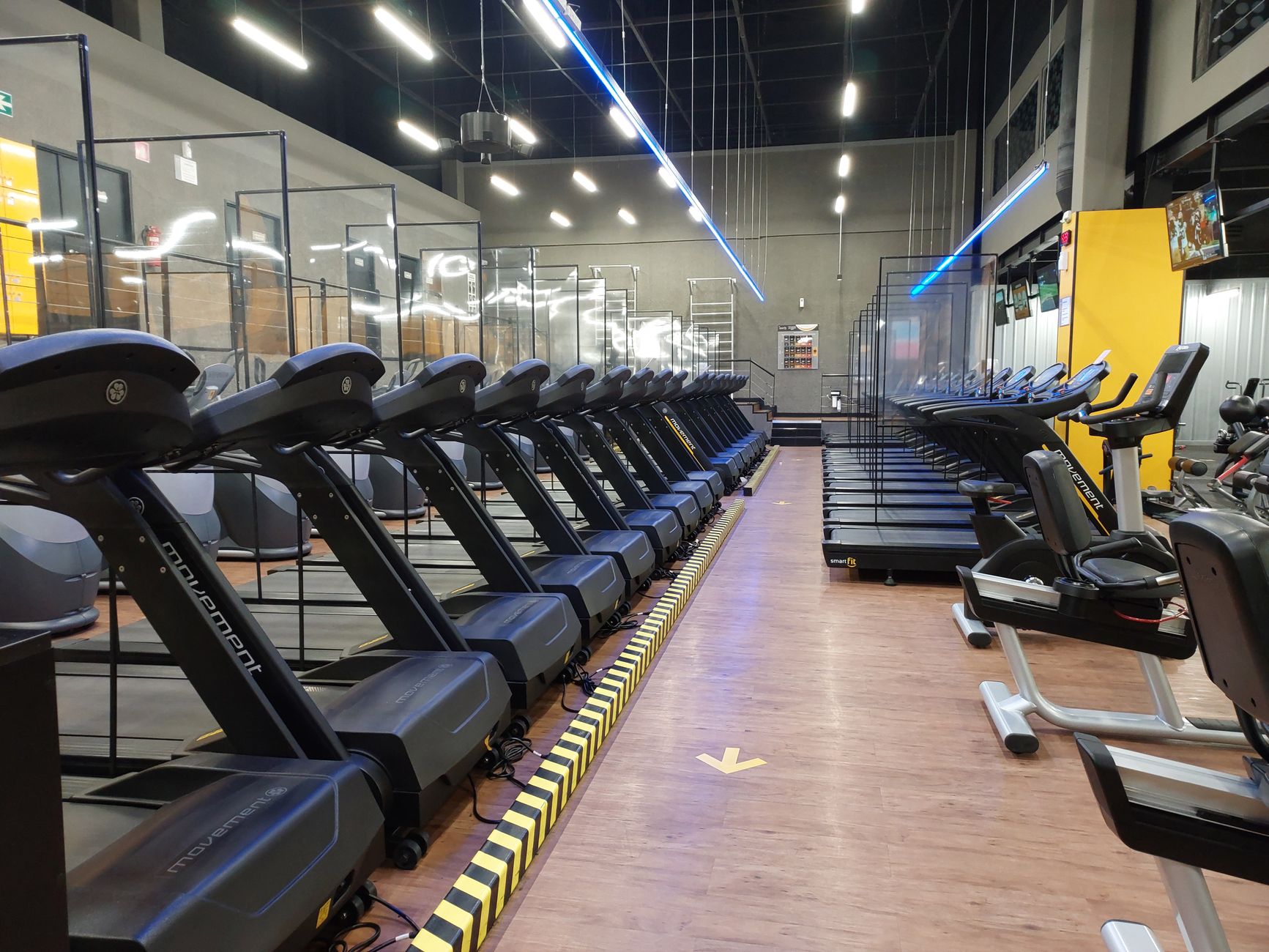
The treadmill has connections to a penal background, but the version typically found in gyms was not merely taken from a Victorian confinement area and adorned with a fitness emblem.
In approximately 1817, British engineer William Cubitt modified an ancient human-powered treadwheel for labor within prisons. Inmates would step on the exterior of a large rotating cylinder, continuously climbing while the apparatus sometimes ground grain or pumped water. In various prisons, this work achieved little more than tiring out those compelled to do it.
The contemporary exercise treadmill evolved through a distinct engineering route. Its moving belt originated in physiological studies, later transforming into a compact medical device for assessing heart performance under controlled stress. It was only after this laboratory equipment was developed that it became commonplace in gyms.
Cubitt adjusted a technology that had existed for centuries
Labeling Cubitt as the creator of “the treadmill” requires clarification. For centuries, both humans and animals had walked within treadwheels to power cranes and mills. The fundamental concept of rotating a wheel using body weight is ancient.
Historian Rosalind Crone’s account for the Open University details that a magistrate in Suffolk requested Cubitt develop a means to engage idle prisoners at Bury St Edmunds County Gaol. Cubitt extended the existing treadwheel to accommodate multiple users simultaneously, repositioned the workers to steps on its outer edge, and enclosed the upper section of the wheel.
This configuration facilitated monitoring and transformed walking into continual climbing. Additionally, it kept prisoners at the axle’s level, where their weight could create valuable torque.
By 1819, prototypes were functioning at Bury St Edmunds and Brixton. The foremost prison-reform organization in Britain supported the device, and by 1824, at least 54 British prisons had implemented treadmills. Variants also surfaced in Ireland, North America, and Australia.
Labor and punishment were interconnected
The initial marketing was not merely “cause distress to prisoners.” Cubitt contended that the device could grind grain, pump water, or run looms. Reformers believed that repetitive labor would deter idleness, cultivate work habits, and assist prisons in covering their expenses.
However, punishment was ingrained in the design. No expertise was necessary; everyone could be assigned the same step count, and the climbing movement was intentionally strenuous. Efficiency and suffering were not opposing views of the apparatus; they were components of the same penal philosophy.
Some implementations generated useful power, while others simply increased resistance. A London Museum record of the treadwheel at Coldbath Fields Prison retains the inmates’ term for it: “grinding the wind.” Six wheels turned fans primarily intended to make the stepping more difficult.
The device was also physically distinct from a gym treadmill. It resembled an “everlasting staircase,” a wide wheel equipped with rows of wooden steps. Prisoners stood closely together, often divided by partitions, grasping a rail while their weight drove the cylinder below them.
A British Museum print produced around 1820 depicts the Brixton machine as it was perceived by contemporaries: a collective industrial structure occupying one side of the prison yard, not a slim moving belt for a solitary runner.
The medical treadmill originated from a separate laboratory lineage
By the late 1800s, physiologists sought machines capable of maintaining steady walking speeds while they measured respiration, metabolism, and circulation. This need led to a closer predecessor of the modern treadmill.
German physiologist Nathan Zuntz developed an early motor-driven Laufband in 1889. A historical review of Zuntz’s work identifies it as the first of its kind and notes his subsequent addition of X-ray equipment to track heart size variations during exercise.
The dynamics had now shifted. On the penal treadwheel, the individual provided power to the machine. Conversely, on a laboratory treadmill, a motor propelled the surface at a controlled pace while the individual reacted. Researchers could modify the workload and compare data over time or among subjects.
This was not merely a commercial repackaging of prison apparatus. It was a reinvention of endless walking for