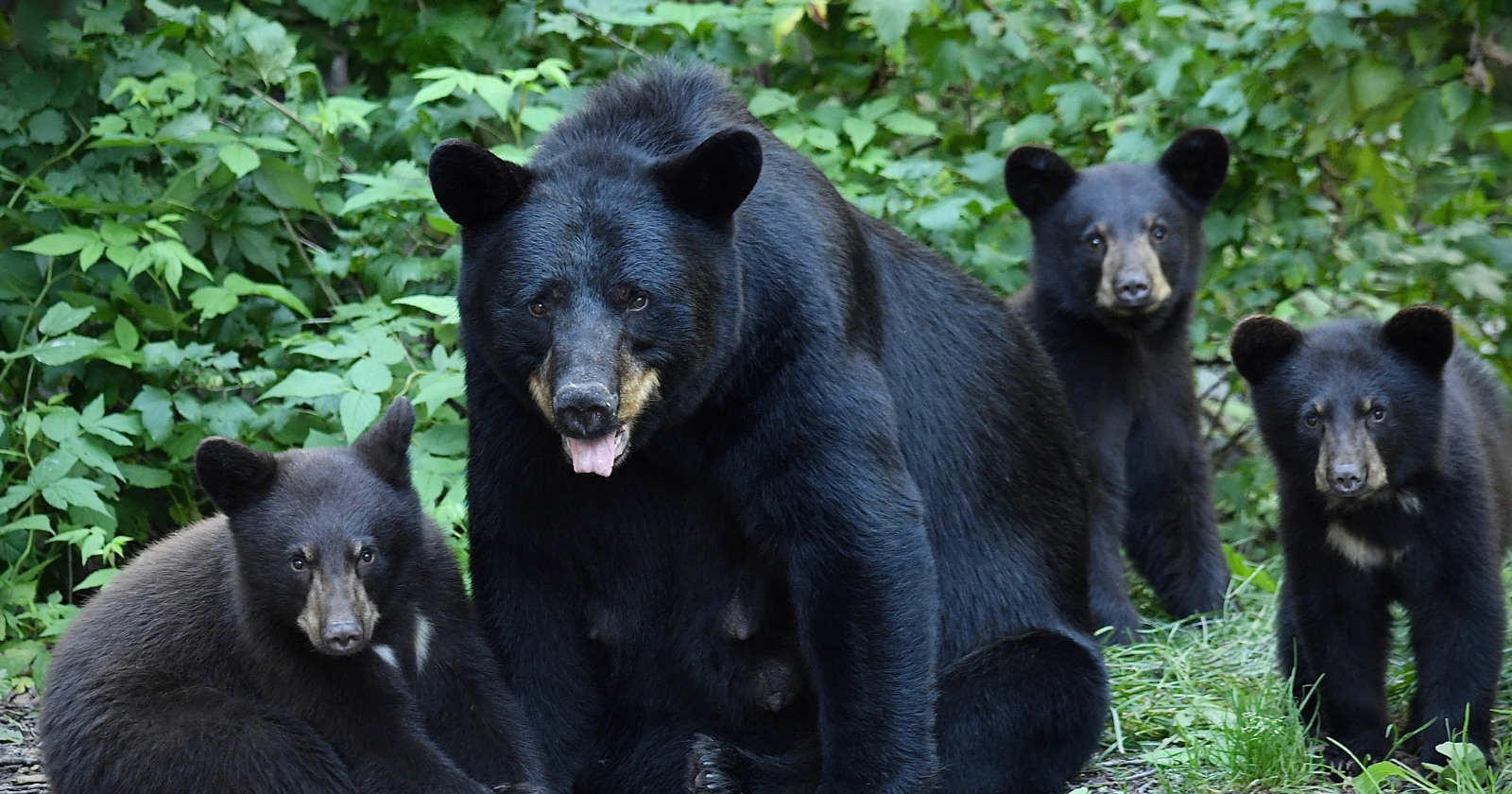
Sixteen black bears held in captivity, each equipped with implanted sensors that tracked their brain activity, have provided researchers with the most detailed insight yet into the internal workings of a hibernating bear. Over the course of the hibernation season, these bears were found to be asleep for nearly 65 percent of the time, approximately twice the duration of their summer sleep, despite their metabolism during hibernation declining to around a quarter of its usual rate.
The research was conducted by a team led by Øivind Tøien at the Institute of Arctic Biology, University of Alaska Fairbanks, in collaboration with Stanford University, the University of Oxford, and the Florey Institute of Neuroscience and Mental Health in Melbourne. The findings were first made available as a preprint in March 2025 and subsequently published in PLOS ONE in August 2026.
What the bears were actually fitted with
Describing them as “wired with brain sensors” captures the essence but doesn’t fully convey the procedure undertaken. The sixteen bears, all kept in outdoor enclosures near Fairbanks instead of being in the wild, underwent surgical implantation of telemetry devices that recorded electroencephalography via bone-screw electrodes, along with tracking eye movement, muscle activity, and core body temperature. This combination of signals, used by sleep researchers to differentiate between REM sleep, non-REM sleep, and wakefulness in humans, was applied to bears for the first time at this scale throughout an entire hibernation season.
The term “five years” in the context refers to the duration during which this telemetry system was operational across the bear population, accumulating over 3,500 days of data overall. The analysis of sleep specifically utilizes a smaller collection of recordings from each bear, typically three distinct 24-hour samples that capture the peak hibernation, a later hibernation phase, and a summer comparative period, rather than encompassing five continuous years of monitoring every bear. This is an important clarification for anyone envisioning five years of uninterrupted recordings, although it does not diminish the validity of the comparisons made between hibernation and summer.
The specific figures regarding sleep stages presented here derive from six of the sixteen bears, with each one contributing three sampled 24-hour recordings rather than the entire implanted group.
The statistics behind “two-thirds”
Throughout hibernation, the bears were recorded as being asleep for around 64.9 percent of the time, divided into 42.9 percent non-REM sleep and 22 percent REM sleep, with the remainder classified as wakefulness. In the summer months, their total sleep decreased to approximately 31.7 percent, with REM sleep specifically dropping to under half of its hibernation level. The doubling effect holds true across the data: bears experienced nearly twice as much sleep during hibernation compared to their active period, with REM sleep increasing by a comparable margin.
Tøien has made a specific remark regarding what occupies the remaining hours of hibernation when the bears are awake. “Most of those awake hours are what we call quiet wake, which means they are not entirely asleep but hardly moving at all,” he stated. This detail is significant as it suggests that hibernating bears are not simply awake in the conventional sense during their non-sleep hours.
Why increased sleep during a metabolic decline is intriguing
The metabolic aspect of hibernation is well-recognized: black bears reduce their metabolic rate to about a quarter of their normal levels, without the drastic drop in body temperature seen in smaller hibernators like ground squirrels, whose temperatures can near freezing. The body temperature of black bears only decreases from around 38 degrees Celsius in summer to between 30 and 35 degrees during hibernation, representing a relatively minor change that maintains brain warmth sufficient for activity and easy arousal throughout the season.
This pairing of a warm, functional brain with a significantly lowered metabolism makes the sleep finding noteworthy rather than a mere assumption. A colder, more profoundly shut-down hibernator does not require sleep in a traditional sense, as its brain functions at a minimal level. However, a black bear’s brain remains capable of producing typical sleep architecture, and the data indicate it does so, sustaining longer stretches than during the active season. The study characterizes hibernation in this species as an extended period comprised of genuine, scoreable sleep interspersed with moments of quiet, low-movement wakefulness.
The contribution of automated scoring
A significant aspect that enabled an analysis of this magnitude was a machine-learning tool employed by the team to automatically score sleep stages, instead of relying purely on humans to review every recording manually. Human scorers achieved agreement about 94.5 percent of the time regarding the classification of specific brain activity stretches, and the automated tool closely matched that standard, yielding performance scores ranging between 0.90 and 0.98 based on the sleep stage being assessed.
Tøien remarked that the team was “surprised by how effectively the machine learning functioned compared to manual scoring,” a finding that has less relevance for what it actually represents than for its potential implications in future research.