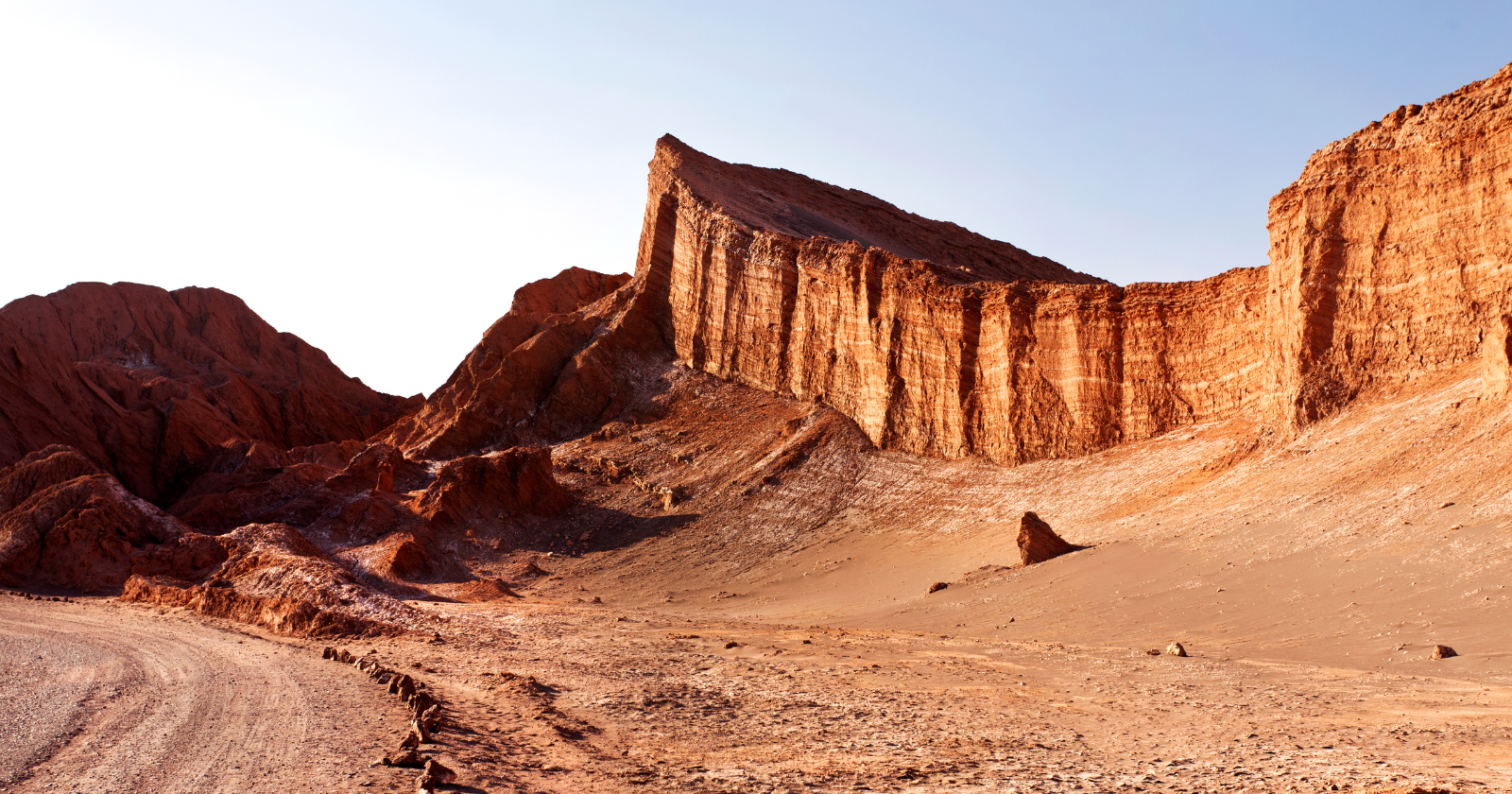
Water in the Driest Desert: A Deadly Revelation in the Atacama
The Atacama Desert, situated in northern Chile and recognized as one of the most arid and ancient places on Earth, has recently witnessed rainfall after centuries without, challenging the common belief that rain serves as a crucial source of life in dry regions. Instead of revitalizing the ecosystem, this rare precipitation turned out to be deadly. Scientists discovered that the sudden downpour resulted in the demise of numerous microscopic organisms that had flourished in the Atacama’s extremely dry conditions. These microbes, perfectly adapted to endure minimal moisture, faced osmotic shock when inundated with water.
Surprising Precipitation in the Atacama
The heart of the Atacama, frequently compared to Martian terrains due to its desiccation, encountered significant rainfall on March 25 and August 9, 2015, and once more on June 7, 2017, marking the first such occurrence in 500 years. This event created transient salty lagoons, leading scientists to initially anticipate a surge of biological activity. However, their findings disclosed a troubling inversion of expectations.
A Contradiction of Water and Mortality
Initial responses implied that the influx of water would invigorate the Atacama’s dormant biospheres. Instead, as expressed by Alberto Fairén and Armando Azua-Bustos, the torrent resulted in substantial microbial fatalities. The microbes, which had adapted to survive in exceedingly parched environments, were overwhelmed by the osmotic pressure brought on by the sudden water influx, effectively “bursting like balloons.” The rainfall wiped out up to 87% of previously recorded microbial species, leaving the once robust community diminished to merely a select few surviving species.
Price of Specialization
This occurrence emphasizes the fragile equilibrium of specialization within extreme ecosystems. Species that are finely attuned to specific environmental conditions can encounter significant risks when circumstances change abruptly. The situation in the Atacama hints at implications for analogous adaptations on Mars, where any ancient life forms may have faced similar adversities during dry periods followed by wet cycles.
Insights for Future Exploration
These results also prompt vital reflections for astrobiology, especially regarding techniques for identifying life on Mars and in other extraterrestrial settings. The researchers caution against water-focused life detection strategies, similar to those applied during the Viking missions in the 1970s, asserting that these methods could inadvertently endanger the very life forms they aim to find. Grasping the Atacama’s reaction to rain serves as a sobering reminder of the intricacies involved in detecting extraterrestrial life and highlights the necessity for careful and innovative approaches in crafting new exploration methods.