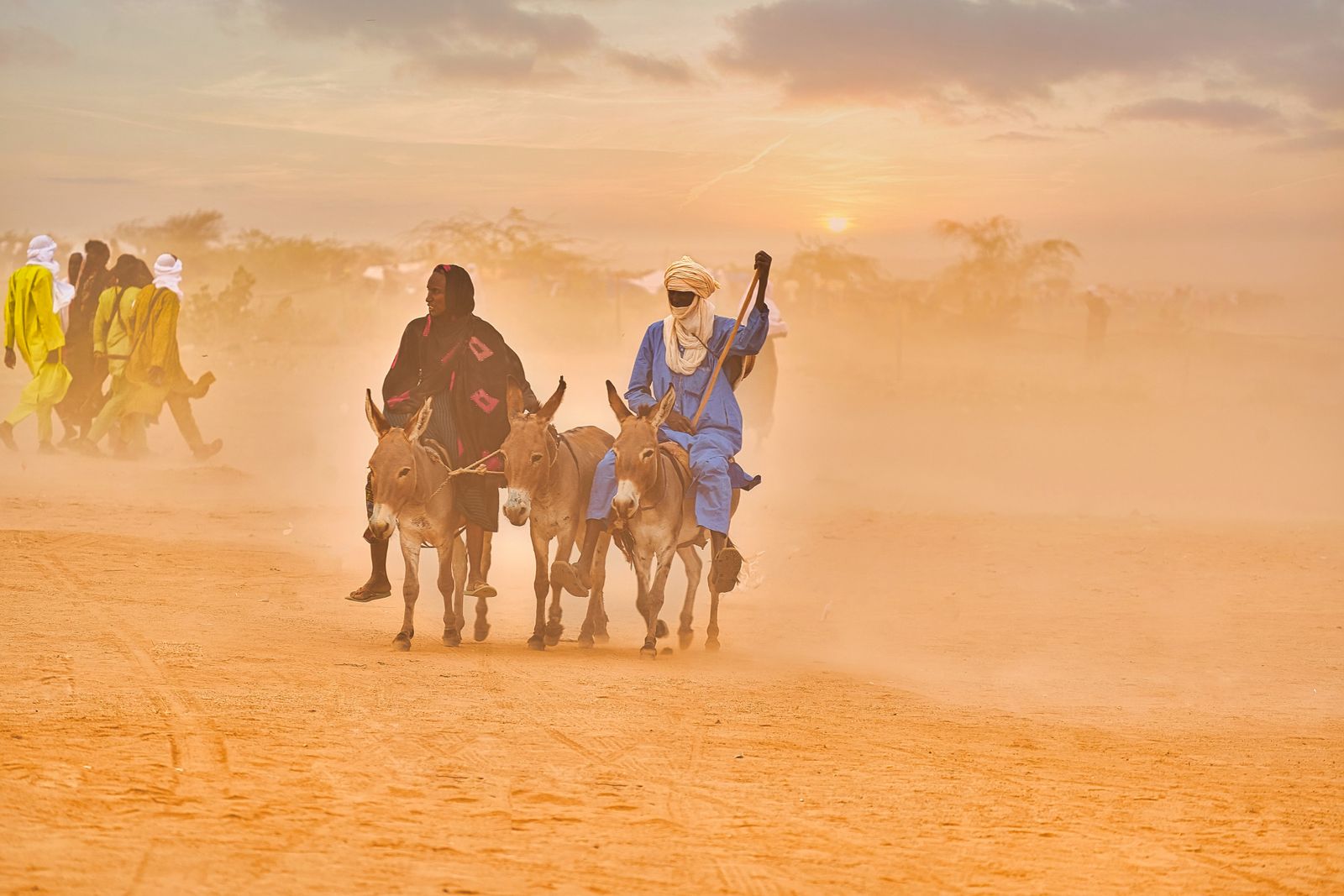
**The Transatlantic Dust Highway: Connecting Deserts and Rainforests**
The Bodélé Depression in northern Chad serves as a ghostly link between two highly contrasting ecosystems—the parched Sahara Desert and the verdant Amazon Rainforest. Each year, millions of tonnes of dust, rich in crucial nutrients, travel from this arid lakebed to the fertile lands of the Amazon.
**Dust and its Lifeline to the Amazon**
Annually, roughly 27.7 million tonnes of dust rises from the Bodélé, with about 22,000 tonnes of phosphorus ultimately enriching the soils of the Amazon. This influx of nutrients nearly offsets the losses experienced by the rainforest due to rainfall and river runoff, which are essential for its sustainability. Researchers such as Hongbin Yu from NASA have carefully measured this transfer, employing advanced satellite technology to trace the dust’s journey.
**The Bodélé Depression: A Weathered Reservoir**
The Bodélé Depression represents the remnants of Lake Mega-Chad, with its diatomite-rich sediments now freely carried by the winds. These diatomaceous materials, abundant in phosphorus and iron, form the endless supply that the Sahara offers to remote regions. Charlie Bristow and colleagues emphasize this natural reservoir as a recycling process for the Sahara’s gifts.
**Winds of Change: The Bodélé Jet**
A low-level jet stream, squeezed between the Tibesti and Ennedi mountains, elevates the dust into the air. This robust air funnel, unmatched throughout the Sahara, actively maintains the dust’s ascent. While the Bodélé remains the dustiest point on Earth, seasonal variations spread emissions across extensive Saharan areas.
**Across Oceans and Islands**
Traversing a vast oceanic expanse, the dust moves within the Saharan Air Layer, a channel of warm, arid air. NOAA clarifies this stratified atmosphere’s influence on mitigating tropical cyclones. In the U.S., the dust’s arrival indicates climatic interactions that link hemispheres, with its precise trajectory determined by atmospheric systems.
**The Amazon: Sustaining Life with Dust**
With its nutrient-deficient soils, the Amazon captures the airborne minerals crucial for its existence. The continuous deposition of nutrients fosters a thriving biosphere, counterbalancing what years of erosion remove. While discussions continue regarding specific sources of dust, the overall nutrient contribution remains indisputable—a vital lifeline for the rainforest.
**Beyond Minerals: Microbial Companions**
The dust is accompanied by microscopic hitchhikers. Research indicates the presence of diverse bacteria and fungi traveling with the dust to new lands. These organisms, although not primarily harmful, illustrate the biological exchanges facilitated along this natural route.
**Climate Oscillations and Dust Flow**
Dust concentrations vary with atmospheric changes. Studies by Luiz Augusto Toledo Machado reveal how U.S. weather fronts and Atlantic pressures influence the amount of dust received by the forest. These events highlight the intricate connections binding distant geographies in climatic harmony.
**Conclusion: A Global Tapestry**
As representations of ecological interdependence, the link between the Sahara and the Amazon showcases Earth’s interconnected processes. Even as global conditions shift, the natural choreography persists, narrating the tale of ancient lakebeds and vibrant forests intertwined through transcontinental connections. This story, rhythmic with nature’s pulse, stands as a profound testament to the Earth’s intricate dynamism.