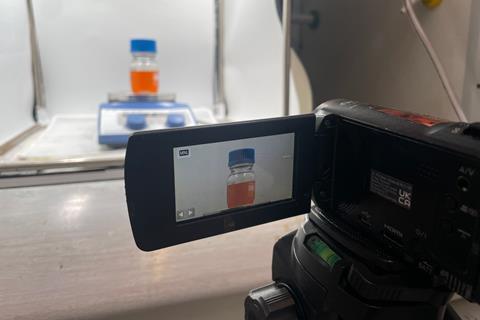
A new study highlights how vibrant dye molecules can transcend the limits of the conventional 8-bit sRGB color space, which might cause inaccuracies in digital reaction monitoring. As the use of smartphones and digital cameras for measuring chemical reactions grows, researchers at the University of Strathclyde, under the guidance of Marc Reid, are creating video-analysis software to convert visual insights into accurate kinetic data. Nevertheless, the sRGB color space, widely utilized by digital cameras, does not adequately capture the complete range of colors found in bright chemical reactions. This shortcoming was evident in Reid’s research, where unexpected data discrepancies were linked to color gamut clipping—the camera’s failure to record hues outside its range accurately.
The team demonstrated these difficulties with a hydroxylation reaction of crystal violet, where the color of the mixture surpassed the sRGB gamut for a significant duration of the experiment, resulting in mistakes in determining the reaction rate. The risk of such inaccuracies is especially troubling as automated laboratories increasingly depend on cameras for observation.
Vittorio Saggiomo, a specialist from Wageningen University, highlights the considerable influence of color clipping on reaction rate assessments, advocating for caution with existing technologies. Reid suggests simple diagnostic techniques to identify and mitigate clipping, like directly comparing sample colors and utilizing RAW formats or wider gamut cameras such as DCI-P3 or Adobe RGB to guarantee precision.
In support of this caution, Steve Christie from Loughborough University endorses the team’s flowchart as a pragmatic approach to tackle color gamut issues, advising researchers to verify that the colors recorded are within the camera’s encoding range to secure trustworthy digital evaluations of chemical reactions.