Incorporating manganese oxide, nickel, and a minimal quantity of scandium can greatly augment the durability and functionality of sodium-ion batteries, according to recent research. These enhancements are vital as worldwide interest in alternative battery technologies continues to grow due to worries regarding the expenses and environmental effects of lithium extraction. Sodium-ion batteries, which share conceptual similarities with lithium-ion batteries, have surfaced as a promising substitute as stated by Marca Doeff, an energy-storage authority previously affiliated with Lawrence Berkeley National Laboratory.
Sodium, being more plentiful than lithium, provides a cost-efficient and environmentally friendly option with diminished risks of material shortages. Sodium-ion batteries can be entirely drained to zero volts during transport, thus ensuring safety. Nevertheless, in spite of these benefits, sodium-ion batteries have lagged behind lithium-ion batteries concerning longevity and resilience. Shinichi Kumakura, a battery researcher at Tokyo University of Science, underscores the difficulties faced in enhancing the lifespan and energy density of sodium-ion batteries.
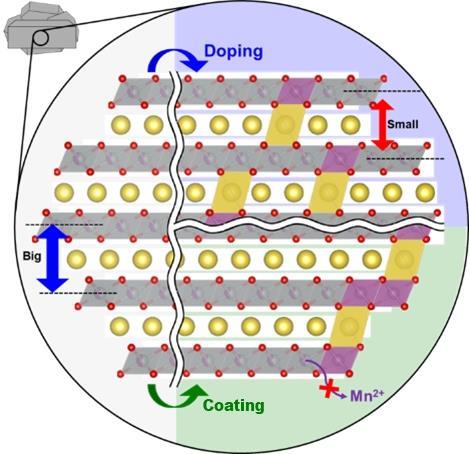
To address these obstacles, researchers have investigated doping the cathode with various materials or using protective coatings. Previous experiments utilizing manganese oxide and nickel encountered stability issues owing to phase transitions and surface instabilities. The latest study conducted by Kumakura’s group introduced scandium into the cathode structure, revealing promising outcomes in boosting battery stability and efficiency.
Upon the addition of scandium, single-battery test cells demonstrated remarkable enhancements, maintaining 68-75% capacity after 100 cycles versus merely 19% in untreated cells. Fully assembled batteries evaluated over 300 cycles preserved up to 92% capacity with scandium integration, with charging rates improving more than threefold. These results were commended by Xiaowen Zhan, a materials scientist at Brown University, who acknowledged the effectiveness of both doping and coating methods.
While the results suggest an encouraging pathway, Doeff and Kumakura point out the commercial hurdles posed by the rarity and expense of scandium. As an alternative, the research team is investigating cerium, another rare-earth element that is relatively economical. The ongoing investigation highlights the potential for further innovations in sustainable battery technologies.