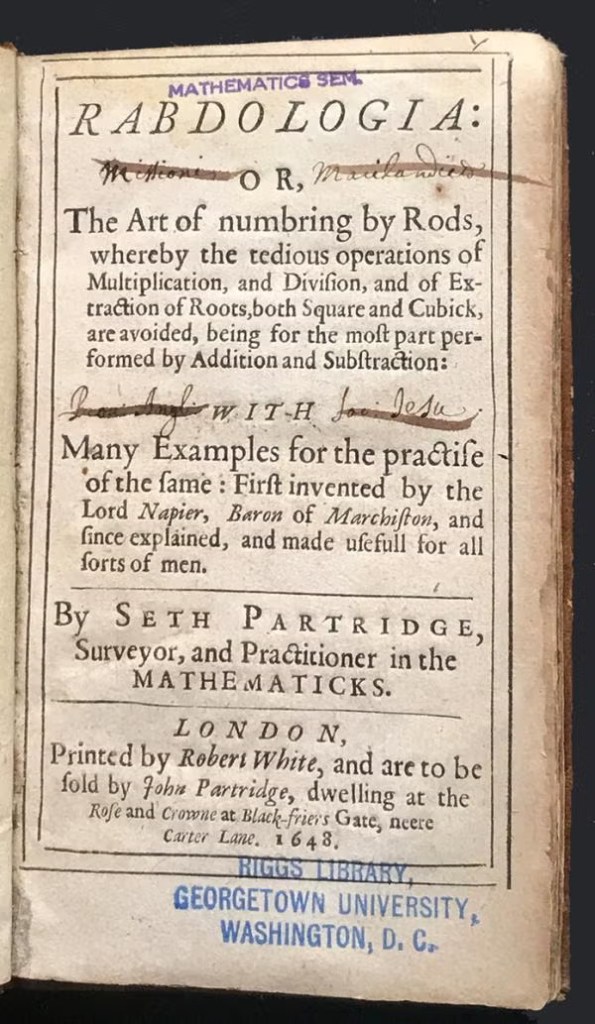
During the Early Modern Era in England, mathematical and scientific devices were essential to the execution and evolution of practical mathematics. Starting from modest developments in the mid-sixteenth century, the art of instrument fabrication flourished into a key aspect within the mathematical community by the seventeenth century. While such devices had been around since ancient times, their variety and quantity surged during this era. This growth of instruments arguably characterized the scientific and mathematical ethos of the time.
These devices were not only representative of the era but also vital in influencing the careers within the mathematical field. The phrase ‘mathematical practitioner’ described a variety of professions that depended on applied mathematics—such as surveying, navigation, military engineering, and bookkeeping. Practitioners frequently attached titles like ‘mathematical practitioner’ to their publications, demonstrating their professional identity and the significance of mathematics in their pursuits.
Henry Bond, for instance, published ‘A New Booke of Gauging’ as a ‘practitioner in the Mathematicks,’ a title also found in Seth Partridge’s ‘Rabdologia’ and William Purser’s ‘Compound Interest and Annuities.’ Gauging involved determining the volume of barrels for customs duties, a task necessitating specialized instruments and mathematical computations due to the intricacy of the shapes involved. Kepler and others contributed to this domain through writings that discussed the mathematical foundations of gauging and related practical tasks.
Throughout the High Middle Ages, surveying techniques were basic, using ropes and poles for measurements. However, the fifteenth and sixteenth centuries called for increased precision, driven by elements such as the translation and spread of Ptolemaic cartography and the changing legal landscapes of land ownership. These shifts required more precise surveying techniques, enabled by innovations like triangulation, introduced by Gemma Frisius.
Mathematical instruments, including the plane table, theodolite, circumferentor, and Gunter’s chain, became vital tools in surveying, replacing and enhancing traditional practices. These improvements allowed for greater accuracy and efficiency in mapping and land measurement, essential for governance and military objectives.
Instruments also significantly impacted the education of gentlemen, as society increasingly acknowledged the value of mathematical literacy alongside conventional education. The capacity to engage with practical mathematics became crucial in areas like estate management and navigation. As highlighted by Edward Stone, mathematical instruments effectively connected theory and application, rendering them a critical element in the education of the period.