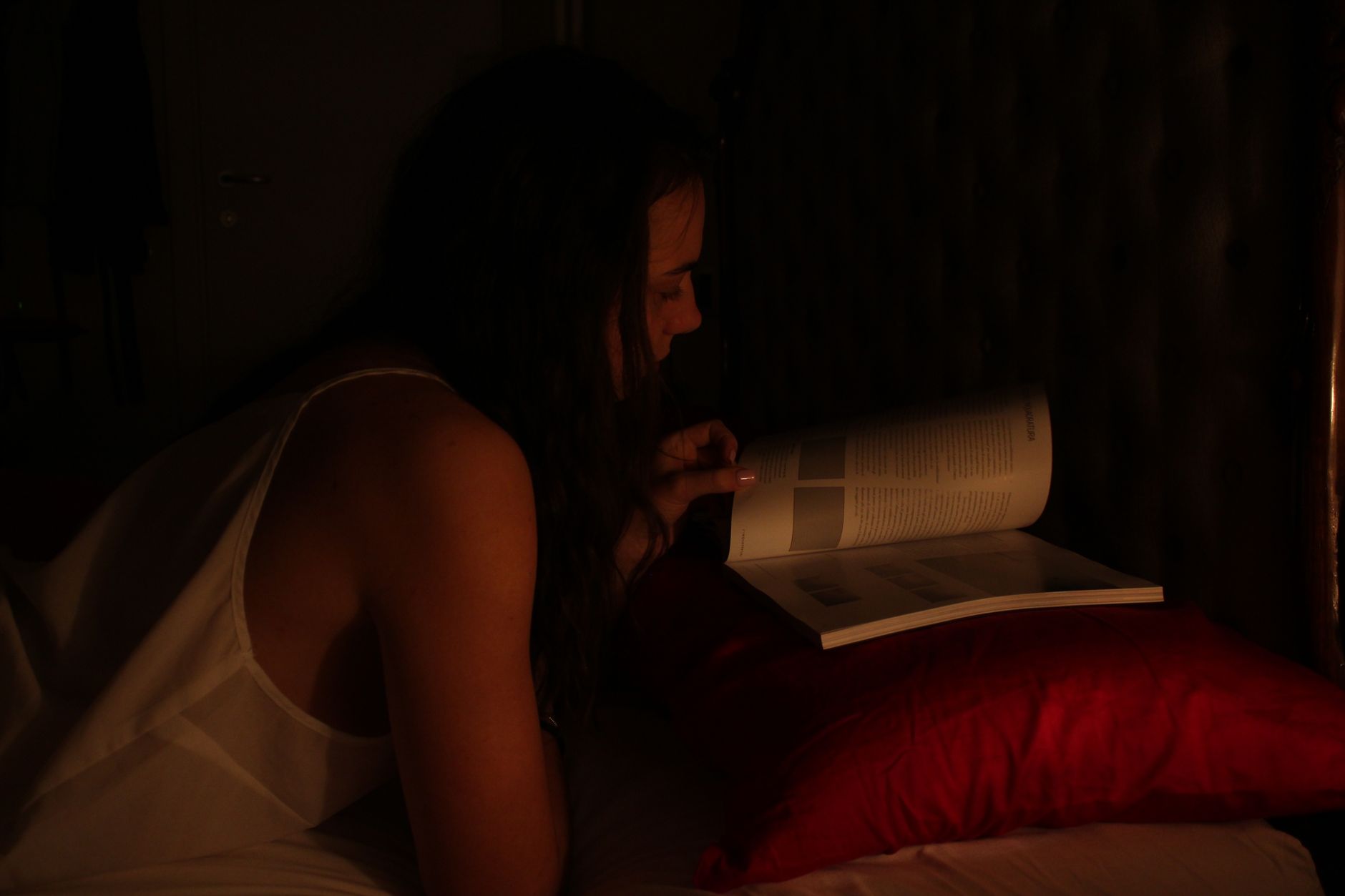
Engaging in reading prior to sleep is among the most frequently recommended pieces of sleep guidance, and distinctively for a traditional remedy, it has indeed undergone evaluation. The findings are promising yet more nuanced than the headlines imply, with the most intriguing result not being that reading aids sleep, which it does to a small extent, but that the medium you read from can subtly negate this advantage. When done correctly, reading a book at night serves as a genuinely effective way to unwind; conversely, reading from a bright screen can counteract the rest it was intended to enhance.
Reading in bed truly does help, somewhat
The most compelling evidence arises from a rare occurrence in the realm of sleep advice: an actual randomized study of the practice itself. In a research initiative referred to as the People’s Trial, investigators led by Aoife Finucane enlisted nearly a thousand participants, randomly assigning half to read a book in bed for fifteen to thirty minutes before sleep for a week, while the other half refrained, and discovered that reading in bed enhanced sleep quality for an estimated 8 to 22 percent of individuals compared to those who did not read, a result highly unlikely to occur by chance.
Two significant observations stem from this. Firstly, while the effect is genuine, it is modest and based on individuals’ self-reported experiences of their sleep, making it more of a gentle prompt rather than a solution, and it won’t rectify a serious sleep issue. Secondly, it is remarkable to have any randomized evidence supporting this type of everyday advice, most of which is grounded in tradition and reason rather than controlled testing. In this instance, the trial was conducted, and reading proved beneficial. The plausible explanation is not convoluted: reading a book is an engrossing yet low-arousal activity that gently engages the mind while replacing the stimulating activities people typically partake in while in bed, and this subtle shift is precisely what the transition into sleep necessitates. Turning pages serves as a signal to the body that the day is winding down.
The unexpected aspect is the medium of reading
The genuinely surprising finding is that the advantage is highly contingent on the medium, as reading the same text from a bright screen alters the physiology entirely. In research published in the Proceedings of the National Academy of Sciences, Anne-Marie Chang and her team had subjects read from a light-emitting tablet on certain evenings and a printed book on others, discovering that the illuminated device inhibited the sleep hormone melatonin by over half, postponed their internal biological clock, extended the time taken to fall asleep, and caused greater grogginess the following morning, whereas the printed book did not elicit any of these effects.
This shifts the entire recommendation framework. Much of what we consider the advantage of reading before bed is, in fact, the benefit of reading from printed material instead of a screen, because the bright light of a phone or backlit tablet signals to the brain, at an inappropriate hour, that it is still daytime. An individual who replaces a paper book with the same story on a bright device may be counteracting the relaxing impact of reading with the stimulating influence of the light, pondering why the highly praised habit does not yield results. The takeaway is not that screens are harmful, but rather that the calming benefits of nighttime reading are connected to maintaining low light levels, which a printed book inherently provides, unlike a luminous device.
How to effectively utilize this
A few realistic limitations should keep this in perspective. The enhancement in sleep quality from the trial was modest and self-reported, the screen study was limited, comprising only twelve participants and involved a fairly extreme exposure to evening light, and reading before bed is not universally relaxing: an engaging thriller or a provocative news story can elevate your arousal level instead of diminishing it, which is counterproductive. The habit contributes to calmness, so anything read at bedtime that is thrilling or upsetting detracts from the purpose.
When synthesized, the practical advice is straightforward and well-supported. Reading before bed ranks among the better-evidenced routines for winding down, but its efficacy hinges on a specific format: a printed book, or at least a non-illuminated e-ink reader in a shaded space, engaging with something compelling enough to draw you in but tranquil enough not to stimulate you, for fifteen to twenty minutes as a conscious conclusion to the day. When approached this way, the unexpected benefits are tangible, resulting in a somewhat smoother transition into sleep, a gentler landing, and a