**Enormous Antibody Validation Scandal Exposed by Scientific Investigators**
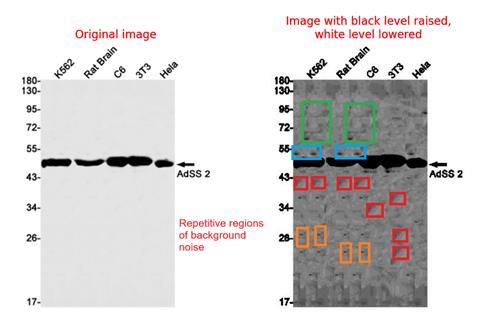
In a startling revelation, scientists have unveiled extensive tampering in antibody validation data throughout the sector. First brought to light in Thermo Fisher Scientific’s catalog in May, the inquiry has now broadened to expose falsified validation data on a significantly larger scale, encompassing over 18,000 images linked to more than 17,000 antibodies from at least 15 distinct supplier companies.
Spearheaded by Reese Richardson, Elisabeth Bik, and Sholto David, who initially detected altered Western blot images, the investigation has captured international attention, with annotated images being compiled in an online repository. Some of the altered data traces back over ten years, highlighting a systemic problem within the sector.
The companies involved range from major vendors to niche firms, such as MilliporeSigma, G-Biosciences, Proteogenix, Abcam, and Origene. The alterations encompass Western blots and immunofluorescence images, vital for assessing antibody binding and distribution within cells. Richardson conveyed the scientific community’s outrage, demanding accountability and transformation from these profit-driven companies.
Bik, a specialist in image integrity, pointed out that while Western blot manipulations are relatively easier to detect, revealing immunofluorescence alterations necessitates more thorough investigation. She cautioned that with the increasing application of artificial intelligence, spotting doctored images may become more difficult. This discovery challenges the previously assumed faith in the quality of expensive antibody reagents. According to Bik, the financial repercussions on research resulting from these manipulations could reach millions or even billions in squandered funding.
The inquiry revealed unique manipulation styles among companies, sparking suspicions that fabricating validation data might be a widespread practice in the industry. G-Biosciences and Thermo Fisher have the highest counts of doctored images, each topping 5,000, followed by LSBio and Origene. Thermo Fisher and Abcam have initiated internal reviews, with Thermo updating and labeling some images to differentiate between edited and original data.
Employing forensic image analysis tools, the investigative team traced modifications in images, uncovering changes beyond standard labeling practices. Some altered images date back to 2011, displaying detailed sessions of modification.
Despite the comprehensive findings, Bik remains doubtful about meaningful industry change. She expressed hope for potential lawsuits to address the scandal and urged companies to take responsibility by scrutinizing their supply chains. Researchers are recommended to independently validate antibodies due to the absence of industry accountability.
Richardson views the scandal as a cautionary tale regarding the privatization of critical research services and advocates for regulatory oversight. Until reforms are implemented, he advises researchers to execute their own validation protocols, as dependence on manufacturers is considered unreliable.