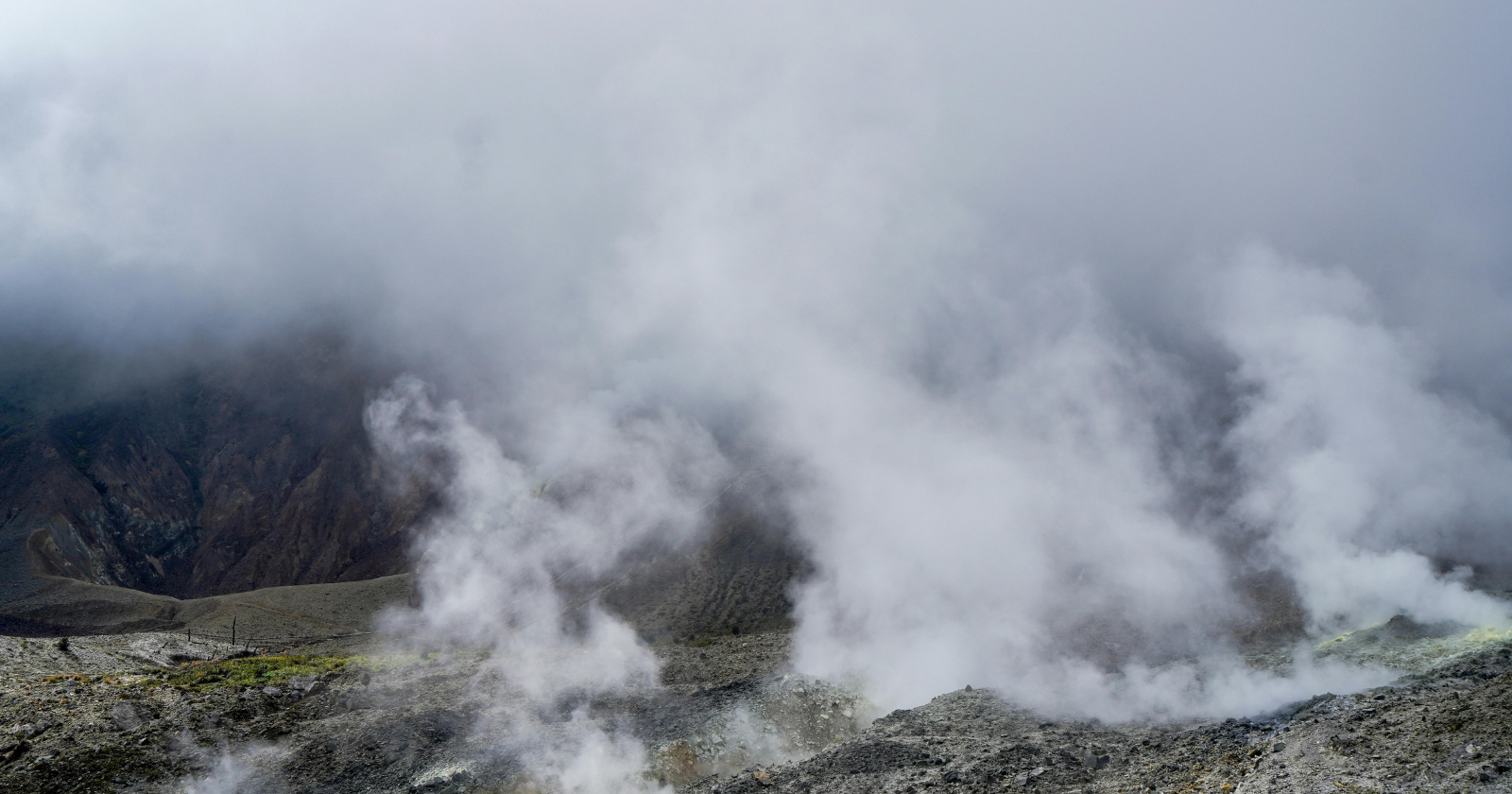
Somewhere to the north-west of Nairobi, in a valley where the earth emits hissing sounds and the air carries a subtle scent of struck matches, lies a power station that incurs no fuel costs.
No coal shipments. No gas pipelines, and no diesel tankers hauling up the slopes. Merely a field of robust silver pipes weaving through volcanic hills, transporting steam that ascends under its own pressure from a few kilometers below. Zebras roam around the wellheads, since the entire complex is situated within Hell’s Gate National Park.
Why the ground is heated
Kenya’s Rift Valley is a region where the continent is slowly pulling apart. Geologist Lucía Pérez Díaz, in an article for The Conversation, describes the East African Rift as an active rift, propelled by an uplift of unusually hot mantle beneath the crust, which stretches it thin and fractures it along massive faults. The observable manifestations of that tension are volcanoes and earthquakes.
At Olkaria, the geothermal site in question, the heat is alarmingly near to the surface. KenGen, the state-owned entity operating the facility, estimates that the magma intrusions supplying the field are located at less than six kilometers deep, and points out that one of the lava flows scattered across the area erupted merely around two centuries ago.
How steam transforms into electricity
So, what occurs a few kilometers beneath those wellheads? Wells at Olkaria extend between 600 and 3,000 meters, penetrating fractured trachyte and rhyolite that has been stewing in heat for nearly a million years. What is extracted is a chaotic blend, approximately three-quarters hot water and one-quarter steam. Cyclone separators divide the two, with dry steam directed to the turbine hall, and the remaining brine being pumped back down to maintain reservoir pressure.
It is an utterly unremarkable setup that operates continuously.
Olkaria I, which began operations in June 1981, was Africa’s first geothermal plant: comprising three units of 15 MW each, supported by 33 wells. KenGen indicates it has consistently achieved over 95 percent availability since its inception.
Forty percent of the grid
Geothermal energy accounted for 39.51 percent of the total electricity produced in Kenya during the financial year ending June 2025, according to the Energy and Petroleum Regulatory Authority. Hydro power was second at around a quarter. Collectively, renewables contributed just over 80 percent of total generation.
That figure carries more significance than it initially seems. Hydro power production is dependent on rainfall, and Kenya has experienced enough dry periods to understand the associated costs. Steam is indifferent to rainfall. A geothermal field functions like a coal power station but without the coal, which is why grid operators categorize it as baseload power, and why it now serves as the foundation of the Kenyan grid.
Roses, pyrethrum, and a sizeable hot bath
At Eburru, further along the rift, locals have been drying pyrethrum flowers over a shallow steam well since the establishment of a drying facility there in the 1920s, decades before anyone in Kenya considered generating electricity from the same heat source. Irene Jepkorir Ronoh, in a paper presented at Stanford’s geothermal reservoir engineering workshop, documents where else the heat is utilized. Fifty hectares of greenhouses at the Oserian rose farm are heated in the early hours, from approximately 2 a.m. to 7 a.m., to protect flowers destined for export markets in Europe and the US from fungal infections. A spa at Olkaria operates using the same cooling brine, with lagoons cooling down from 90 degrees to bath temperature and attracting about 45,000 visitors annually.
Who inhabited the area first
The construction of all this required the displacement of local grazing lands.
In 2014, four Maasai villages were relocated to accommodate the 140 MW Olkaria IV plant. Jackson Shaa of the Narasha Community Development Group and Annabel Perreras of the International Accountability Project, writing for the Bretton Woods Project, note that the community’s land reduced from 4,200 hectares to 1,700, with the replacement area being unsuitable for livestock. They also mention that the World Bank’s Inspection Panel determined that the Bank should have activated its indigenous peoples policy but failed to do so, reasoning that the policy was applicable only to hunter-gatherers, not pastoralists. The Bank later acknowledged this oversight, leading to mediation. The homes in the new area are sturdy; the herds are diminished.
Drilling for the next 1,600 megawatts
Steam fields are a significant financial risk. A single well can cost millions of dollars and may end up dry, which is why private investors typically prefer purchasing steam rather than searching for it themselves. Kenya’s solution has been the state-owned Geothermal Development Company, which conducts the initial drilling and sells the steam to anyone willing to install a turbine. At Menengai, a collapsed volcanic caldera near Nakuru with an estimated