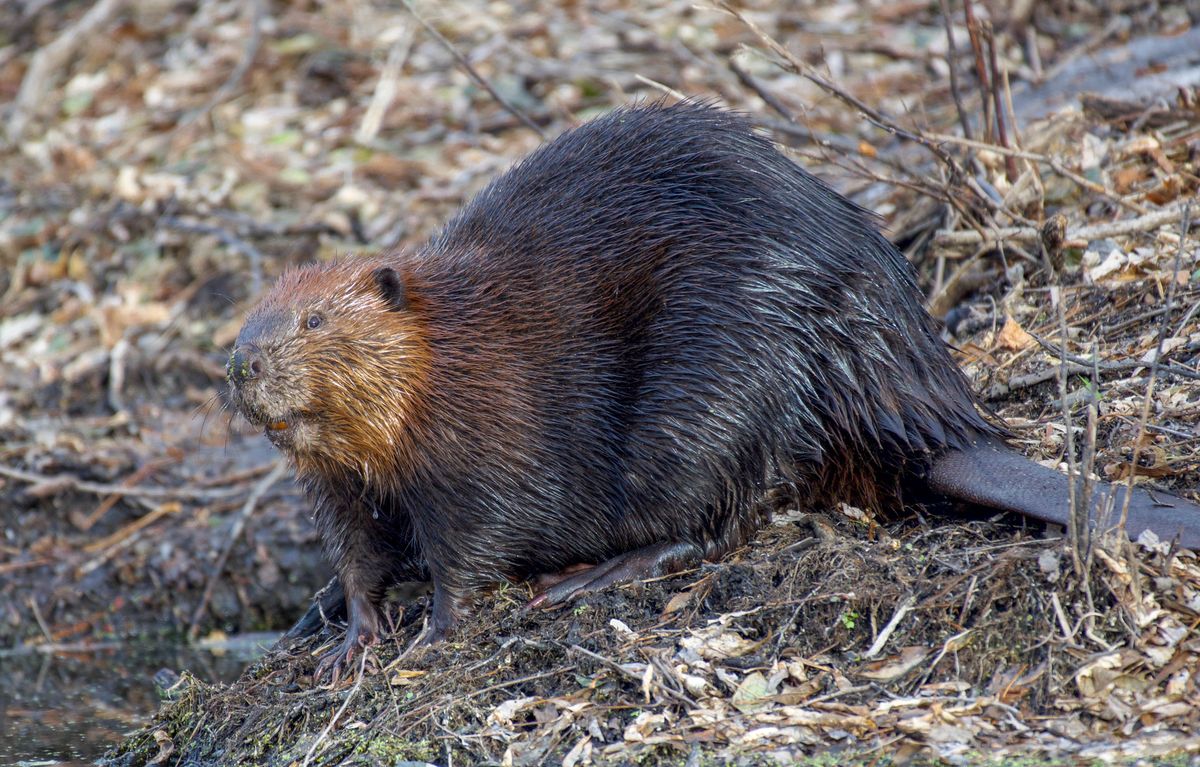
In 1948, Idaho wildlife authorities carried out a distinctive wildlife-management trial by relocating 76 beavers to secluded regions using parachutes. Out of these, 75 beavers successfully survived the drops. This initiative featured an older male beaver named Geronimo, who underwent repeated test descents to verify the safety and efficacy of the parachute gear. This narrative, explored in Elmo W. Heter’s 1950 article “Transplanting Beavers by Airplane and Parachute” published in the Journal of Wildlife Management, illustrates a functional approach to moving beavers to areas where access was impeded by the absence of roads.
Prior to parachute usage, transferring beavers necessitated arduous overland treks using trucks and pack animals, which resulted in considerable beaver fatalities. Aircraft offered a more effective transport solution to unreachable locations, and parachute innovations allowed for secure landings. The wooden crates designed for transport were constructed to remain closed during descent due to parachute tension and to open upon touchdown, thereby releasing the beavers.
Geronimo, the test subject beaver, was not a volunteer but rather an animal utilized to enhance the parachute technique. Although the operation yielded positive results, it brought to light the difficulty of maintaining container security during flight while ensuring effective release upon landing. The success rate of 75 out of 76 beavers surviving the flights only reflected the immediate results of the drops. Long-term success necessitated further evaluation of the beavers’ survival rates, their adaptation to the new surroundings, and their breeding success in the released locations.
The relocation’s intent was to shift beavers away from regions of human encroachment, such as McCall, to backcountry ecosystems where their intrinsic dam-building activities could enhance the environment by increasing wetlands, elevating water tables, and fostering improved ecological relationships. Nonetheless, the ecological advantages are site-sensitive and hinge on numerous variables, such as fish migration patterns and water flow conditions.
The 1948 endeavor stands as a remarkable chapter in wildlife management history, showcasing both the creativity and the hurdles of wildlife relocation. While the act of parachuting beavers may appear remarkable, it served as a resolution to the human-wildlife conflict, aiming to realize the ecological potential of beavers in appropriate settings. This account emphasizes the need to acknowledge both the accomplishments and constraints inherent in such wildlife management initiatives.