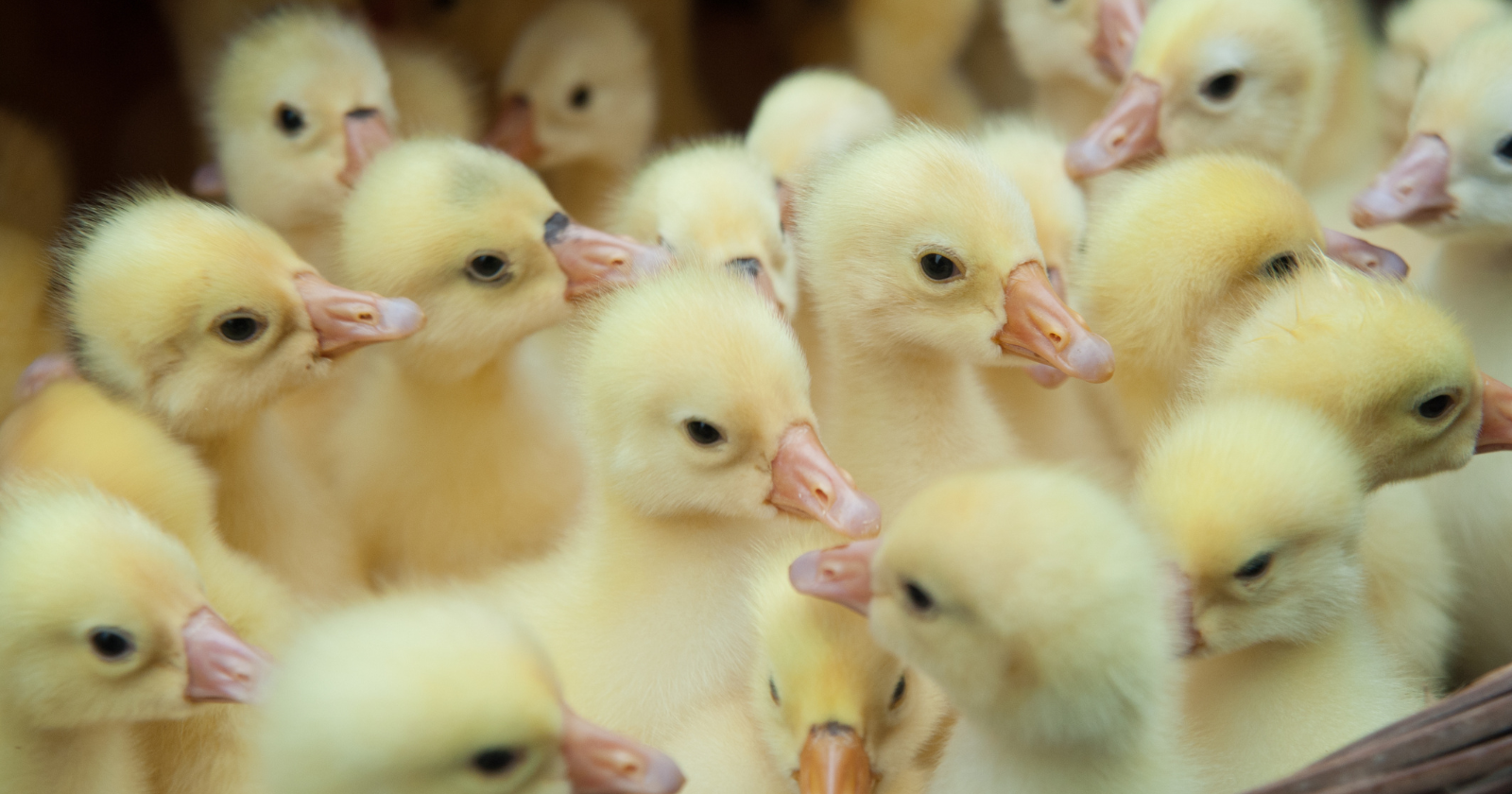
Somewhere in America at this moment, a cardboard box is making noises. That box is completely lawful mail. Day-old chicks have passed through the American postal service since 1918, and an investigation by the Postal Service’s Office of Inspector General documented over 41 million of these deliveries via the air network alone in just one year. Within the industry, these boxes are referred to as “lives,” which can either seem grimly practical or bizarrely affectionate depending on the circumstances.
**What the Rulebook Permits**
Publication 52, the Postal Service manual regarding hazardous, restricted, and perishable mail, enumerates the species allowed: chickens, ducks, emus, geese, guinea fowl, partridges, quail, and turkeys, in addition to pheasants (which can only be mailed from April to August). All other birds are nonmailable. Thus is any bird vaccinated against the live Newcastle disease virus. Emus are the entry that halts people. A day-old emu chick is a fist-sized bundle of striped fuzz, and it qualifies as mail.
The conditions attached to the rest resemble a century’s worth of hard-earned lessons. Birds must not exceed 24 hours of age. They must be sent in the original, unopened box from the hatchery of origin, with the date and hour of hatching noted on the address side by an individual with direct knowledge of that information. Boxes cannot be stacked more than ten high. Shipments must depart early enough during the week to prevent arriving at a post office on the afternoon prior to a Sunday or public holiday, when a closed counter and a locked door can be lethal. Delivery must occur within 72 hours of hatching.
**Why 72 Hours?**
That figure stems from biological factors rather than administrative decisions. A chick absorbs the last of its egg yolk into its body right before emerging from the shell, and the internal yolk sac then serves as a packed meal of fat, protein, and maternal antibodies.
The intriguing part is how far that meal can last. A study on feed deprivation in newly hatched broiler chicks noted that commercial handling and transportation could postpone a chick’s first significant meal by as much as 72 hours and discovered that chicks denied food for 24 or 48 hours weighed less than those that had been fed a week later. This particular paper is merely that: one paper; and this one focused on growth rather than postage. Its findings awkwardly contrast with a delivery window that uses the yolk as excess capacity.
**What Happens When Time Runs Out**
Pub 52 provides a response for the unfortunate scenario, and it is as bureaucratic as possible. Its section on disposal states that any mailpiece of live animals that cannot be delivered or returned within the timeframe must be handled immediately, that funds from any sale return to the mailer via postal money order minus a 25 percent commission, and that a postmaster must log the entire matter on PS Form 3820.
Such failures are not mere hypotheticals. In WBUR’s Cognoscenti, Tove Danovich recounted a shipment of approximately 12,000 chicks left in a postal truck for three days during the 2025 season, with about 4,000 dead by the time someone opened the doors. Earlier cases she references include around 5,000 birds lost to delays in Maine and 4,000 on a Miami runway. Hatcheries across the Midwest informed the Midwest Newsroom, in coverage released by NPR Illinois, that late deliveries were causing deaths among birds that used to arrive unharmed, and that neither UPS nor FedEx will transport lives, leaving hatcheries with no alternative for their business. Eagle Nest Hatchery in Ohio has since announced it will cease shipping live chicks entirely, citing transit losses it deemed too significant to justify, as reported by Farm and Dairy.
**An Ongoing Revision**
The same audit uncovered deficiencies in the protocols for receiving, handling, and delivering lives, changes in the network communicated to hatcheries too late for them to plan accordingly, and minimal oversight over the contracted air carrier responsible for much of this transportation.
Eleven recommendations arose from that audit. One suggested adding a “deliver by” date, 72 hours following hatching, printed on each box of day-old poultry. Postal management initially disagreed but eventually revised their stance.
Another proposed regulation in the Federal Register would prohibit the reuse of fiberboard containers, necessitate individual addressing and sequential numbering when boxes are bundled together, and require mailers to inscribe the recipient’s information directly onto adult bird packaging in case a label dislodges. Public comments closed on September 8th.
None of the suggested changes address the 72-hour timeframe itself. A yolk sac was never intended as a shipping allowance. It provides a newly hatched bird with roughly three days of leeway, and the debate occurring in comment periods and hatchery closures alike revolves around how much of that leeway a logistics network is entitled to utilize.