Archimedes of Syracuse stands out as a key figure in the annals of mathematics and science, celebrated for his innovative contributions in Ancient Greece. Recognized as a mathematician, physicist, engineer, and astronomer, Archimedes has left an indelible mark, although much of what persists today is a mixture of legend and reality. While popular tales cherish his famous expressions such as “Eureka” or his insistence on not interrupting his circles, the deeper insights into his mathematical contributions often remain clouded.
Archimedes made significant strides in the method of exhaustion, a forerunner to integral calculus, by honing and expanding upon concepts initially put forth by earlier Greek mathematicians such as Eudoxus. His application of the method was broader and more mathematically advanced than that of those who came before him, yet contemporary discussions frequently skip over these earlier influences in favor of focusing solely on Archimedes. His work sparked a revival in the sixteenth century, which played a crucial role in the growing domains of new mathematics and science, impacting figures like Galileo.
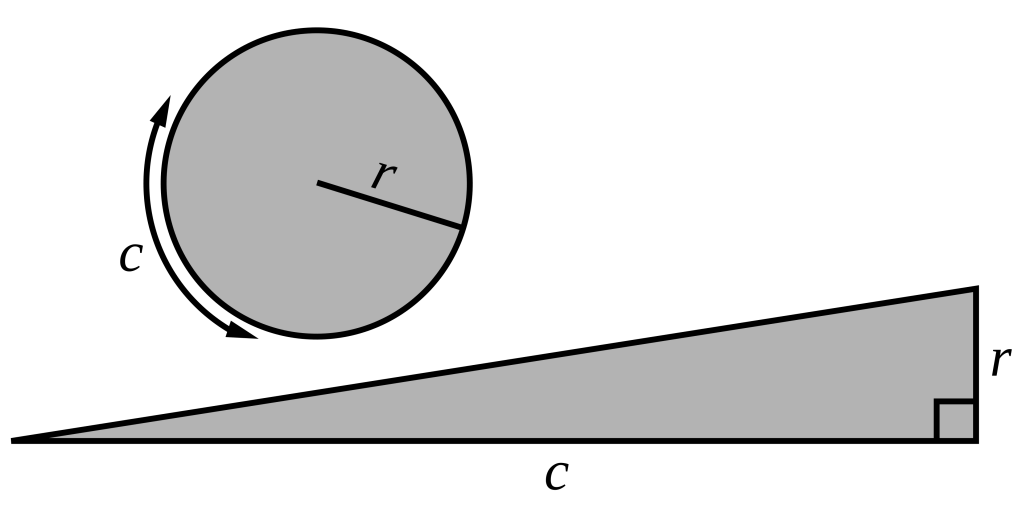
A well-known application of the method of exhaustion by Archimedes was the calculation of the area of a circle using inscribed and circumscribed polygons, a quest that ultimately resulted in his approximation of Pi ((π)). Archimedes’ calculations laid foundational stones for subsequent mathematical investigations, even as they were eclipsed by later advances in calculus.
In addition to his work on circles, Archimedes employed the method in his treatise “Quadrature of the Parabola,” which deals with dissecting a parabolic segment into triangles to demonstrate that its area surpasses that of another triangle by a specific ratio. His geometric techniques resonated with aspects later observed in calculus, though his approaches were limited by the mathematical language of his era.
Alongside his mathematical accomplishments, Archimedes’ mechanical techniques, as outlined in his correspondence with contemporaries like Eratosthenes, showcase his inventive method of addressing geometrical and physical challenges. These techniques utilized abstract notions like the laws of leverage, foreshadowing ideas that would later be formalized in calculus.
Despite his groundbreaking contributions, Archimedes’ work remained obscured for centuries until its rediscovery, which curtailed its immediate influence on the historical progression of calculus. Likewise, while he delved into problems akin to differential calculus, such as identifying tangents to curves, no organized method resembling the later concepts of calculus was established.
In conclusion, Archimedes exemplifies the intricate blend of myth and mathematical advancement. His pioneering application of exhaustion methods, investigation of geometric areas, and emerging concepts akin to calculus highlight his lasting legacy in the realms of science and mathematics.