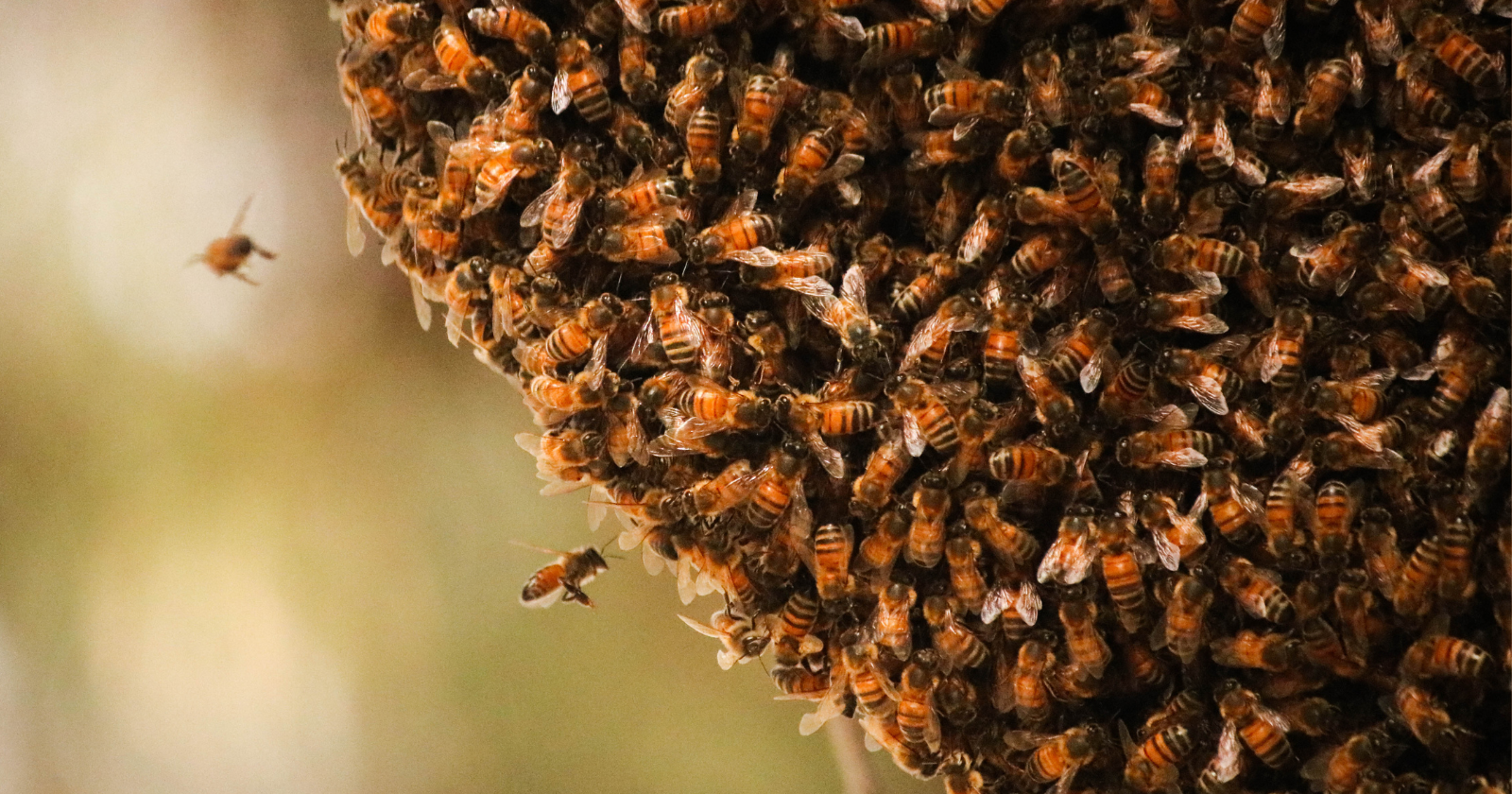
In November 2023, Derek Mitchell, a mechanical engineer at the University of Leeds, released a pioneering paper in the Journal of the Royal Society Interface that questions a long-held assumption in beekeeping. Entitled “Honeybee cluster—not insulation but stressful heat sink,” the research employs mathematical approaches used in the assessment of building insulation to reassess the conventional understanding of honeybee clustering behavior in colder conditions. In contrast to over a century of beekeeping documentation that characterized bee clusters as insulators maintaining warmth in their center, Mitchell’s examination shows that these clusters actually act as heat sinks.
The traditional model depicted a warm insulating layer of bees encircling a warmer center, similar to a blanket that conserves heat. This notion has supported the adoption of thin-walled hives even in very cold environments, presuming that the bees’ innate clustering would ensure adequate thermal regulation. Nevertheless, Mitchell’s study, using engineering definitions of insulation, reveals that the conventional perspective is incorrect. His results prove that bee clusters do not meet essential insulation criteria and instead possess the traits of a heat sink, where heat is dissipated rather than kept.
Mitchell’s research indicates that as bee clusters compress in response to cold, their insulating capabilities decrease, akin to how compacting down in a jacket reduces its insulation. This finding carries important implications for hive construction. Present thin-walled hives amplify heat loss, indicating a necessity for more robust insulation, similar to natural tree cavities, where bees have historically flourished.
The research, positioning hive conditions as crucial to bee welfare, implies that conventional methods may induce stress in bees, encouraging a reevaluation of beekeeping practices. By emphasizing the hive as a vital component of the honeybee’s habitat, Mitchell’s discoveries call for a reassessment of how bees are housed, with prospective ethical and ecological advantages.