During the Early Modern Period, England saw substantial advancements in the availability and usage of scientific and mathematical instruments. These devices were mainly utilized by specialists in areas such as navigation, surveying, and estate management; however, it became trendy among the gentry to educate themselves about these tools in order to partake in informed discussions with professionals. This growing interest resulted in an increase in private mathematics tutoring, which largely concentrated on the application of instruments rather than the underlying theoretical mathematics—considered unrefined by the upper class to explore too deeply.
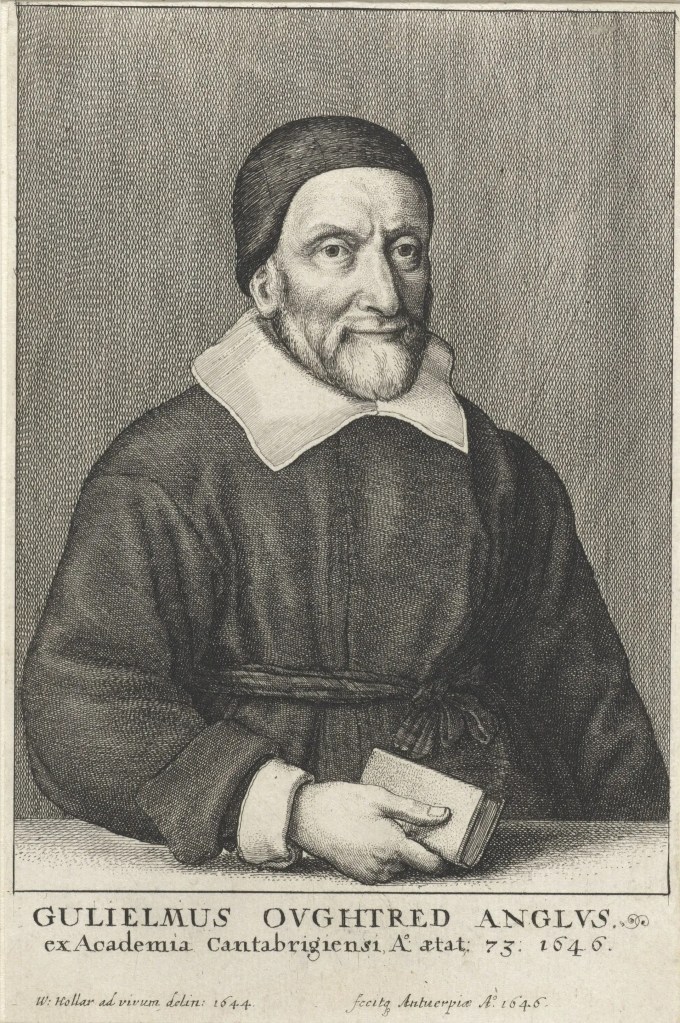
William Oughtred, a notable mathematics educator, strongly opposed this trend. Oughtred asserted that genuine mathematical skill emerged from demonstration and theory, rather than from mere superficial use of instruments. His teachings aimed to cultivate solid expertise, illustrated by students like Seth Ward, John Wallis, and others, who eventually rose to prominent positions in English mathematics.
Oughtred’s contributions included the creation of the linear slide rule, a development from Edmund Gunter’s logarithmic scale. He was against the spread of mechanical shortcuts that overlooked mathematical principles.
The dispute over inventorship with Richard Delamain represented a significant chapter in Oughtred’s life. Oughtred defended his inventions through vigorous debate, emphasizing the necessity of theoretical comprehension alongside practical instrument usage. His innovations and educational doctrines secured his legacy, shaping mathematical practice and instruction for years to come.