**The Kerala School of Mathematics: A Neglected Episode in the Development of Calculus**
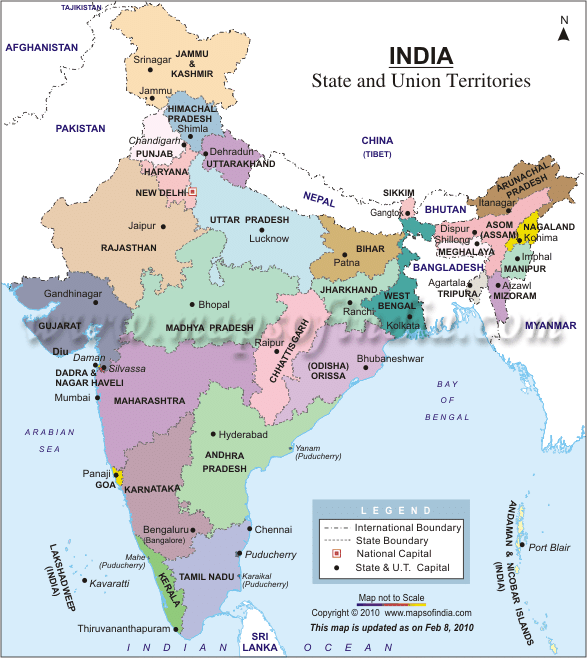
The historical progression of calculus is characterized by essential contributions from different cultures and periods. An especially intriguing yet frequently neglected episode in this narrative is the endeavors of the Kerala School of Astronomy and Mathematics, a collective of scholars active in medieval India from the fourteenth to the early seventeenth centuries. Located in the modest coastal state of Kerala in southwestern India, these scholars achieved groundbreaking strides in the realm of infinite series, foreshadowing crucial concepts in calculus.
Established by Mādhava of Sangamagrama (c. 1340 – c. 1425), the Kerala School nurtured a remarkable line of mathematicians and astronomers who perpetuated his work. Although Mādhava’s original writings are absent, his mathematical successes have been retained through the texts of his successors. His only documented student, Vataśśeri Parameśvara Nampūtiri (c. 1380–1460), alongside later members like Kelalūr Nīlakantha Sōmayāji (b. 1444) and Jyesthadevan (c. 1500–1575), added to the mathematical literature, creating texts that detailed astronomical, mathematical, and astrological theories.
A central domain of inquiry for the Kerala School was the investigation of jyotisa, which encompassed astronomical computations essential for ascertaining calendrical and ritualistic timings. Nevertheless, their most extraordinary achievements lie within the sector of infinite series, a precursor to contemporary calculus. Mādhava computed an astonishingly precise value for Pi (3.14159265359), derived using methods akin to the technique of exhaustion. He also devised multiple infinite series, including what is presently referred to as the Mādhava-Leibniz series for π, which estimates the sum of an infinite series supplemented by corrective terms.
The Kerala School additionally devised versions of series that were later rediscovered in Europe: the Maclaurin-Taylor series for sine and cosine functions, the Gregory series for arctan, and Newton series for sines and cosines. These were crucial advancements in infinite series, a topic largely overlooked by Greece. However, despite these triumphs, the school’s impact waned with the passing of Acyuta Pisārati in 1621, and their contributions remained obscure outside of Kerala and unrecognized in broader historical accounts.
European recognition of the Kerala School arrived much later, particularly through John Warren’s work in 1825, which briefly acknowledged their contributions in his memoir, and Charles Wish, who in 1835 published a paper on Hindu quadrature and infinite series. Nonetheless, their endeavors were predominantly disregarded until the mid-20th century when scholars such as Cadambur Tiruvenkatachari Rajagopal revisited these early mathematical accomplishments.
The inquiry into whether the Kerala School independently uncovered calculus before Newton and Leibniz is a matter of academic contention. George Ghevergheses Joseph, in his book “The Crest of the Peacock,” proposed the possibility of Kerala’s mathematical knowledge reaching Europe, though there is no direct evidence backing this claim. Detractors highlight the absence of a generalized calculus framework in Kerala mathematics, in contrast to the systems developed by Newton and Leibniz, who unified derivatives and integrals into a coherent system.
Historians like Victor Katz and David Pingree contend that while the Kerala School’s efforts were advanced, they remained confined within particular trigonometric contexts and lacked the widespread applicability typical of calculus. Similarly, Kim Plofker cautions that the Kerala School’s exceptional application of infinite series should not be equated with the invention of calculus.
In summary, although the Kerala School’s contributions did not directly contribute to the development of calculus as it is conceptualized today, they signify a notable chapter in mathematical history. Their sophisticated grasp of infinite series and trigonometric functions highlights the rich and diverse inputs to mathematics beyond the traditional Western narrative. Recognizing and valuing their work enhances the historical tapestry of mathematics, unveiling a legacy of intellectual inquiry and innovation that transcends geographical and cultural confines.